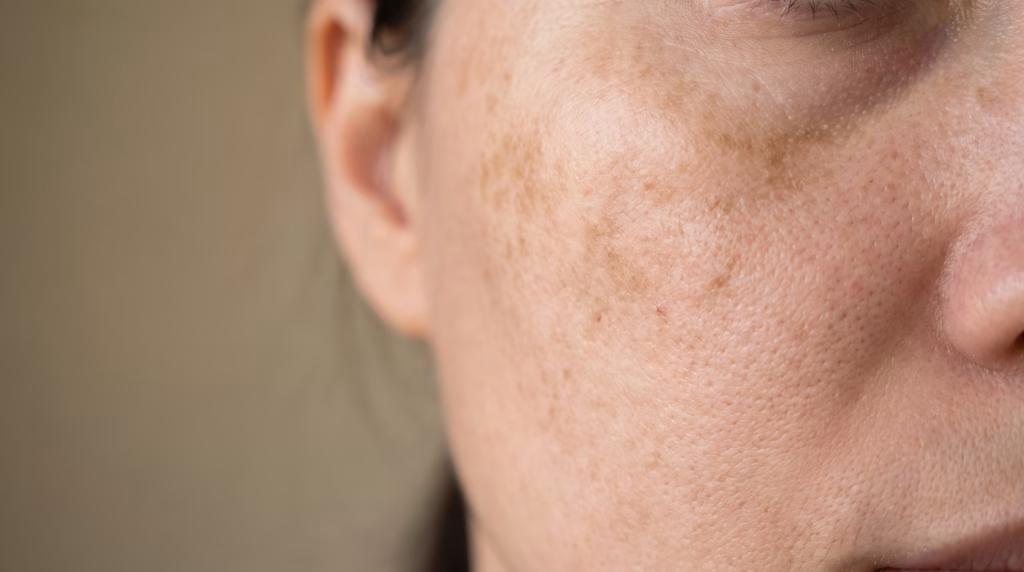
You’ve noticed darker marks after acne, patchy colour across your cheeks after a summer in Southsea, or a complexion that looks uneven even when your skin feels healthy. You probably want the result first: clearer, more even-looking skin. But in Portsmouth and Southsea, the safest way to get there is to work out what caused the pigment, and how likely your skin is to darken after irritation.
I’m Natasha, the sole practitioner at House of Glam HQ in Southsea, Portsmouth. With 7+ years of clinical experience, I treat brightening as pigment management. My aim is to even your natural skin tone, reduce visible discolouration and improve skin quality. I do not try to change your natural complexion, and I do not support unsafe whitening claims.
Why skin brightening treatment is a common question in Portsmouth
A teacher in Southsea might come to me after a beach-heavy summer with brown patches over the upper lip and cheeks. Someone else may be in their twenties, acne finally under control, but flat marks still left behind months later. The trigger is different. The frustration is usually the same.
Most enquiries are about sun-related pigmentation, post-inflammatory hyperpigmentation and melasma. They need different plans. A dark mark left after a breakout is not managed in the same way as hormonally influenced melasma. And if your barrier is already irritated, a stronger treatment can leave you with more pigment, not less.
The term brightening can make a pigment concern sound simpler than it is. I use it carefully. In a proper consultation, I want to know whether the colour looks superficial or deeper, whether inflammation is still active, which Fitzpatrick skin type best describes you, and whether your current skincare is quietly making things worse. That is why a consultation is more useful than picking something from a treatment menu.
If you are comparing options such as a facial chemical peel in Portsmouth, the right choice depends on the cause of the pigment, not the strongest treatment name.
What Portsmouth clients usually want help with
You may be looking for a safer way to manage:
-
Post-inflammatory hyperpigmentation: Brown or grey marks after acne, picking, eczema or another irritation.
-
Melasma: Patchy pigmentation on the cheeks, forehead or upper lip, often linked with hormones and light exposure.
-
Sun-related uneven tone: Areas that have gradually become darker after repeated exposure.
-
Dull surface texture: Skin that looks flatter because dead skin and dehydration make colour look less even.
The social side matters too. The Children’s Commissioner reported that Black children were more likely to see skin-lightening products online than white children, with 46% compared with 24%, while Asian children were at 35%. The report makes clear that exposure starts early and can carry real harm, which is why safe pigment treatment should stay well away from skin-lightening marketing. The figures come from the Children’s Commissioner’s February 2026 report, A healthy influence? Children’s exposure to appearance-changing products online.
What happens at your first visit
I ask about acne, pregnancy or breastfeeding, contraception, perimenopause, medication, previous treatments, sun exposure and your home routine. Then I assess the pigment, look at likely triggers and work out whether you need treatment, a prescription referral or a period of barrier repair first.
And if treatment is not the right next step, I say so.
You will not be pushed into booking a course on the day. You leave with a practical plan: what to use, what to pause and when your skin is worth reviewing.
How uneven tone actually happens
Melanin is the pigment that gives your skin its colour. Specialised cells called melanocytes produce it, and the amount, type and distribution differ naturally from person to person. Uneven tone shows up when pigment production or transfer becomes more active in one area than another.
Four triggers come up repeatedly in clinic:
-
Ultraviolet exposure: Sunlight can stimulate pigment production and make existing melasma or dark marks more visible. In melasma-prone skin, visible light can matter too, so daily broad-spectrum sun protection is part of treatment.
-
Hormonal shifts: Pregnancy, hormonal contraception and perimenopause can all influence melasma. My guide to post pregnancy skin care goes through the postpartum version of this and what is safe while breastfeeding.
-
Inflammation: Acne, picking, shaving irritation, eczema and over-exfoliation can leave post-inflammatory hyperpigmentation. Darker skin tones are often more prone to longer-lasting marks.
-
Melasma itself: This usually reflects a mix of hormonal tendency and light exposure. It can improve, but it often needs ongoing control.

The pigment pathway in plain English
Think of melanin production like a sequence of steps. Tyrosine is the starting material, and the enzyme tyrosinase helps move the process forward. If the skin gets a signal from UV exposure or inflammation, melanocytes may produce more pigment, and nearby cells receive that pigment.
Most brightening approaches target one of these points:
-
Reducing tyrosinase activity: Ingredients such as azelaic acid and prescribed hydroquinone can reduce pigment formation.
-
Increasing controlled cell turnover: Retinoids and selected peels help shed pigmented surface cells over time.
-
Calming inflammation: A gentle routine lowers the risk of creating new marks while older pigment fades.
That is why one treatment can work well for one person and disappoint another. If the main issue is ongoing inflammation, repeated exfoliation will not fix the cause. If pigment sits deeper, a superficial treatment may give only modest improvement.
Brightening vs whitening, why the difference matters
A medically supervised approach to hyperpigmentation aims to reduce uneven areas while protecting your natural skin tone. Whitening products often promise a lighter complexion more generally. I will not support that message, and I will not recommend an unlabelled cream because it claims to work fast.
In the UK, cosmetic products containing hydroquinone, mercury or corticosteroids are prohibited from being placed on the market. London Trading Standards has published failed sample results showing products containing hydroquinone and clobetasol propionate in its cosmetic product failed samples report. The NHS also explains the risks of inappropriate steroid use on skin. That distinction matters. Prescription treatment is not the same thing as a cosmetic whitening claim.
Prescription treatment is different from a cosmetic claim
Hydroquinone still has a place in UK care for some conditions, including melasma and post-inflammatory hyperpigmentation, but it needs proper supervision. Sussex Community Dermatology Service explains that hydroquinone can irritate skin, should not be used for too long and can, in rare cases, cause ochronosis, particularly in very dark skin. You can read its patient guidance via the Sussex Community Dermatology Service.
The Primary Care Dermatology Society lists a prescription combination cream of hydroquinone 4%, tretinoin 0.05% and fluocinolone acetonide 0.01% as one of the most widely used melasma treatments. It improves things for 60 to 80% of people, but only about 30% clear completely, and melasma often comes back. See the Primary Care Dermatology Society’s melasma guidance. That is the standard I use when I discuss pigment treatment: improvement and control, not a cure.
Trends I tell clients to avoid
Glutathione IV drips are often sold online as a shortcut to lighter skin. But they are not a House of Glam HQ treatment, and I do not recommend them for pigment management. The British Association of Dermatologists and the British Skin Foundation both stress proper diagnosis and realistic treatment of pigmentation conditions instead.
For a comparison of two skin treatments I do offer, see these Portsmouth skin rejuvenation options. The core point stays the same: treat the pigment condition in front of you, do not chase a lighter complexion.
The treatment options I discuss for uneven tone in Southsea and Portsmouth
No single skin brightening treatment suits every concern or every Fitzpatrick type. I assess the cause, depth and behaviour of the pigment before recommending anything. And sometimes I advise against treatment until the barrier is calmer.
A practical comparison
| Treatment | What it targets | Downtime | Best for |
|---|---|---|---|
| Chemical peels | Surface pigment, dullness and uneven texture through controlled exfoliation | Mild sensitivity, dryness or peeling may occur | Selected Fitzpatrick I to IV cases, with careful protocols for deeper tones |
| Medical-grade microneedling | Post-acne marks, texture and collagen support | Redness and sensitivity for a short period | Fitzpatrick III to VI when settings and aftercare are appropriate |
| Medical-grade topicals | Melanin production, inflammation and cell turnover | Irritation is possible | Melasma and post-inflammatory hyperpigmentation under suitable supervision |
| Skin boosters | Hydration, skin quality and luminosity | Injection-related swelling or tenderness | Dehydrated skin needing quality support rather than direct pigment removal |
| Laser or IPL at other clinics | Targeted pigment and tone concerns | Varies by device, setting and skin response | Selected candidates after full assessment and patch testing |
| Facials and skin treatments | Exfoliation, congestion and hydration support | Usually little visible downtime | Maintenance, dullness and people new to professional skin treatments |
My plain-English view
A chemical peel can help when pigment sits near the surface and the skin can tolerate controlled exfoliation. But I do not treat every patch of pigment with a peel. Melasma, deeper skin tones and irritated skin often need a more cautious plan first. If this route suits you, a facial chemical peel is planned around your skin history and recent sun exposure. I have set out which chemical peel I choose for hyperpigmentation, and what each one costs.
Microneedling can improve the look of post-acne marks and texture by creating controlled micro-injuries that trigger repair. But I do not recommend it for active acne, a damaged barrier or anyone unlikely to follow aftercare. The details matter: needle depth, speed, timing and what the skin can realistically tolerate. My microneedling in Portsmouth starts from £80, and Klarna is available on treatments if you want to spread the cost over three monthly payments.
Topicals are often the base layer of a pigment plan. The Primary Care Dermatology Society says azelaic acid 20% is usually applied twice daily, with 8 to 12 weeks needed before results can be assessed, and it can be used during pregnancy and breastfeeding. But even useful ingredients can backfire if they irritate your skin.
Skin boosters improve hydration and skin quality rather than directly removing pigment. At House of Glam HQ, I offer Seventy Hyal (£165) and Profhilo (£185) using CE-marked, medical-grade products from reputable pharmaceutical suppliers. They can help skin look fresher and less flat when dehydration is part of the picture. But if your main concern is melasma or post-acne pigmentation, a skin booster alone is usually not enough. You can read more about skin boosters in Portsmouth.
Laser, IPL and machine-based facial systems may come up in discussion, but they are not treatments I offer at House of Glam HQ. My own facials in Portsmouth are on the menu for maintenance and dullness, with every price listed. In the right clinic and on the right skin, they can have a role. But in darker skin tones, melasma-prone skin or already irritated skin, the wrong energy setting or too much stimulation can worsen pigment.
Matching the right treatment to your skin type and concern
Fitzpatrick skin typing describes how skin tends to respond to sunlight, from I through VI. It is not a full diagnosis, and two people with the same type can still react differently. I use it as one safety guide alongside your history of pigmentation, scarring, sensitivity and tanning.
Fitzpatrick I and II
Fair skin often tolerates selected peels well. But fair does not mean risk-free. If the concern is melasma rather than isolated sun damage, I still stay conservative. Sometimes a topical plan is the better first step.
Fitzpatrick III and IV
Olive and medium skin can respond well to microneedling, azelaic acid and carefully selected peels. But overdoing treatment is where problems start. If acne marks are the issue, I usually want active breakouts and picking under control before I treat the leftover colour.
Fitzpatrick V and VI
Deeper skin tones need more caution with energy-based treatments, especially at other clinics where laser or IPL may be discussed. Incorrect settings can worsen pigmentation. I often consider medical-grade topicals, microneedling, suitable peels or injectable skin boosters before anything more aggressive.
Match the concern, not the label
-
Melasma: Start with light protection, trigger management and suitable medical-grade topical care. Peels may have a role, but I will not promise permanent clearance.
-
Post-acne marks: Get active acne under control first. Microneedling, azelaic acid and carefully selected peels can be considered once the skin is calmer.
-
Sun damage: A conservative peel may suit some Fitzpatrick I to IV clients, while topical care can be safer when pigment is more widespread.
-
Dullness: Gentle exfoliation and barrier-supporting skincare may be enough. You do not always need a procedure.
The safest choice is not the strongest one. It is the one your skin can tolerate consistently.
Realistic timelines and what results usually look like
Pigment fades slowly because the skin needs time to reduce production, move pigmented cells towards the surface and avoid creating fresh inflammation. A sensible plan can look underwhelming in the first two weeks, especially when I am trying to protect reactive skin or a deeper skin tone.
With azelaic acid 20%, the Primary Care Dermatology Society advises allowing 8 to 12 weeks before results can be assessed. A UK dermatology review describes hydroquinone effects becoming visible after about 5 to 7 weeks, with treatment commonly continuing for at least three months. Hydroquinone still needs proper supervision because irritation can make pigment worse. The melasma guidance from the Primary Care Dermatology Society covers expected timelines, and a review in the Journal of Clinical and Aesthetic Dermatology discusses hydroquinone use and risks.
What the calendar may look like
At around two weeks, you might notice smoother texture or temporary brightness, but pigment change may still be subtle. Peels can cause dryness or flaking, and microneedling can leave short-term redness.
At around six weeks, a course may start to show a clearer difference in the contrast between marks and surrounding skin. This is also when I review tolerance. If your skin is stinging, peeling for too long or developing new dark areas, stronger products are not the answer.
By three months, most people who respond well have a meaningful shift to assess. Some need longer. And melasma often needs maintenance because the triggers can continue.
A course of peels may be spaced every 2 to 4 weeks, depending on the peel, your skin condition and the treatment goal. Microneedling is often planned as three sessions spaced a month apart, with cumulative change assessed around three months.
Brightening will not lift a tattoo, remove a birthmark or undo years of sun exposure in one course. It improves appearance. It does not cure every cause of discolouration.
Safety, aftercare and getting the most from treatment
Preparation and aftercare affect both comfort and pigment risk. I ask clients to pause retinoids and strong acids for 5 to 7 days before suitable procedures, avoid deliberate sun exposure and arrive without an active tan. Clean skin helps me judge what I am treating and reduces avoidable irritation.
After a peel or microneedling session, use the gentle products advised for your skin, apply SPF 50 every morning and reapply outdoors. Do not pick flaking skin, use harsh exfoliants or attend hot yoga for 48 hours. Heat and friction can keep redness going and can encourage post-inflammatory pigment.

A sensible aftercare checklist
-
Before treatment: Tell me about medication, pregnancy, breastfeeding, active acne, eczema and previous reactions.
-
During recovery: Follow the advised routine rather than adding extra brightening products.
-
For sun protection: Wear SPF 50 daily, even when the Portsmouth sky looks grey.
-
If your skin reacts: Contact the clinic. Do not try to correct burning, swelling or unexpected darkening by layering more active products.
Clients booking the same course can heal quite differently because their routines, sun exposure and picking habits differ. Aftercare can protect a good treatment choice, or undo it.
The same clinical approach applies to anti-wrinkle injections. A first treatment legally requires a £25 prescriber consultation, and the 14-day review is included. I refer to these as anti-wrinkle injections (commonly known as Botox, the brand name for botulinum toxin) only when I need to explain the treatment clearly.
For practical recovery guidance, see this advice for peel recovery in Portsmouth.
Frequently asked questions about brightening treatment
Can brightening help melasma on darker skin?
Yes, but the plan has to respect your risk of post-inflammatory hyperpigmentation. I am cautious with stronger treatments when melasma or a deeper Fitzpatrick type makes rebound darkening more likely. Medical-grade topicals, controlled peels and microneedling may be more suitable, depending on your history.
What should I book first if I have never had a skin treatment?
Book a consultation first. A standalone consultation can be booked with a £15 deposit, and that deposit is deducted from your treatment if you go ahead. If you book your treatment directly, your consultation happens at the start of the appointment with no separate consultation fee. I assess the pigment, discuss your routine and recommend a sensible starting point.
Is skin brightening treatment permanent?
No. Pigment is managed over time, not permanently deleted. Sun exposure, hormones, acne and irritation can all bring colour back, so maintenance and daily SPF matter.
How do I know if a chemical peel or microneedling is the better option?
It depends on the cause of the uneven tone. Surface pigment and dullness may respond well to a peel. Post-acne marks and texture often suit microneedling better. But if your barrier is irritated, I may tell you to wait and repair the skin first.
Are skin boosters enough for pigmentation?
Usually not on their own. Skin boosters such as Seventy Hyal (£165) and Profhilo (£185) can improve hydration and skin quality, which helps skin look fresher. But if the main issue is melasma or post-acne pigmentation, they are usually support treatments, not the full plan.
Can I spread the cost of treatment?
Yes. Klarna finance is available on treatments, so you can spread the cost over three monthly payments. If you are comparing options, I will tell you which route is most likely to suit your skin rather than pushing the most expensive one.
How do I know a clinic is safe?
Ask who performs the treatment, whether products and devices are properly regulated, whether prescriber involvement is available when legally required, and whether pricing and aftercare are clear. House of Glam HQ is based in Southsea, Portsmouth and run by me, Natasha. I have 7+ years of clinical experience, and the clinic has verified reviews across Google, Fresha and Facebook, rated 5.0.
Book a consultation
If you are considering skin brightening treatment in Portsmouth, the right first step is a consultation. Book a standalone consultation on Fresha for a £15 deposit, deducted from your treatment if you go ahead, or book your treatment directly and your consultation happens at the start of the appointment with no separate fee. Appointments are booked in advance, and Klarna finance is available on treatments.
Book on Fresha: Book your consultation or treatment
WhatsApp: Message Natasha on WhatsApp
Call: 07831 846273
Email: houseofglamhq@gmail.com

