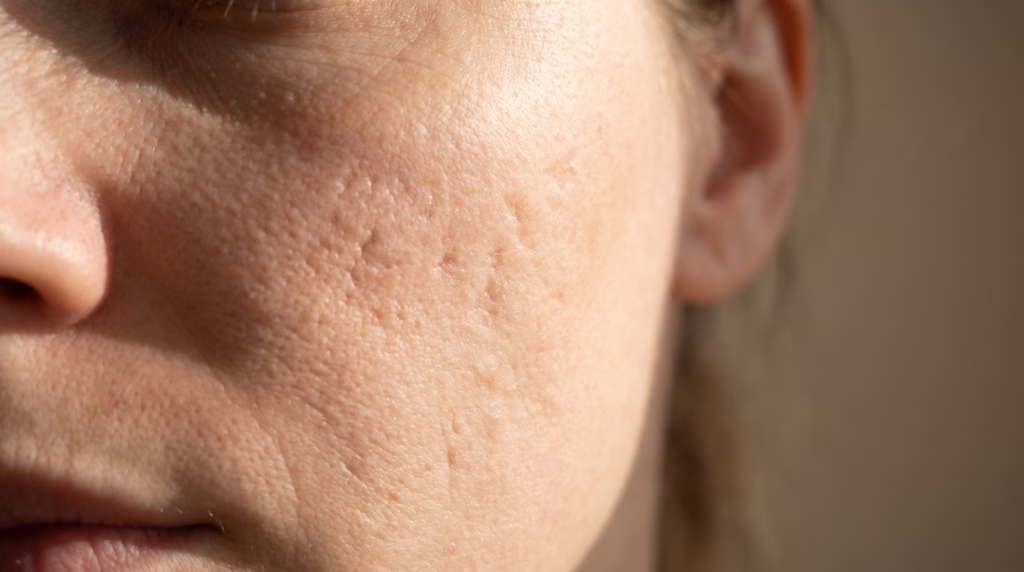
If you search for the best treatment for acne scarring, most advice pushes you toward whatever sounds strongest. I’m going to be more useful than that. The best treatment depends on what you see in the mirror.
I’m Natasha, sole practitioner at House of Glam HQ in Southsea, Portsmouth, and I’ve been treating skin for 7+ years. And the honest answer is simple: if your main issue is indented texture, I usually recommend microneedling first. If your main issue is flat brown or red marks left after acne, chemical peels often make more sense as the starting point. They do different jobs.
That’s where people get misled. A dent in the skin and a mark on the skin are not the same problem. One needs collagen rebuilding underneath. The other needs work at the surface. If you treat the wrong one, you spend money and time without getting the result you wanted.
Here’s the quickest way to frame it:
| Concern | What it looks like | What I usually recommend first | Honest expectation |
|---|---|---|---|
| Rolling scars | Soft, shallow dips | Microneedling | Usually the best non-surgical response |
| Boxcar scars | More defined indents with clearer edges | Microneedling | Good improvement is possible |
| Ice-pick scars | Deep, narrow pits | Assessment first, often limited non-surgical improvement | Can be softened visually, not erased |
| Post-inflammatory marks | Flat brown, red, or uneven tone after spots | Chemical peels | Tone usually improves better than texture |
The Honest Answer to Treating Acne Scars
If you want the straight answer, here it is: for textural acne scarring, microneedling is my lead treatment. For marks and pigmentation, peels are the supporting treatment and sometimes the better first move.

A lot of people come in saying they want their scars gone, but when I look closely, they’ve got a mix of old pigmentation and uneven texture. That matters. If I use only a peel on sunken scars, I’m working too superficially. If I microneedle someone whose real frustration is leftover brown marks, I’m not starting with the treatment that’s most likely to make the quickest visible difference.
Texture needs rebuilding
Rolling and boxcar scars happen because the skin healed with a loss of support underneath. That’s why microneedling is usually my answer for these. It works by triggering collagen production in the area where the skin has sunk.
Peels don’t do that in the same way. They work higher up, which is why they’re more helpful for uneven tone, post-inflammatory pigmentation, and that dull, blotchy look acne often leaves behind.
Practical rule: If you can feel the scar when you run your fingers over the skin, microneedling is usually the more useful starting point.
Marks need surface work
If your skin is mostly smooth but still covered in flat marks, a peel may do more for you than microneedling at the start. I’m not against combining them. In fact, that’s often the most sensible plan. But I won’t pretend one treatment does every job well.
This is also where I need to be very clear. I don’t offer laser for acne scarring. My laser is for hair removal only. So I’m not going to sell you a laser answer I don’t provide, and I’m not going to invent a comparison that doesn’t apply in my clinic. For the treatments I use for scarring, the honest comparison is microneedling versus peels.
Identifying Your Acne Scar Type
Not every pitted scar behaves the same way. And if you don’t know which type you have, it’s easy to expect too much from the wrong treatment.

Pimple scars, spot scars, acne scars: are they the same thing?
People use different words for these. Pimple scars, spot scars, acne marks, acne scarring. What you call them makes no difference to me, but which of two problems you actually have makes all the difference, because they need opposite treatments.
Most of what gets called a pimple scar is not a scar. It is a post-inflammatory mark: a flat brown or red patch where a spot used to be. Run a finger over it and the skin is smooth. Marks like these usually fade on their own over several months, and a peel speeds that up.
A true spot scar has changed the shape of the skin. You can feel it. It is a dip, a pit or a dent, and it will not fade with time, because support is missing underneath. That is the kind that needs collagen work rather than surface work.
So I look, and often I touch. Flat and coloured is a mark. Textured and indented is a scar. Plenty of people have both, which is why the plan usually has two halves.
Rolling scars
These are usually the most responsive to non-surgical treatment. They look like soft dips with sloping edges, almost like gentle waves in the skin. They tend to happen where the skin has lost support underneath rather than being sharply punched out.
This is the scar type I most often feel positive about treating with microneedling. They’re usually shallower, and the collagen-building approach fits the problem.
Boxcar scars
Boxcar scars have clearer edges and look more like defined indentations. Some are shallow. Some are deeper. They can still improve well, but they often need patience because the shape is more structured.
I’m always careful with expectations here. Improvement is realistic. Complete removal isn’t.
Rolling scars usually respond best. Boxcar scars can improve well. Ice-pick scars are the ones I’m most cautious about discussing.
Ice-pick scars
These are the deep, narrow pits. They’re the most stubborn for any non-surgical approach I offer. I won’t tell you microneedling will erase them, because it won’t.
What I can often do is improve the surrounding texture so they don’t stand out as much. That still matters. But if someone comes in with mostly deep ice-pick scarring and expects smooth skin from a short course of non-surgical treatment, I’ll say plainly that the expectation doesn’t match the treatment.
Why skin tone changes the plan
Skin tone affects how aggressively I treat. Darker skin types carry a higher risk of post-inflammatory pigmentation if treatment is too strong or rushed. That’s one reason I favour a steady approach and why needling has an important place in scar work.
In UK clinical practice, subcutaneous needle techniques are favoured across all skin colours because they carry a significantly lower incidence of post-inflammatory hyperpigmentation than dermabrasion, chemical peels, or laser resurfacing, according to this clinical review on skin needling and acne scarring.
That doesn’t mean every darker skin tone should automatically have the same treatment. It means the plan needs thought. Intensity, timing, aftercare, and what we prioritise first all matter.
Microneedling for Indented and Textured Scars
If your main concern is uneven texture, this is usually where I start. Microneedling makes sense because it targets the actual structural problem, not just the surface.
Why it works
Acne scars that dip inward usually form because the skin didn’t rebuild enough collagen during healing. Microneedling creates controlled micro-injury in the skin, which pushes the repair response back into action. Over time, that can help strengthen the area under the scar and soften the indentation.
That’s why I recommend skin needling far more often for rolling and boxcar scars than I do peels on their own. It’s the better match for the job.
A UK-affiliated systematic review found that microneedling achieves consistent improvement in 31 to 62% of acne scar cases, with 100% of treated patients showing at least some visible benefit, as reported in this systematic review of acne scar treatments. I still don’t quote made-up clinic success rates, because your result depends on scar type, skin, and whether you complete a proper course.
What a session is actually like
I think people do better when they know what they’re agreeing to. The treatment feels prickly and intense in scarred areas, especially where tissue is tighter. It’s manageable, and I talk clients through it as I work.
Afterwards, your skin usually looks flushed and feels warm, a bit like sun exposure. Then it settles. The point isn’t one dramatic session. The point is steady rebuilding.
Typical treatment rhythm
For scarring, I usually talk in terms of a course, not a one-off.
- Single session option: Microneedling £80 for the face
- Course of 3: £215
- Course of 6: £410
- Acne scarring treatment: the same face microneedling, usually planned as a course of 6
- Consultation: £15, deducted from treatment
Those prices matter because acne scar work is rarely about popping in once and hoping for the best. Most clients need consistency over time. If you already know texture is your main problem, you can book microneedling on Fresha, or message me on WhatsApp and I will tell you honestly whether it is the right starting point for your skin.
If someone wants one treatment that does all the work in a week, I’m probably not the right practitioner for them.
Who tends to suit it best
Microneedling is usually the best fit when:
- Your main issue is texture: Dips, unevenness, soft tethering
- You’ve got rolling scars: These tend to be the most rewarding to treat non-surgically
- You want a gradual plan: Collagen rebuilding takes time
- You need a safer approach across skin tones: Especially when post-inflammatory pigmentation is a concern
What matters is whether the treatment fits your scar type, not whether it is fashionable.
Where Chemical Peels Fit Into Your Plan
Chemical peels matter in acne scar treatment, but I use them judiciously. They are usually not my first answer for indented scars. They are far more useful for the marks acne leaves behind.
When a peel is the better first move
If your skin is relatively smooth but patchy in colour, a peel may give you the result you notice fastest. Brown marks, uneven tone, and post-inflammatory pigmentation sit on the surface. That’s where peels do their best work.
This is why I often separate the question into two parts:
- Are you bothered most by dents?
- Or by discolouration?
If it’s colour, I may start with a chemical peel treatment instead of going straight to microneedling.
What peels can and can’t do
A peel helps renew the upper layers of skin. That can freshen tone and reduce the look of old acne marks. It can also help very mild surface irregularity. But if the scar is indented, a peel won’t rebuild the lost support underneath in the same way microneedling can.
That’s the bit people need to hear clearly. If your scarring is pitted, peels are usually supporting treatment, not the whole answer.
Where I use peels most often
- Flat post-acne marks: Especially brown pigmentation
- Uneven tone: When skin looks blotchy after acne has settled
- Combination plans: Surface tone plus deeper textural work
- Clients easing in: Sometimes a peel is a gentler place to start
Chemical peels are £70 for a Jessner face peel or £80 for a TCA face peel, so they can also be a sensible first step for someone whose main concern is marks rather than dents.
A peel can make skin look clearer and brighter. It doesn’t rebuild a deep acne scar on its own.
Why combining treatments often works better
The best treatment for acne scarring often stops being a singular approach. If someone has rolling scars and old pigmentation, splitting the plan usually makes more sense than forcing one treatment to do both jobs.
I might use microneedling to work on the depressed areas and peels to improve the leftover tone issues around them. That’s a more honest plan than saying one treatment fixes everything.
How I Assess Your Scars and Plan Your Treatment
I don’t start scar treatment by asking what package you want. I start by looking at what your skin is doing.
The first thing I assess
Scar type and scar depth come first. Rolling, boxcar, and ice-pick scars don’t respond the same way, and flat pigmentation marks are a separate issue altogether. A lot of people have a combination, which is why a proper consultation matters.
At House of Glam HQ, every treatment is carried out by me personally, and a consultation is where I decide whether microneedling or a chemical peel is suitable, or whether I think you’d be better seeing a GP or dermatologist first.
Skin tone and risk of new pigmentation
This is a real safety point, not a minor detail. Darker skin tones can develop post-inflammatory pigmentation if treatment is too aggressive. That doesn’t mean treatment can’t be done. It means I adjust intensity, pacing, and aftercare to reduce the chance of creating fresh marks while trying to improve old ones.
I’d rather take a slower route than over-treat and leave someone with a new problem.
Lifestyle, downtime, and expectation
Some people can manage visible redness for a short period. Some can’t. Some want a gradual course. Some come in hoping one session will sort years of scarring. That’s where I have to be blunt.
Scarring usually improves over months, not instantly. And active acne changes everything.
If acne is still active
If you’re still breaking out regularly, especially with inflamed or cystic acne, treating old scars while new ones are forming often doesn’t make sense. The acne needs to be settled first.
And there’s another factor that gets ignored far too often. Persistent picking or scratching is listed in NHS guidance as a direct risk factor for scarring, which you can read in this NHS acne guidance document. If someone is still picking, I need to address that before I start asking their skin to heal from procedures well.
The best scar plan can fail if new inflammation keeps happening every week.
Realistic Goals and When to See a Dermatologist
My job is to improve the appearance of scarring as much as I realistically can. My job is not to promise removal.
What good treatment usually aims for
With the right plan, most clients see visible softening in texture, improvement in tone, and scars that draw less attention. That’s meaningful. But no non-surgical treatment I offer will erase acne scars completely.
If someone wants me to guarantee a percentage improvement, I won’t do it. I don’t invent numbers, and I’d be wary of anyone who does.
When I’d tell you to see a GP or dermatologist
Sometimes the right advice is referral, not treatment. If you’ve got active cystic acne, ongoing inflammation, worsening scarring, or scarring that looks beyond what non-surgical skin work is likely to help, I’ll tell you to get medical input.
According to UK clinical guidance, urgent referral to a dermatologist is mandatory for patients whose acne presents with ongoing scarring, because early aggressive treatment of inflammatory acne is the main way to prevent permanent damage. That’s stated in this UK acne referral guidance.
And if you were looking for volume support or hydration rather than true scar treatment, that’s a different conversation from skin booster injections Portsmouth. I separate those treatments clearly because skin quality and acne scarring are not the same issue. General upkeep sits in another category again, and my facials in Portsmouth menu is where the cleansing, dermaplaning and extraction side of skin care lives, with every price listed.
If you’re in Portsmouth, Southsea, or wider Hampshire and you’re unsure whether you need microneedling, peels, or a dermatologist first, a consultation is the right place to start.
Common questions about pimple and spot scars
Do pimple scars go away on their own?
The flat ones usually do. Post-inflammatory marks, the brown or red patches left behind after a spot, fade on their own over several months, faster with sun protection and faster again with a peel. Indented scars do not. If you can feel a dip in the skin, waiting will not change it, because the support that would fill it is not there.
What is the best treatment for spot scars that are indented?
Microneedling, in my clinic. It works at the layer where the problem actually sits. Face microneedling is £80 a session, and scarring is normally planned as a course of six at £410. Rolling scars respond best, boxcar scars respond reasonably, and ice-pick scars are the ones I am most cautious about.
How long before I see a difference?
Collagen builds slowly, so the change is gradual rather than session by session. Most people notice texture softening across a course rather than after one appointment, and the skin carries on changing for a while after the course finishes. Anyone offering you a result in a week is selling you something.
Can acne scars be removed completely?
No, and I will not tell you otherwise. What I aim for is scarring that catches the light less and draws the eye less, with more even tone around it. That is a real improvement and most people are glad of it, but it is not erasure. If your scarring is deep and widespread, the honest answer may be that a dermatologist should see it before you spend money with me.
Can I treat spot scars while I am still breaking out?
Usually not, and I will say so rather than take the booking. Treating old scarring while new inflamed spots keep forming means repairing at one end while damage carries on at the other. Settle the acne first, with a GP if it needs prescription treatment, then come back to the scarring.
If you want honest advice on the best treatment for acne scarring, book a consultation on Fresha. It is £15, deducted from the cost of your treatment if you go ahead. I’ll assess the type of scarring you’ve got, tell you whether microneedling or peels make more sense, and be direct if I think you need medical treatment before any aesthetics work. If you would rather ask a question first, message me on WhatsApp, call 07831 846273, or email houseofglamhq@gmail.com. Every treatment is carried out by me personally in Southsea, Portsmouth, and the plan is based on your skin, not hype.

