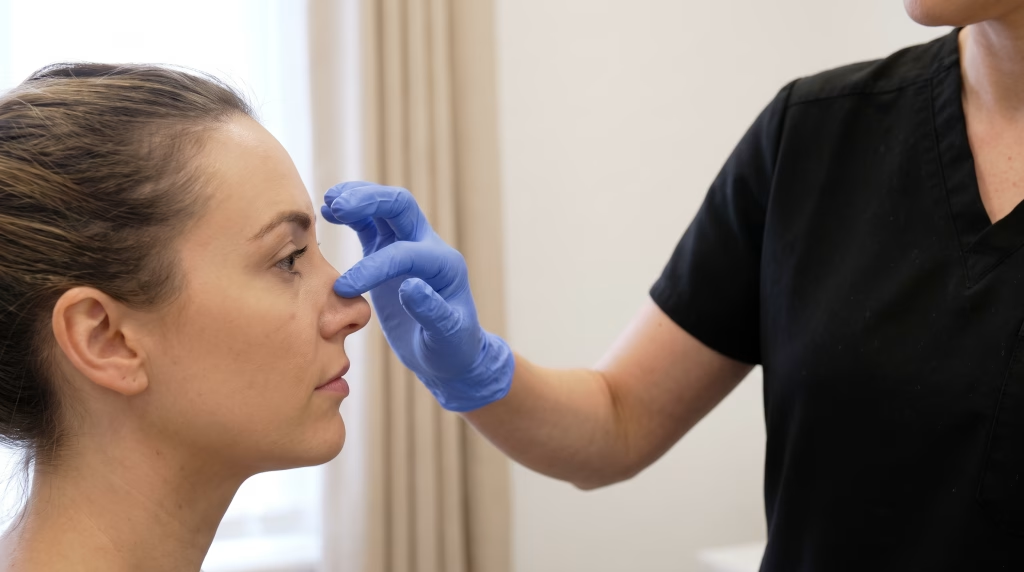
Yes, you can reshape a nose without surgery. But the internet often oversells what that really means.
I’m Natasha, sole practitioner at House of Glam HQ in Southsea, Portsmouth, and I’ve been working in aesthetics for 7+ years. Clients seeking nose jobs without surgery typically aim for one of three things: a smoother bridge, a lifted tip, or a nose that feels less dominant in profile. Those are reasonable goals. What isn’t reasonable is pretending filler can do everything surgery can.
A non-surgical nose job, also called non-surgical rhinoplasty, liquid rhinoplasty or nose filler, is about refinement, not reinvention. Done well, the result is subtle. Your profile looks cleaner. The nose stops pulling attention. You still look like yourself.
And that honesty matters more with this treatment than with almost any other dermal filler treatment I offer. If it isn’t right for someone, I’d rather say that in the consultation than take the booking and give them something filler was never going to deliver.
An Honest Answer to ‘Nose Jobs Without Surgery’
The most popular advice on this subject usually starts with how quick it is, how little downtime there is, and how you can be in and out fast. That’s all true. It misses the bigger point.
The question isn’t whether you can change the nose without surgery. You can. The question is what kind of change filler can create.
What this treatment is actually for
A good liquid rhinoplasty usually helps with:
- Bridge smoothing, where a bump or hump draws the eye in side profile
- Tip lift, when the tip droops slightly or drops when smiling
- Mild asymmetry, where the line of the nose looks a bit uneven
- Adding height to a flatter bridge, where more structure improves balance
What it does best is create a cleaner line.
A really good result isn’t a “different nose”. It’s a nose that blends better with the rest of the face.
That’s the standard I work to. Small changes in the centre of the face can make a real difference, but small is the word that matters.
Where people get misled
People often come in saying they want a smaller nose. Sometimes, after talking it through properly, what they want is a straighter profile or less attention on a bump. Filler can sometimes help with that appearance. It cannot physically shrink the nose.
That distinction matters, because if someone wants actual reduction, surgery is the right route. If someone wants careful camouflage and balance, non-surgical rhinoplasty can be a very good option.
How a Liquid Nose Job Actually Works

A liquid nose job works by using hyaluronic acid, or HA, filler to improve the shape the eye sees. The key principle is simple: we fill the valleys. That means softening dips around a bump or supporting an area like the tip so the overall profile looks straighter and more balanced. The American Society of Plastic Surgeons explains that this approach camouflages imperfections, but cannot physically reduce the size of the nose in its overview of liquid rhinoplasty and the filling the valleys principle.
Bridge smoothing is the most common
This is the correction I treat most often.
If someone has a bump on the bridge, filler can be used to smooth the line around it so the profile reads as straighter, much like levelling the road around a raised section makes the route look cleaner from side view. That’s why this treatment suits bumps so well. We’re improving the contour the eye follows.
And this is also why the result can look so effective without looking obvious.
Tip lift is next
The second most common concern is a tip that droops slightly, especially when smiling. A carefully planned amount of support can improve how that tip sits in profile.
Sometimes that’s all someone needed. Not a major change. Just less downward pull and a neater line.
Practical view: the best candidates for nose filler usually don’t need “more done”. They need the right thing done, in the right place, with restraint.
It’s filler, but it isn’t the same as other filler areas
People sometimes assume nose filler is similar to lip filler or even areas people ask about when discussing cheek fillers. It isn’t. The nose is much less forgiving. The treatment plan has to respect structure, balance and safety first.
That’s why I won’t publicly recommend a brand name as though that’s the deciding factor. The important part is using CE-marked, medical-grade, reversible HA filler, chosen for the individual nose, with sound anatomical judgement behind it.
The Critical Limit It Cannot Make Your Nose Smaller
This needs saying plainly. Filler adds volume. It doesn’t remove it. So a non-surgical nose job cannot make your nose smaller.
Anyone promising that isn’t being straight with you.
Why this matters
The whole method relies on adding product to change contour. That can make a bump look less obvious, a bridge look smoother, or a tip look better supported. What it cannot do is reduce bone, cartilage or overall nasal size.
So if your goal is:
- A smaller nose
- A narrower nose
- A lower projection
- Actual reduction of a prominent structure
Then filler is the wrong tool.
When the result can still feel right
Often, people become confused. A nose can look more refined after filler, even though it isn’t physically smaller. That’s because balance changes how we read a face.
If the bridge is smoother, the tip sits better, and the profile line is cleaner, the nose often stops standing out. For a lot of people, that’s what they wanted all along. But if someone wants obvious reduction, I’ll say so early and clearly.
If your goal is size reduction, surgery is the honest answer.
And sometimes I advise no treatment at all. Occasionally the issue isn’t really the nose. It’s proportion elsewhere, or expectations that no filler treatment should be asked to meet.
Non-Surgical vs Surgical Rhinoplasty Compared

If you’re weighing up surgery against filler, the fairest way to do it is by goal, recovery, reversibility and cost. Not hype. I have set out both of my prices, and what they cover, in my non-surgical nose job cost guide.
In the UK, the popularity of non-surgical options has tracked with a 48% decline in surgical rhinoplasty over the past decade, and the cost gap is a major reason. Surgical nose jobs are reported at £4,000 to £8,000, while non-surgical options are typically £300 to £600, making them about 90% more affordable according to The Guardian’s reporting on the fall in rhinoplasty and rise of non-surgical alternatives.
The trade-off in plain English
Here’s the honest comparison:
| Option | Best for | Anaesthetic | Recovery | Result | Reversible | Cost |
|---|---|---|---|---|---|---|
| Non-surgical rhinoplasty | Smoothing a bump, tip lift, mild asymmetry, adding bridge height | Topical numbing | Same day return to normal activity | Immediate, typically temporary | Yes, HA filler can be dissolved | From £180 |
| Surgical rhinoplasty | Reducing size, structural reshaping, permanent correction | General anaesthetic | 2 to 4 weeks | Permanent structural change | No | £4,000 to £10,000+ |
I’m not anti-surgery. Far from it. Surgery is the correct option for some goals, especially if someone wants the nose made smaller or needs permanent structural correction.
When filler suits better
Non-surgical rhinoplasty tends to suit people who want a visible but measured change, without taking time out for surgery and recovery. It also suits people who want to test how profile refinement feels before ever considering an operation.
For the right nose, it’s efficient. For the wrong nose, it’s a compromise that becomes obvious.
When I’d advise seeing a surgeon
I’d usually steer someone toward surgery if any of these apply:
- They want the nose smaller, because filler cannot do that
- The bump is large enough that smoothing it would mean adding too much volume overall
- There are breathing concerns, because that’s medical, not cosmetic, and should go through a GP or specialist
- They expect a fully different nose, rather than refinement
- They’ve had previous rhinoplasty, because revision cases need extra caution and sometimes a surgical opinion first
For anyone comparing options more broadly, Essential aesthetic treatment information helps set realistic expectations before you book anything.
Why Your Injector Is the Most Important Safety Choice
The nose is the area where practitioner choice matters most. Not because I want to scare anyone, but because this is the area where poor judgement can cause serious problems.
Non-surgical rhinoplasty is legally unregulated in the UK, which means non-medical practitioners can perform it even though the nose is one of the highest-vascular-risk areas.
Why the nose carries more risk
There’s a complex network of blood vessels around the nose. If filler is placed incorrectly, a vessel can be compressed or blood flow can be compromised. That can lead to serious complications.
This isn’t about panic. It’s about standards.
On the nose, reversibility is not a nice extra. It is a safety essential.
That’s why I only support the use of CE-marked, medical-grade hyaluronic acid filler in this area. HA is reversible with hyaluronidase. Permanent filler has no place in the nose.
What to look for before you book
If you’re researching nose jobs without surgery, judge the injector harder than you judge the clinic photos. Ask sensible questions.
- Medical judgement: can they explain who is not suitable, and are they willing to turn people away?
- Product choice: are they using reversible HA filler, rather than talking vaguely about filler as if all products are interchangeable?
- Consent and records: do they run proper consultation, medical history and aftercare, not just a quick booking chat?
- Professional traceability: can you verify the person behind the treatment, not just the branding?
The honest answer to “what do you use”
I don’t publicly push brand names for noses. That misses the point. The right answer is: reversible HA, the right anatomical knowledge, and the right technique. That’s what makes this treatment safer.
And every treatment is performed by me personally. No staff, no passing you over to someone else.
Your Procedure The Practical Details and Next Steps
If you’re still considering nose jobs without surgery, the next question is usually practical. How long does it take, what’s recovery like, and what do you need to plan for?
The clinical data most often quoted for this treatment shows it is very efficient, taking an average of 12 minutes, with approximately 93% patient satisfaction, and results that typically last 9 to 12 months. About a third of patients return for a touch-up at the one-year mark to maintain the result, according to the American Society of Plastic Surgeons press release on what was learned after 5,000 non-surgical rhinoplasties.
What the appointment usually looks like
In real clinic terms, I allow 20 to 30 minutes. That includes assessment, marking out the plan, applying topical numbing and reviewing the result carefully. The treatment itself is quick. The decision-making matters more than the clock.
You’ll usually see the shape change immediately. Mild swelling can happen, but it typically settles within 24 to 48 hours. Most clients go straight back to their day.
What you need to know before and after
A few practical points matter more than people expect:
- Consultation first: I offer a consultation because suitability matters with this area. Sometimes the right answer is yes. Sometimes it’s surgery. Sometimes it’s no treatment.
- Downtime: there’s effectively zero downtime, so you can resume your day the same day.
- Longevity: results typically last 9 to 12 months, then a top-up is usually needed if you want to maintain the look. There is a fuller answer in how long nose filler lasts, and does it hurt.
- Aftercare: for this area specifically, don’t let glasses or sunglasses rest on the bridge for 48 hours.
- Price: treatment starts from £180.
For general filler recovery and expectations, this guidance from an experienced practitioner is worth reading before you book.
Good planning makes this treatment feel easy. Rushing into it is where people make poor decisions.
A quick note on other injectable treatments
If you’re comparing filler with anti-wrinkle treatments elsewhere on the face, they do very different jobs. Anti-wrinkle injections (commonly known as Botox, the brand name for botulinum toxin) relax muscle movement. They don’t reshape the nose. And before any first anti-wrinkle treatment in the UK, a prescriber consultation of £25 is legally required, with the 14-day review included.
If you want to talk it through properly, the consultation is the place to do it. No pressure, no rushed decision, just a clear answer on whether non-surgical rhinoplasty fits your face and your goal.
If you’re considering a non-surgical nose job and want an honest opinion first, book a consultation with House of Glam HQ. I’ll tell you plainly whether nose filler is a good fit, whether surgery would suit your goal better, or whether the right answer is to leave it alone. For pricing, treatment details and booking, start with the non-surgical nose job page. You can also contact me directly at houseofglamhq@gmail.com or call 07831 846273.

