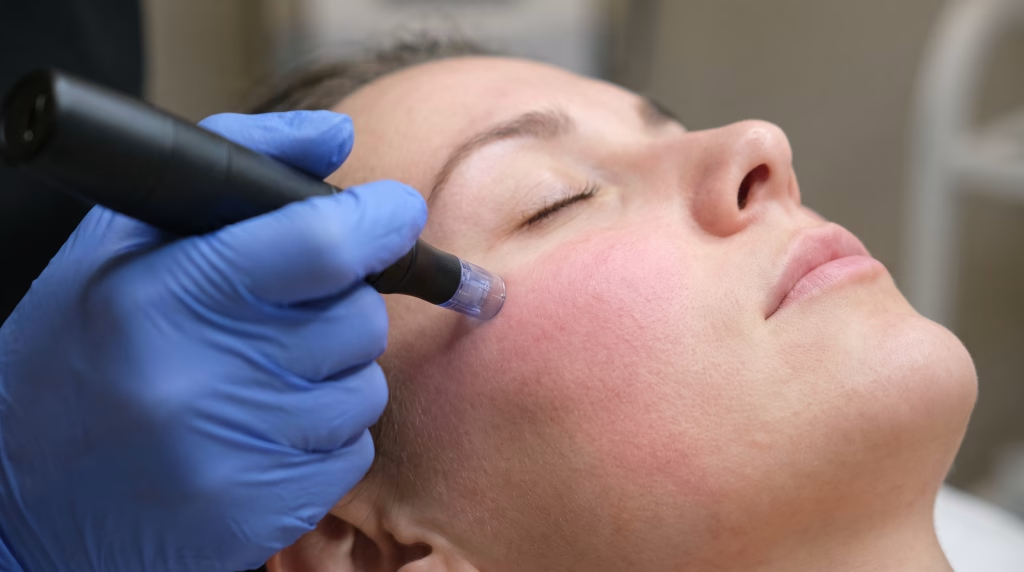
Thinking about microneedling and wondering how often you should actually be doing it? It’s a question I get asked a lot here in Portsmouth. There’s no single answer that fits everyone, because your skin is unique. But understanding how the treatment works and what you want to achieve really helps in figuring out the best schedule for you. Let’s break it down.
Key Takeaways
- Microneedling works by creating tiny controlled injuries that prompt your skin to repair itself, boosting collagen and elastin production.
- The ideal frequency for microneedling depends on your specific skin concerns, type, and how your skin responds to treatment.
- For general skin quality and radiance, a single session can offer a boost, but a course of 3 spaced 4-6 weeks apart is often recommended for more noticeable, lasting results.
- More significant concerns like acne scarring typically require a more intensive course, often 6 sessions spaced 4-6 weeks apart, to allow for deep remodelling.
- Consistency is vital, and aftercare plays a big role in maximising the benefits, with results compounding over a course of treatments.
Understanding how often you should have microneedling

Microneedling is a treatment that works by creating tiny controlled injuries in the skin. This might sound a bit scary, but it’s actually how we get your skin to kickstart its natural repair process. Think of it like this: your skin sees these little ‘wounds’ and goes into overdrive to fix them, producing more collagen and elastin. These are the proteins that keep our skin looking plump and youthful. Because it’s working with your skin’s natural functions, it’s a really effective treatment.
The science behind microneedling’s effectiveness
So, how does it actually work? When the fine needles create those micro-channels, your skin’s immediate response is inflammation. This is phase one, and it happens within the first 72 hours. Your body sends healing agents to the area, and blood flow increases. You’ll notice redness, which is just your immune system doing its job. Then comes phase two, the proliferation stage, which lasts from about day three to week four. This is when your skin starts rebuilding. New blood vessels form, and fibroblasts get busy making collagen and elastin. This is where you start to see improvements in texture and scars begin to fill in. The final phase, remodelling, takes the longest, from week four to week twelve. Here, the new collagen matures and reorganises, making your skin denser and improving its overall quality. The full effect of one session really peaks around 4 to 6 weeks later. It’s a gradual process, but that’s why the results are so natural and long-lasting.
How your skin heals after treatment
After a microneedling session, your skin goes through a predictable healing cycle. Immediately after, it’ll look and feel a bit like a mild sunburn – red and maybe a little sensitive. This usually calms down within 24 to 48 hours. During this time, it’s really important to be gentle with your skin. We advise avoiding active skincare products, makeup, and direct sun exposure for at least 48 hours. This gives your skin a chance to start the repair process without irritation. As the weeks go by, you’ll notice the changes happening beneath the surface. The collagen production ramps up, and that’s when the visible improvements start to appear. It’s a fascinating process to watch, and it’s all happening naturally within your own skin.
Why consistency is key for results
While you might see some initial improvements after just one session, microneedling really shines when it’s done as a course of treatments. Each session builds on the results of the last. The collagen that’s produced after one treatment provides a foundation for the next. This compounding effect is what leads to the most significant and lasting changes, whether you’re targeting fine lines, texture, or scarring. Think of it like going to the gym; you wouldn’t expect to get fit after just one workout, right? It’s the regular sessions that deliver the best outcomes. For general skin quality and radiance, a course of 3 treatments spaced 4-6 weeks apart is often a good starting point. If you’re dealing with more stubborn issues like acne scarring, a course of 6 might be recommended to really tackle it effectively. We’ll always discuss what’s best for your specific concerns during your consultation.
Tailoring your microneedling frequency

So, you’re thinking about microneedling, but you’re wondering how often you should actually be doing it? It’s a really common question, and honestly, there’s no one-size-fits-all answer. It really depends on what you’re trying to achieve with your skin.
What to expect from a single session
Think of a single microneedling session as a bit of a refresh. It’s great for giving your skin a general boost, making it look a bit brighter and feel smoother. You’ll see some immediate improvements, usually within a few days, but the real magic happens over the next 4 to 6 weeks as your skin gets to work producing new collagen. It’s like giving your skin a gentle nudge to start its own repair process. For a quick pick-me-up or to just see what it’s all about, one session is a good starting point.
When a course of treatments is best
If you’ve got specific concerns you want to tackle, like fine lines, uneven texture, or even some pigmentation issues, then a course of treatments is definitely the way to go. Microneedling works by stimulating collagen production, and this process takes time. Each session builds on the last, so you get cumulative results. For things like texture and fine lines, I usually recommend a course of three sessions, spaced about 4 to 6 weeks apart. This gives your skin enough time to heal and rebuild between treatments. It’s about consistency and allowing your skin to fully respond.
How your specific concerns influence frequency
Now, let’s get down to the nitty-gritty. The frequency really does change depending on what you’re dealing with. For general skin quality and a bit of radiance, a single session might be enough every now and then, or maybe a course of 3 to start. But if you’re looking to seriously tackle things like acne scarring or deeper texture issues, you’ll likely need more. For acne scarring, for example, I often suggest a course of six treatments, again, spaced 4 to 6 weeks apart. This is because scar tissue is tougher and needs more consistent stimulation to break down and remodel. It’s all about tailoring the plan to your skin and your goals. We’ll chat through all of this at your consultation, of course, to make sure we set a realistic and effective schedule for you. It’s not just about the treatment itself, but about getting the best possible outcome for your skin. If you’re looking into treatments for specific issues, you might also find chemical peels in Portsmouth can be a good complementary option, depending on your needs.
Recommended microneedling schedules

So, how often should you actually be having microneedling? It’s a question I get asked a lot, and the honest answer is, it really depends on what you’re trying to achieve. There’s no one-size-fits-all answer, but I can give you a good idea of what works best for different concerns.
General skin quality and radiance
If you’re looking for that overall glow-up, a bit of a refresh, or just to keep your skin looking its best, a single session can give you a nice boost. You’ll see some improvement within days, and the full effect will peak around 4-6 weeks. For maintaining that radiance, I usually suggest spacing treatments about 4 to 6 weeks apart. This gives your skin time to fully recover and benefit from the collagen stimulation before we do it again. Think of it as a regular tune-up for your skin.
Addressing fine lines and texture
When we’re talking about smoothing out fine lines or improving uneven texture, one session is a good start, but you’ll likely see more significant changes with a course of treatments. I typically recommend a course of three sessions for these concerns. We space these out every 4 to 6 weeks. This allows the collagen-building process to really get going and build upon itself with each treatment. It’s about consistency here; you’re not just treating the surface, you’re encouraging your skin to rebuild from within over time.
Tackling acne scarring and deeper concerns
For more stubborn issues like acne scarring, deeper texture problems, or even stretch marks, we need to be a bit more persistent. Microneedling works by breaking down old scar tissue and stimulating new collagen to fill it in. This process takes time. For these concerns, I usually advise a course of six sessions, and I have set out what a course of microneedling for acne scars costs so you can plan the spend properly. Again, we keep them spaced 4 to 6 weeks apart. This longer course allows for more substantial remodelling of the skin. It’s a commitment, but the results for scarring can be really quite dramatic when done consistently. It’s about giving your skin the best possible chance to repair and regenerate.
Here’s a quick rundown:
- General Radiance: Single session or a course of 2-3, spaced 4-6 weeks apart.
- Fine Lines & Texture: A course of 3 sessions, spaced 4-6 weeks apart.
- Acne Scarring: A course of 6 sessions, spaced 4-6 weeks apart.
Remember, this is a general guide. During your consultation, we’ll look at your specific skin and discuss your goals to create a plan that’s just right for you. It’s all about tailoring the treatment to your individual needs.
Factors influencing your treatment plan

When I’m planning out microneedling sessions for someone, it’s never a one-size-fits-all situation. Honestly, what works for one person might not be quite right for another, and that’s perfectly normal. There are a few key things I always take into account to make sure we get you the best possible results.
Skin type and sensitivity considerations
Your skin type is a big one. If you’ve got skin that’s naturally oily, it might handle treatments a bit more frequently. On the flip side, if your skin tends to be on the drier or more sensitive side, we’ll definitely want to give it a bit more breathing room between sessions. It’s all about working with your skin, not against it. For example, if you have particularly reactive skin, we might start with something gentler, like the Rejuvenating Facial, before moving onto microneedling. It’s about building up tolerance and ensuring comfort throughout the process.
The role of your age and skin condition
Age plays a part too. Younger skin generally bounces back quicker, so sometimes shorter intervals can work well. Mature skin, however, often benefits from a little more recovery time. Beyond age, the specific condition of your skin is what really matters. Are we dealing with fine lines, acne scars, or just looking for a general refresh? The answers to these questions directly shape how we approach your treatment frequency. For instance, tackling something like acne scarring often requires a more consistent approach over a longer period, perhaps a course of 6 sessions spaced 4-6 weeks apart, to really see those improvements build.
How downtime affects your schedule
We also need to think about your life and what you’ve got going on. Microneedling can leave your skin looking a bit pink and feeling sensitive for a day or two, similar to mild sunburn. This is the ‘downtime’ we talk about. Knowing your schedule helps me recommend when to book your next session so it fits in without causing you any stress. It’s about making the treatment work for you, not the other way around. We’ll always discuss your aftercare plan to minimise any discomfort and ensure your skin heals beautifully between treatments.
Maximising your microneedling results
The importance of aftercare
Right, so you’ve had your microneedling session, and you’re probably wondering what to do next. Honestly, the aftercare is just as important as the treatment itself. It’s not complicated, but you do need to be a bit mindful for a couple of days. Think of it like this: I’ve just created all these tiny little pathways in your skin to encourage healing and collagen production. The last thing you want to do is clog them up or irritate the area.
So, for the first 48 hours, I’ll be telling you to avoid makeup, active skincare products (like anything with strong acids or retinoids), and definitely no direct sun exposure. Keep it simple. Cleanse gently, moisturise with something soothing, and wear SPF religiously if you have to go outside. This allows your skin to do its thing without any interference. It’s all about letting that healing process happen naturally.
Combining microneedling with other treatments
This is where things get really interesting. Microneedling is brilliant on its own, but it can also be a fantastic partner to other treatments. For instance, if you’re looking to tackle both static lines (the ones that are there even when your face is relaxed) and dynamic lines (caused by muscle movement), combining microneedling with anti-wrinkle injections can be very effective. Microneedling works on the texture and collagen, while the injections relax the muscles causing those dynamic lines. We just need to space them out properly so each treatment can do its best work. I’ll always advise on the best timing during your consultation.
Similarly, for overall facial rejuvenation, microneedling can complement treatments like dermal fillers. While microneedling builds collagen and improves skin quality, fillers can restore lost volume or contour specific areas. It’s about creating a complete picture for your skin. We’re not just treating one thing; we’re looking at your skin holistically.
Realistic expectations for visible changes
This is a big one, and I always try to be upfront about it. Microneedling isn’t a magic wand, but it is incredibly effective when you understand what it does. You’ll see some initial improvements, like brighter, slightly smoother skin, within a few days. That’s mostly down to the immediate healing response and the serums used during treatment. However, the real magic, the collagen-building part, takes time. The most significant changes, like the reduction in fine lines, improved texture, and fading of scars, develop over 4 to 6 weeks. That’s when the collagen production really peaks after a single session.
It’s also important to remember that results compound. If you’re coming for a course of treatments, each session builds on the collagen created by the last. So, while you might see a difference after one session, a course of three or six will give you much more dramatic and lasting results. Patience is key here. We’re working with your skin’s natural processes, and those take time. Don’t expect overnight miracles, but do expect genuinely noticeable improvements if you’re consistent with your treatments and aftercare. For acne scarring, for example, a course of 6 sessions is often recommended to really tackle those deeper concerns. If your skin is too reactive to start there, my facials and skin treatments in Portsmouth, including dermaplaning and the Rejuvenating Facial, are the gentler route, with every price listed.
When to book your next microneedling session
So, you’ve had your microneedling treatment, and you’re wondering when to schedule the next one. It’s a really common question, and the answer isn’t a one-size-fits-all thing. It really depends on what you’re trying to achieve and how your skin is responding.
Understanding the healing cycle
After microneedling, your skin goes through a natural healing process. Think of it in three phases. First, there’s inflammation, which is your skin’s immediate response, usually lasting a few days. Then comes proliferation, where your skin starts rebuilding itself, creating new collagen and elastin. This is when you’ll start to see improvements, typically around weeks two to four. Finally, there’s remodelling, the longest phase, where the new collagen matures and reorganises, leading to increased skin density and improved texture. The full effect of a single session really peaks around 4 to 6 weeks post-treatment.
How results compound over time
This is where consistency really pays off. Each microneedling session builds on the collagen that was produced from the previous one. It’s not like a one-and-done treatment. The improvements you see aren’t just from one session; they accumulate. So, if you’re looking for significant changes, especially for concerns like acne scarring or deeper texture issues, a course of treatments is definitely the way to go. For general skin quality and radiance, you might see a nice boost after one session, but for more stubborn issues, you’ll want to plan for a series.
Planning your maintenance treatments
Generally, for most concerns like fine lines, texture, or pigmentation, I recommend a course of 3 treatments spaced 4 to 6 weeks apart. This allows your skin enough time to go through its healing and remodelling phases between sessions. If you’re tackling more significant acne scarring, a course of 6 treatments, also spaced 4 to 6 weeks apart, is often more effective. After you’ve completed your initial course, we can discuss maintenance. This might mean a single session every 3 to 6 months, depending on your skin’s needs and how well you’re maintaining your results with good aftercare. I have gone into how long microneedling results actually last if you want the fuller picture before you commit to a course. It’s all about working with your skin’s natural rhythm to get the best, lasting results. We’ll always confirm your next session and overall plan at the end of each appointment, so you’re never left guessing. Tailoring your microneedling frequency is key to success.
Thinking about when to book your next microneedling session? It’s a great way to refresh your skin! For the best results, many people find that spacing their treatments out works wonders. Ready to give your skin some love? Visit our website to find out more and book your appointment on Fresha!
So, How Often Should You Have Microneedling?
Right, so we’ve gone over how microneedling works and what it can do for your skin. The big question is always about frequency. Honestly, it really does depend on what you’re trying to achieve. For general skin health and a bit of a glow-up, a session every 4-6 weeks can be great. If you’re tackling things like acne scarring or deeper texture issues, you’ll likely need a course of treatments, maybe 3 to 6 sessions spaced out over a few months. We’ll figure out the best plan for you during your consultation. It’s not a one-size-fits-all thing, and I’ll always be straight with you about what’s realistic and what your skin needs. The key is consistency and letting your skin do its thing between sessions.
Frequently Asked Questions
How many microneedling sessions do I really need?
It truly depends on what you’re hoping to achieve. For a general boost to your skin’s look and feel, a single session can make a difference. However, if you’re looking to tackle things like fine lines, uneven skin texture, or pigmentation, I usually suggest a course of about three treatments. For more stubborn issues like acne scars, a course of six sessions is often recommended to get the best, lasting results. We always space these out every 4 to 6 weeks to give your skin plenty of time to heal and improve between sessions.
When will I start seeing results from microneedling?
You’ll notice some changes quite soon after your first session, often within a few days. But the real magic happens over the next 4 to 6 weeks. That’s when your skin is busy making new collagen, which makes everything look smoother and plumper. The full effect of one treatment really peaks around that 4 to 6-week mark. If you have a course of treatments, each one builds on the last, so the improvements just keep getting better and better.
Does microneedling hurt?
Honestly, I find that most people don’t find it painful at all. Before we even start the treatment, I apply a numbing cream all over the area we’ll be working on. We leave that on for about 20 to 30 minutes to make sure you’re comfortable. By the time I start using the microneedling device, your skin is nicely numb. Most clients say it feels more like a gentle vibration rather than any real discomfort.
What’s the recovery like after microneedling?
After the treatment, your skin will likely look a bit pink or red, a bit like you’ve had a mild sunburn. This is totally normal and usually calms down within 24 to 48 hours. For the first couple of days, I advise you to avoid any harsh skincare products, makeup, and direct sun exposure. Most people can get back to their usual daily activities the very next day, though.
Can microneedling help with acne scars?
Absolutely! Microneedling is actually one of the most effective treatments we have for acne scarring. It works by creating tiny little channels in the skin, which encourages your skin to produce more collagen. This new collagen helps to fill in those indented scars, like rolling or boxcar scars, and generally smooths out the skin’s texture. For acne scarring, I typically recommend a course of about six treatments, spaced 4 to 6 weeks apart, to see the best improvement.
Is microneedling suitable for all skin types?
Yes, that’s one of the great things about microneedling! It’s safe and effective for pretty much all skin types and tones, including darker skin. Unlike some laser treatments that use heat, microneedling doesn’t carry the same risk of causing pigmentation issues. Of course, I always do a thorough consultation beforehand to make sure it’s the right choice for your specific skin and any concerns you have.

