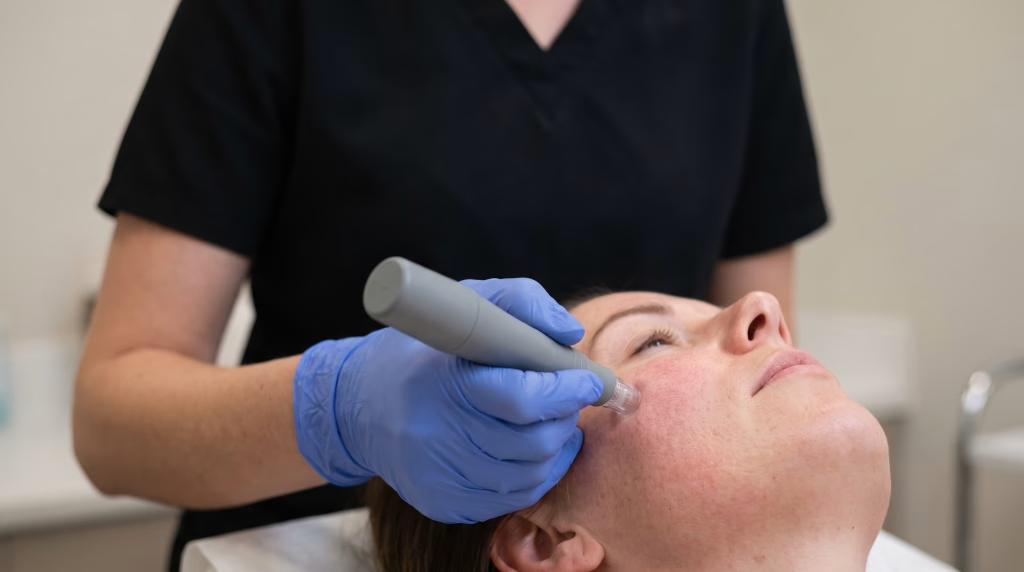
Microneedling results typically last 6 to 12 months after a full course, with maintenance sessions usually needed every 9 to 12 months. Visible improvement can take up to 6 weeks to appear, so this isn’t a same-day result.
You may be sitting in a consultation room in Southsea, Portsmouth, asking the question clients usually want answered first: “How long will this last?” After seven years of performing microneedling, I understand why you want a clear timeline. You’re committing time, money and patience, and you need to know whether the treatment suits your skin concern.
The honest answer depends on completing the right course, allowing collagen repair to develop and protecting your skin afterwards. A single appointment may give your skin a fresher appearance, but it usually isn’t the fairest point at which to judge the final result.
The Honest Answer on How Long Microneedling Results Last
A client may return months after treatment and ask whether microneedling is still working. The answer can be yes, provided we are discussing improvement from a completed course, not the temporary brightness that may follow one appointment.
The British College of Aesthetic Medicine gives a practical framework of 6 to 12 months for results, with maintenance often considered every 9 to 12 months. These are planning ranges, not guarantees. Skin type, the concern being treated, treatment depth, the number of sessions completed and aftercare all affect how long the improvement remains visible.
Allow time for the result to develop. Visible regeneration may take up to 6 weeks to become apparent, while collagen continues to remodel afterwards. Microneedling stimulates the skin’s repair response. It does not place a filler beneath the skin or create an effect that appears within days. Repair, collagen production and tissue remodelling take place in stages.
My practical answer: judge the outcome after the recommended course, expect gradual change, and plan maintenance rather than permanence.
At House of Glam HQ, I assess whether microneedling suits the concern you want to improve. Texture, early lines and some scarring may respond well, while deeper concerns can require more sessions and patience. You can also review what microneedling before and after really looks like before booking. A realistic timeline helps set expectations, but it cannot replace an assessment of your skin.
The Biological Timeline of Collagen Repair After Microneedling
Microneedling creates controlled micro-injuries in the skin. That triggers a healing response, but the visible result develops in stages rather than arriving immediately.
What happens after treatment
The first stage is the immediate response. Your skin may look flushed and feel warm or sensitive, which reflects the early inflammatory part of healing. This doesn’t mean the final result has appeared, and it doesn’t tell us yet how much collagen remodelling will occur.
The next stage involves repair. Skin cells begin restoring the treated area, while fibroblasts support the production of collagen and other structural components. This is why the skin may gradually feel smoother before the visual improvement becomes obvious. If you are still deciding whether to book, this is what a microneedling session actually feels like.
The longer stage is remodelling. Newly formed collagen reorganises over time, so texture and firmness can continue changing after the initial healing period. The Chelsea and Westminster Hospital NHS microneedling guidance explains that improvement may take up to 3 months, and that more than one treatment may be needed before you notice a change.

Why the first appointment can mislead you
The British College of Aesthetic Medicine states that visible signs of regeneration and repair can take up to 6 weeks, with the process continuing over the following months. Its patient guidance also describes microneedling as a treatment that commonly needs a course rather than a single appointment, which is why I don’t encourage clients to judge the outcome too early.
For a practical explanation of supporting collagen through skincare and treatment planning, see House of Glam HQ collagen advice. The key point is simple: the treatment starts the process, but your skin needs time to complete it.
What Affects How Long Your Microneedling Results Last
Two people can complete similar microneedling courses and experience different longevity. The treatment is only one part of the result. Your skin, the concern being treated, the depth selected and your everyday habits all matter.
Treatment depth and the concern being treated
More superficial needling tends to create a shorter-lived improvement because the visible effect is influenced by normal epidermal turnover. Deeper treatment may create a stronger repair response, but it also needs careful assessment, appropriate aftercare and a practitioner who understands when a deeper approach is unsuitable.
Acne scarring is a good example. A UK treatment guide explains that a common course may involve 3 to 6 sessions spaced around 4 to 6 weeks apart, while deeper scarring can require 6 to 8 sessions rather than one appointment. That doesn’t mean a higher number of sessions guarantees a better result. It means the concern may need more structured work.
Skin and lifestyle
Your age, natural collagen activity and healing response influence how long improvement remains visible. Younger, resilient skin may maintain changes differently from mature or compromised skin, but no age group receives a guaranteed duration.
Sun exposure can accelerate visible ageing and undermine the work you’ve invested in. Smoking can also affect skin repair. Consistent SPF, sensible skincare and avoiding repeated irritation give your skin a better environment for maintaining its appearance.

The treatment plan should also account for your goal. Improving general texture isn’t the same as working on established scarring, and a course designed for one concern may not suit another. My House of Glam HQ guidance on microneedling recovery explains why the healing period needs to be respected rather than rushed.
Your Treatment Course Schedule and Maintenance Plan
Microneedling works best when the spacing allows your skin to heal and remodel before the next appointment. NHS patient guidance states that 4 to 6 sessions are normally required, with a minimum interval of 6 weeks between treatments. Depending on the number of sessions completed, the treatment window can therefore extend across roughly 3 to 9 months. You can also review how often you should have microneedling when planning around work, events or travel.
| Phase | Sessions | Interval | What to Expect |
|---|---|---|---|
| Initial assessment | 1 | Before treatment | Skin history, concern, suitability and aftercare are discussed |
| Early course | 1 to 2 | At least 6 weeks | Healing takes place and early changes may be subtle |
| Main course | 4 to 6 overall | At least 6 weeks | Cumulative improvement is assessed over several appointments |
| Deeper scarring plan | 6 to 8 where appropriate | Around 4 to 6 weeks | More appointments may be needed for established scarring |
| Maintenance | Usually reviewed around 9 to 12 months | As assessed | A further session may help maintain the appearance |
The table is a planning guide, not a promise. The British College of Aesthetic Medicine describes a common course of 3 to 4 treatments at about six-week intervals, while NHS guidance describes 4 to 6 sessions as normally required. The difference reflects the concern being treated, treatment approach and how your skin responds.
I assess progress after the course rather than making a rushed decision after the first appointment. Maintenance is considered when the improvement begins to soften, not automatically on a fixed date for every client.
Aftercare Steps That Protect and Extend Your Results
Aftercare affects both comfort and the quality of the healing process. Your skin has been deliberately stimulated, so the first priority is to reduce irritation while the barrier settles.
The early healing period
For the first 48 to 72 hours, avoid active skincare ingredients, direct sun exposure and heavy exercise. Heat, sweat and strong products can aggravate recently treated skin, which may increase discomfort and prolong redness.
Use gentle cleansing and hydration instead. Apply broad-spectrum SPF when advised and limit unnecessary exposure to sunlight. UV exposure can work against the long-term appearance you’re trying to maintain, particularly when you’re addressing uneven tone or signs of ageing.

Returning to your normal routine
Don’t restart retinoids, exfoliating acids or other potentially irritating products until your skin has fully healed and I’ve advised that it’s appropriate. A product that feels fine on everyday skin may sting or inflame skin that has recently been needled.
Avoid booking other facial treatments too soon. Layering procedures before the skin has recovered can create unnecessary irritation and make it harder to identify what caused a reaction. Good aftercare isn’t about buying a large routine. It’s about using suitable products consistently and leaving the skin alone when it needs to recover.
Aftercare protects the investment: gentle care supports healing, while repeated irritation can make your skin look unsettled before the collagen work has had time to develop.
How Microneedling Longevity Compares to Other Skin Treatments
Microneedling suits people who want gradual improvement in texture, firmness and the appearance of some scarring. It isn’t the right answer for every concern, and comparing it with other treatments should start with the mechanism rather than the advertised result.
Chemical peels work by applying a controlled chemical solution to the skin. They may suit concerns such as surface texture, dullness or uneven tone, depending on the peel selected and your skin assessment. At House of Glam HQ, microneedling in Portsmouth starts from £80, while a facial chemical peel starts from £70. Price doesn’t decide suitability, and the cheaper treatment isn’t automatically the better choice.
Skin boosters follow a different route. Profhilo and Seventy Hyal are hydration-focused injectable treatments, whereas microneedling stimulates a controlled repair response through mechanical micro-injury. House of Glam HQ lists Seventy Hyal at £165 and Profhilo at £185, with the appropriate option discussed during assessment. These treatments can sometimes sit within a wider skin plan, but they aren’t interchangeable.

I do not offer PRP at House of Glam HQ, so if you’re researching combination treatment elsewhere, ask what each part is intended to do and whether the added procedure is justified for your skin.
Microneedling may be a poor fit if you want an immediate, fixed result or aren’t able to follow aftercare. In those cases, I’d rather explain the limitation clearly than recommend a treatment because it sounds popular.
Why Practitioner Standards and Regulation Affect Your Results
Longevity isn’t only about your skin biology. It also depends on whether the treatment is planned correctly, performed hygienically and adjusted to the concern being treated.
Needle depth, pressure, treatment pattern and skin preparation all require judgement. A practitioner who uses an unsuitable depth may create unnecessary irritation without producing the intended response. Poor infection-control practice creates a safety concern, while inconsistent technique can produce an uneven result that is difficult to assess.
UK standards are receiving more attention as non-surgical treatments become more widely discussed. BABTAC’s Sharp Standards guidance addresses competence and safety expectations, while UK policy discussions have considered microneedling within wider non-surgical cosmetic licensing reforms.
That doesn’t mean regulation alone can guarantee a result. It does mean you should ask who is performing the treatment, what training they’ve completed, how they select treatment depth and what aftercare they provide. At House of Glam HQ, Natasha is the sole practitioner, with more than seven years of clinical experience and one-to-one training and care.
A consultation should include a clear discussion of suitability, expected timing and alternatives. If someone promises permanent results or tells you that every skin concern needs the same course, I’d treat that as a warning sign.
FAQ
How long do microneedling results last?
Microneedling results usually last 6 to 12 months after a full course, with maintenance often reviewed around 9 to 12 months. The exact timeline depends on your skin, the concern being treated, how many sessions you complete and how well you protect your skin afterwards.
When will I see microneedling results?
Some clients notice early smoothness quite quickly, but visible improvement often takes up to 6 weeks to appear. Collagen remodelling continues after that, so changes in texture and firmness can keep developing over the following weeks and months.
How many microneedling sessions do I need?
A common course is 3 to 6 sessions, though NHS guidance often cites 4 to 6 sessions as normal. If you’re treating deeper acne scarring, more appointments may be needed. I recommend judging progress after the planned course, not after one session.
How often should I have maintenance microneedling?
Maintenance is usually considered around 9 to 12 months, but it is not automatic on a fixed date for everyone. I base it on how your skin looks, how your results are holding and what concern we’re maintaining.
Does microneedling hurt, and what is recovery like?
Most clients describe microneedling as uncomfortable rather than painful, though that varies with depth and individual sensitivity. Recovery is usually mild, with redness, warmth and sensitivity in the first 48 to 72 hours. During that time, keep skincare gentle and avoid strong actives, direct sun and heavy exercise.
Is microneedling better than a chemical peel?
Not necessarily. Microneedling and chemical peels work differently. Microneedling is often chosen for gradual improvement in texture, firmness and some scarring, while a peel may suit dullness, uneven tone or surface texture concerns. The better option depends on your skin and your goal.
Book a Consultation
If you’re considering microneedling in Portsmouth, Southsea or elsewhere in Hampshire, the right first step is a consultation. I’ll assess your concern, skin condition, expectations and whether microneedling is suitable, rather than assuming every client needs the same treatment.
Book a standalone consultation on Fresha for a £15 deposit, deducted from your treatment if you go ahead, or book treatment directly and your consultation happens at the start of the appointment with no separate fee. Microneedling is available from £80, Klarna finance is available on treatments through three monthly payments, and appointments are booked in advance.
-
WhatsApp: Message Natasha on WhatsApp
-
Call: 07831 846273
-
Email: houseofglamhq@gmail.com
You can see what microneedling costs before you book, starting at £80 for the face. House of Glam HQ provides microneedling and other skin treatments in Southsea, Portsmouth, with plans based on your skin and realistic timelines. Visit House of Glam HQ to review the service and arrange an appointment when you’re ready.

