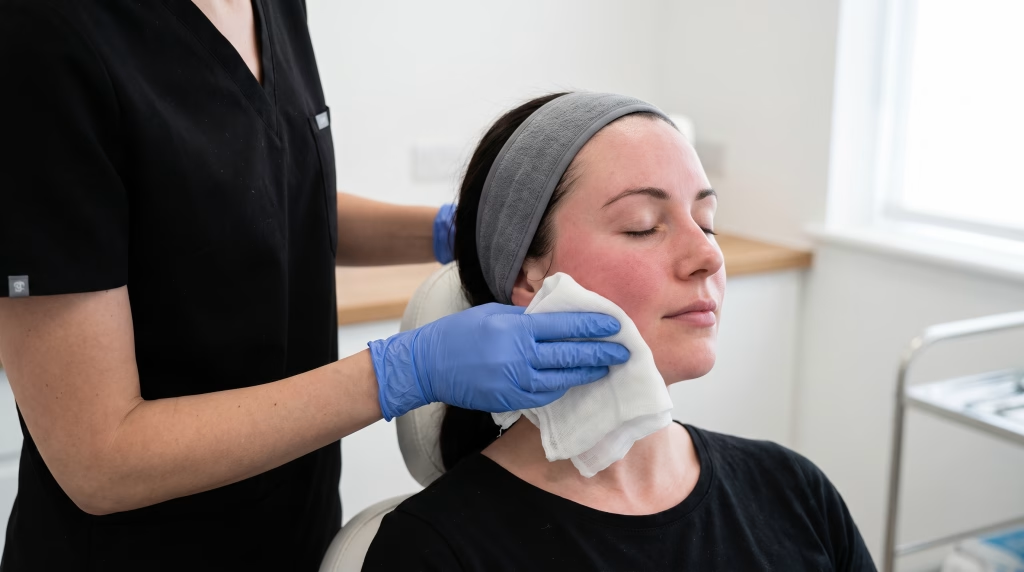
Dermaplaning is one of the gentlest treatments I offer, so the side effects are usually minor, short-lived, and easy to manage. That’s the honest answer clients want first. Clients leave with smoother skin, a bit of temporary pinkness, and no real downtime. If you are planning the appointment around a working day, this is how long a facial takes and how much time to allow either side. The procedure isn’t risk-free, though, and the safest results come from proper screening, sensible aftercare, and knowing which reactions are normal and which ones aren’t.
The biggest fear I hear is about facial hair, and I’ll tackle that straight away. Dermaplaning does not make hair grow back thicker, darker, or faster. It cuts fine vellus hair at the surface, so regrowth can feel blunt for a few days, but the follicle hasn’t been changed, so the hair comes back exactly as it was before. That’s the bit people need to hear, because the myth is stronger than the actual outcome.
Table of Contents
- The Honest Picture on Dermaplaning Side Effects
- The Common Minor Side Effects and How Long They Last
- The Hair Regrowth Myth and Why It Will Not Change
- Who Should Not Have Dermaplaning and Why Assessment Matters
- Recovery Time and the First 24 Hours of Aftercare
- Why Less Is More After Dermaplaning
- When a Reaction Needs Medical Attention
- Book a Consultation if You Are Unsure
The Honest Picture on Dermaplaning Side Effects
Dermaplaning is one of the gentler cosmetic treatments, and that is the honest place to start. It still removes the skin’s surface layer, so a brief period of redness, tightness, or dryness can happen afterwards, especially if the skin is already sensitive or compromised. The main trade-off is simple, a smoother finish with a short window of irritation that usually settles when the skin is given a lighter routine and proper protection. Johns Hopkins notes that skin can stay bright pink while it recovers, which is why aftercare and sun protection matter, and Cleveland Clinic lists infection, scarring, and skin discolouration among the possible complications. Cleveland Clinic dermaplaning overview

What most people actually feel
In clinic, the pattern is usually straightforward. The skin looks pink straight after treatment, feels more reactive for a short time, then settles. That matches broader guidance that describes temporary redness, soreness, tingling, tightness, dryness, and sensitivity in the first couple of days. WebMD dermaplaning overview, Healthline dermaplaning guidance
A mild reaction does not usually signal a problem. It generally means the skin has been exfoliated and needs a calmer 24 hours, with less friction and less active product use.
What I do not see often is anything dramatic when the skin has been assessed properly first. That is why dermaplaning remains a practical option for people who want a polished finish without much interruption to their day. Many clients can apply makeup and carry on as usual, which is one reason it is often chosen before events or a busy week.
If you are unsure whether your skin is a good fit, start by find the right skin treatment. A proper assessment removes guesswork and helps set realistic expectations from the start.
The Common Minor Side Effects and How Long They Last
The common dermaplaning side effects are usually mild and short-lived. Straight after treatment, the skin often looks pink and feels a little warm or tender. That reaction makes sense. The surface has just been exfoliated, so the skin may need a quieter stretch before it settles back down.
What usually settles first
Redness is usually the first thing people notice, and it often fades within a few hours. Some people feel light tingling, tightness, or a touch of dryness as the skin adjusts. If your skin is naturally sensitive, you may also notice a brief increase in reactivity to products or sunlight for a day or so.
That does not point to a bad outcome. It usually means the barrier has been worked on and should be treated gently for the next 24 hours. A small breakout or extra flush can happen in reactive skin, but it is not the usual pattern. I tell clients to keep the routine simple, avoid friction, and treat the skin as temporarily more vulnerable after exfoliation.
When someone asks how much time to allow around a stronger treatment, I point them to schedule time off for a peel. Dermaplaning is generally lighter than that, so downtime is usually limited, but the comparison helps set expectations.
Most of the time, dermaplaning aftermath is closer to “my skin feels fresh and a bit pink” than “my skin needs recovering from a procedure”.
The Hair Regrowth Myth and Why It Will Not Change
This is the question that comes up most often, and it deserves a straight answer. Dermaplaning does not make facial hair grow back thicker, darker, or faster. It removes the hair that’s sitting at the surface, usually fine vellus hair, and it doesn’t reach the follicle where growth is controlled.
Why it can feel different for a few days
When a hair is cut across rather than left to taper naturally, the regrowth can feel a little blunt at first. That’s a texture issue, not a change in the hair itself. The colour, thickness, and growth pattern stay the same because the follicle hasn’t been altered.
That distinction matters because people often mistake a short blunt tip for changed growth. It hasn’t changed. The hair is growing back through its normal cycle, and very short stubble can feel more noticeable before it softens again.
If facial hair removal is your main concern rather than skin smoothing, laser hair removal is a separate conversation, because it works on a completely different principle. Dermaplaning is for surface exfoliation and peach fuzz removal, not for changing how hair behaves long term.
The hair myth survives because the regrowth feels different for a short while, not because the hair has actually become stronger.
That’s the line I keep clear in consultation. If someone wants a smoother finish for makeup or events, dermaplaning makes sense. If they want permanent change to hair growth, it isn’t the right tool.
Who Should Not Have Dermaplaning and Why Assessment Matters
Some of the best outcomes happen before the blade ever touches the skin. Dermaplaning isn’t suitable for active acne, inflamed breakouts, very reactive skin conditions, or certain skin infections, because scraping over broken or inflamed skin can irritate it further or spread bacteria. Patient guidance from the UK also flags higher risk when the skin barrier is already compromised, especially with eczema, psoriasis, herpes, or impetigo. Patient.info dermaplaning safety guidance
Why I assess the skin first
That screening step is the safety net. It’s not about being cautious for the sake of it, it’s about avoiding a treatment that would work against the skin sitting in front of me. Natasha assesses the skin first and won’t treat if it isn’t right, because dragging a blade over the wrong surface is how irritation starts.
Here’s the practical point. If the skin is already inflamed, the procedure can add friction to an area that’s already struggling. If there’s a bacterial or viral issue, the priority shifts away from exfoliation and towards proper management first. Dermaplaning is low-risk when the skin is suitable, but suitability is everything.
If you have a known skin condition, bring that up at consultation rather than hoping it’ll be fine on the day. That conversation is where the safest plan gets made, and it stops most problems before they start.

Recovery Time and the First 24 Hours of Aftercare
The mild redness or sensitivity usually settles the same day, and the skin feels back to normal, just smoother, very quickly. That short recovery is one of the main reasons dermaplaning fits neatly into a normal week.
The first day needs a lighter touch
For the first 24 hours, keep things simple. Avoid heavy makeup, retinol, acids, vitamin C, harsh scrubs, heat such as saunas or hot workouts, and direct sun. Those are the things most likely to push freshly exfoliated skin into extra irritation.
Daily SPF is the part that doesn’t get skipped. Freshly exfoliated skin is more sun-exposed, so sun protection helps reduce irritation and pigmentation problems. Gentle hydration is the other key piece. The skin doesn’t need to be overloaded, it needs to settle.
Less movement, less heat, less product, that’s the formula for the first day.
Most clients are back to normal quickly, with makeup on and the rest of the day intact. The goal after dermaplaning is to protect the smooth result, not to nurse a wound.
Why Less Is More After Dermaplaning
The biggest aftercare mistake is the well-meant one. People see freshly exfoliated skin and reach for more actives, more scrubs, more “repair” products, and that’s usually where irritation starts. A gentle, hydrating moisturiser and a good daily SPF are the two things that matter straight after dermaplaning.
What helps and what doesn’t
Light hydration calms the skin. SPF protects it. Everything else should be questioned, especially if your skin is already a bit reactive. Piling on strong products after exfoliation is more likely to irritate than to improve the result.
Dermaplaning can pair well with a hydrating facial or a combination treatment like the Ultimate Glow Facial, because freshly prepped skin often takes in products more easily. That pairing is about enhancing the finish, not managing side effects. You can read the broader peel and facial context in House of Glam HQ peel guidance.
If skin needs more than gentle hydration and SPF, that’s a sign the treatment choice may have been off in the first place. That loops back to assessment. The safer the screening, the less rescue work anyone has to do afterwards.
Dermaplaning is meant to be simple. Keep it simple, and the skin usually stays calm.
When a Reaction Needs Medical Attention
Mild redness, tightness, and some sensitivity are part of the usual recovery pattern. What matters is the change in direction. If the skin becomes more red instead of less red, feels hot or painful, starts weeping, crusting, or develops pustules, that moves beyond normal post-treatment sensitivity. Fever or any sign that the area is worsening also needs attention.
The line between normal and not normal
In practice, I look for progression. A little pinkness that settles is expected. Redness that spreads, soreness that increases, or a rash that keeps expanding suggests irritation that needs a closer look. Infection is uncommon, but it can happen when the skin barrier is disrupted or if equipment is not properly clean, and Cleveland Clinic lists infection among the main complications.
If the skin looks angry, feels more tender as the hours pass, or starts to flare in a way that does not match ordinary aftercare, contact Natasha directly or seek medical advice promptly. If you need gentle skincare ideas for skin that runs red easily, find gentle skincare that calms redness is a useful place to start, but it should never be used instead of medical review when symptoms are getting worse.
I would rather hear from someone early than have them wait and hope it settles. Most aftercare concerns do calm down quickly, but a reaction that is spreading, painful, or producing discharge deserves prompt attention before it becomes harder to settle.
Book a Consultation if You Are Unsure
If you’re unsure whether dermaplaning suits your skin, a proper consultation is the right next step. Natasha carries out every treatment herself at House of Glam HQ in Southsea, Portsmouth, and the assessment always comes first. That matters because dermaplaning is usually one of the gentler treatments, but the safest result still depends on matching it to the right skin at the right time. The clinic offers Dermaplaning Express £45, Deluxe £65, and it’s also included in the Ultimate Glow Facial £65.
What to do next
Bring any skin history you have, especially if you’ve had flare-ups, infections, or reactions to exfoliating treatments before. That gives a clearer picture of whether the treatment is likely to sit well with your skin, rather than relying on guesswork. You can use the contact details to ask about suitability before booking.
What I see most often is that the concern is less about serious side effects and more about whether the skin is a good match for the treatment on that day. Dermaplaning does not usually cause major problems when the skin is assessed properly, but skin that is already reactive, inflamed, or recovering from another issue needs a different approach. A consultation lets that decision be made properly.
If you want the full facial menu and booking information, visit the facials page.
If you want honest advice on dermaplaning side effects, a consultation at House of Glam HQ is the best place to start. I’ll assess your skin properly, tell you if dermaplaning is suitable, and only recommend the treatments that make sense for you.

