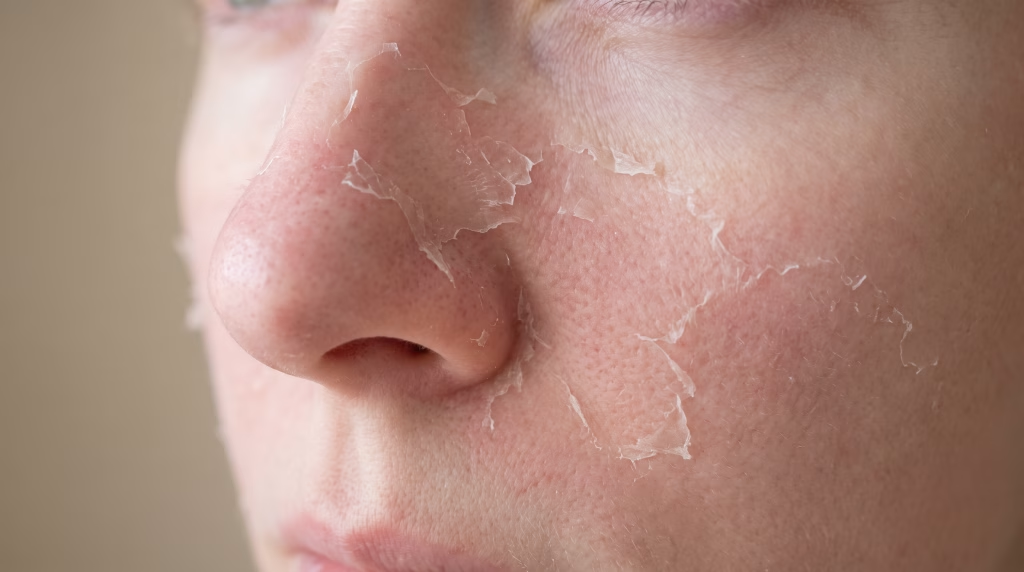
Chemical peel downtime varies entirely by peel type, from zero downtime with a light AHA peel to around 5 to 7 days of visible peeling with a deeper TCA peel. That’s the honest answer, and it’s why when someone asks me “how much downtime will I have?”, my first question is always, “for which peel?”
Frequently, questions arise about chemical peel downtime as if there’s one standard recovery time. There isn’t. A superficial peel and a deeper peel behave very differently on the skin, and if you treat them like they’re the same, that’s when people end up booking the wrong thing at the wrong time.
I’m Natasha, sole practitioner at House of Glam HQ in Southsea, Portsmouth, and I’ve been working in aesthetics for 7+ years. Every peel is carried out by me personally, and I’m very direct about what recovery looks like. If a peel doesn’t fit your week, your work, or your event plans, I’ll say so.
The Honest Answer to Chemical Peel Downtime
Chemical peel downtime depends on depth and strength, not on the words “chemical peel” alone. That’s why I never give one blanket figure. An AHA peel, a salicylic peel, a Jessner and a TCA all sit in different places on the scale, and the recovery reflects that.
Some clients can come in on a lunch break, leave a little pink, and carry on as normal. Others need to plan around several days of visible peeling. Both are valid options. They’re just different treatments for different goals.
If you’re looking at chemical peels Southsea, the first thing I’d want to know isn’t just what you want to improve. I’d also want to know what you can realistically tolerate afterwards. That matters just as much.
Why the same question gets different answers
A superficial peel works near the surface, so the skin usually settles quickly. A deeper peel pushes further, so the recovery is more obvious. That’s the trade-off.
Practical rule: The deeper the peel, the more you need to plan your diary around it.
And that’s where people get caught out. They hear “peel” and assume a bit of dryness for a day or two. Sometimes that’s true. Sometimes it definitely isn’t.
What I look at before recommending one
I’m matching two things at consultation:
- Your skin goal, such as brightness, congestion, texture or general refresh
- Your downtime tolerance, meaning whether you can turn up to work, social events or photos while flaking
- Your timing, especially if you’ve got a wedding, holiday or a work event coming up
If the peel you want doesn’t fit your schedule, I’d rather adjust the plan than leave you regretting it three days later.
Your Downtime Timeline by Peel Type
This is the part people need. Here’s how chemical peel downtime breaks down across the main peel types, starting with the lightest.
Chemical Peel Downtime at a Glance
| Peel Type | Peel Depth | Visible Downtime | What to Expect |
|---|---|---|---|
| AHA | Superficial | Essentially none | Slight pinkness for a few hours, then usually back to normal |
| BHA Salicylic | Superficial | Minimal | Little to no disruption, perhaps a bit of light flaking |
| Jessner | Medium-light | Around 3 to 5 days | Mild to moderate flaking and light peeling |
| TCA | Medium depth | Roughly 5 to 7 days | Visible peeling, tighter feel, the one to schedule carefully |
| Course of 3-6 | Light peels | Minimal each time | Recovery repeats with every session, so plan the whole course around your diary |
AHA and BHA, the easy ones to fit in
AHA is the easiest option if you want very little disruption. Slight pinkness is common for a few hours, then the skin recovers. Socially, it’s usually no issue at all.
BHA salicylic is similar in terms of convenience. You might get a bit of flaking, but it’s usually light rather than dramatic. If someone asks me for a peel but says they can’t look obviously “mid-recovery”, these are often where the conversation starts.
For clients who are cautious, reactive, or still finding a chemical peel for sensitive skin, this gentler end of the menu often makes more sense than chasing the strongest option straight away.
Jessner and TCA, where planning matters
Jessner sits in the middle. I’d usually describe it as mild to moderate flaking with light peeling for around 3 to 5 days. This is the level where you do need to think about your week, even if you’re not fully hiding away.
TCA is the deepest peel I offer, and this is the one I’m blunt about. Expect roughly 5 to 7 days of visible peeling. Skin can feel tight, look dry, and clearly go through that shedding phase. If you’ve got meetings, photos, a date, or anything else where you want your skin looking calm and polished, don’t book this casually.
If you can’t tolerate obvious peeling, don’t choose TCA just because it sounds stronger.
Choosing the lightest peel that still works
If you can’t take visible peeling, the honest answer isn’t a stronger peel applied carefully. It’s a lighter peel repeated more often. An AHA or BHA salicylic peel keeps you presentable and still moves the skin forward.
That suits clients who want steady progress but can’t disappear for a week. You still need to follow aftercare properly, but you don’t get that classic peel-face look people worry about.
How to Plan Your Peel Around Big Events
The best way to avoid a bad booking is simple. Work backwards from the event.
If you’ve got a wedding, holiday, party, work presentation, or photos coming up, I ask about that at consultation before I recommend anything. I’d rather build a plan around your life than hand you a stronger peel and hope for the best.

For a glow close to the event
If the goal is fresh, brighter-looking skin without visible peeling, I’d usually steer you towards AHA or a BHA salicylic peel. Those are the options I consider when someone wants to look good soon without having to explain flaky skin to anyone.
A few days to a couple of weeks beforehand is often the sensible window for that kind of treatment, depending on the skin and what else is going on in the routine.
For a stronger peel, give it space
If you want a TCA peel, the mistake is leaving it until the week of the event. I wouldn’t recommend that. TCA is the peel to plan around, not squeeze in.
Book the occasion first. Then fit the peel around it.
I’ve had plenty of consultation chats where the treatment choice changed the moment we looked at someone’s calendar. That isn’t me being over-cautious. It’s me trying to stop the very predictable problem of visible peeling landing right on the days you wanted your skin looking its best.
The common error I see
People often assume stronger means better, full stop. Then they book the strongest peel they can find a few days before something important.
That’s backwards. The right peel is the one that gets you where you want to go without clashing with your life.
Aftercare That Makes Recovery Smoother
The biggest mistake after a peel is also the most tempting one. Don’t pick the skin. Don’t help it along. Don’t peel off bits that look ready.
That’s what increases the risk of scarring, pigmentation problems, and a longer messier recovery. Let the skin shed naturally.

What actually helps
None of this changes biology overnight, but it does keep recovery smoother and less obvious.
- Leave the flaking alone: If skin is peeling around the mouth or chin, let it come away in its own time. Picking creates problems you didn’t need.
- Keep the skin moisturised: Hydrated skin tends to shed more evenly and usually looks less visibly flaky.
- Wear SPF daily: Fresh skin is more vulnerable to sun exposure and pigmentation. This is not optional.
- Pause active skincare: Retinol, exfoliating acids and similar products can push already stressed skin too far.
- Skip heat for a few days: Saunas, very hot environments and intense exercise can make skin feel more irritated.
- Avoid makeup over peeling skin: It tends to sit badly anyway, and it can draw more attention to the flakes.
What I mean by simple aftercare
After a peel, simpler is better. Gentle cleansing, moisture, SPF, patience.
And if you want the peel-specific version, read House of Glam HQ’s guide to recovery.
Freshly peeled skin doesn’t need you to do more. It needs you to stop doing the things that make recovery harder.
Getting Great Results with Less Downtime
If you can’t take social or work downtime, I don’t think the answer is to force a strong peel and hope you cope with it. Usually, the better approach is to go gentler and more progressive.
That might mean starting with lighter peels rather than jumping straight to TCA. It can also mean using a course approach so the skin improves steadily with less obvious recovery each time.
When a progressive plan makes more sense
This is a good fit for people who:
- Can’t disappear for a week
- Need to stay presentable for work
- Are new to peels and want to see how their skin responds
- Prefer gradual progress over one heavier recovery period
The honest trade-off is simple. A gentler route can take more sessions to reach the same point a single deeper peel might. But for a lot of people, that’s still the smarter choice because it doesn’t derail their week.
The low-downtime route
A superficial AHA or BHA salicylic peel is the route here. Neither gives the shedding people associate with downtime, and for the right client a course of them is the easiest way to get steady improvement without planning life around recovery.
And sometimes a peel isn’t the only route I’ll discuss. Depending on the skin concern, microneedling Portsmouth may also come into the conversation as another professional skin treatment option. The right plan depends on the skin in front of me, not a one-size-fits-all template.
Find the Right Peel for Your Skin and Schedule
Downtime isn’t only about strength. It’s also about skin type, skin history, and safety. For darker skin tones, especially Fitzpatrick IV to VI, deeper peels can carry more pigmentation risk, so suitability needs proper assessment before choosing the stronger end of the menu.
If you’ve got eczema, rosacea, or another active flare, I’d want to go through that carefully at consultation and in some cases advise you to check with your GP as well. Peels can improve the appearance of the skin, but they aren’t the right option for every situation.
At House of Glam HQ’s chemical peel page, you can book a consultation for £15, which comes off your treatment if you go ahead. Face peels are £70 for a Jessner peel or £80 for a TCA peel, neck and chest peels are priced separately from £50, and courses of 3 and 6 are available, so ask me for the course price. Every consultation is with me personally, so I can tell you plainly what fits your skin and what fits your diary. The full list, area by area, is in my guide to what a chemical peel costs.
If you want honest advice on chemical peel downtime and a treatment plan that works in real life, book a consultation with House of Glam HQ. You can also contact me directly on 07831 846273 or at houseofglamhq@gmail.com.

