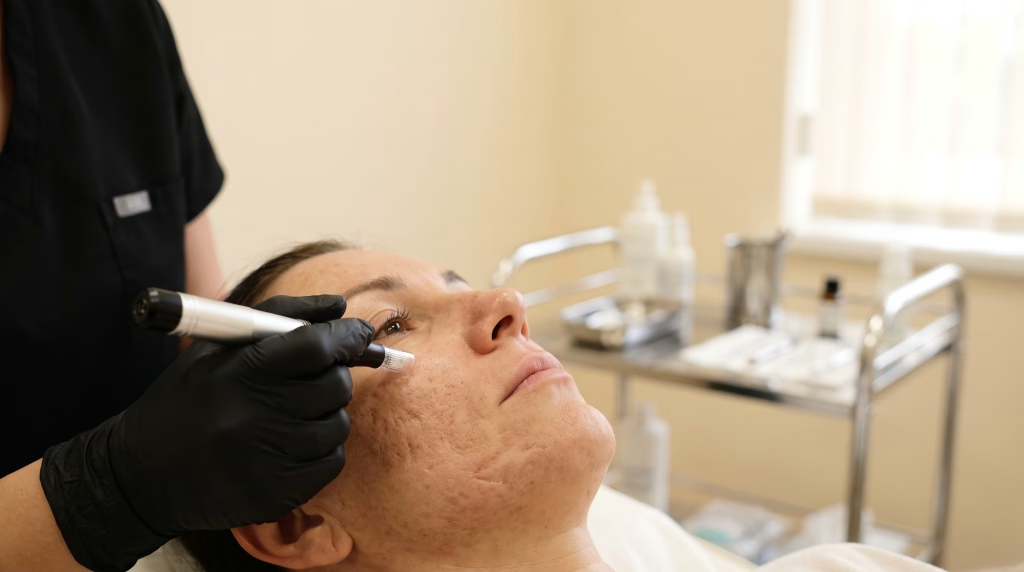
You’ve finally got your active acne under control, but the mirror still catches the damage left behind: soft rolling dips across the cheeks, a few sharply defined pits, and brown or red marks that make your skin look uneven. Chemical peels can improve some of that. They can’t erase every scar, and choosing the wrong peel for your scar pattern can leave you with irritation, wasted money or pigmentation problems.
I’m Natasha, sole practitioner at House of Glam HQ in Southsea, Portsmouth. With more than seven years of clinical experience, I assess the scar itself before recommending a treatment. For some clients, a controlled peel is a sensible starting point. For others, microneedling, subcision, focal TCA CROSS or laser makes more clinical sense.
What a Chemical Peel Can and Cannot Do for Acne Scars
A client might come to me several months after finishing isotretinoin, pleased that the breakouts have settled but frustrated by shallow rolling scars and a couple of deeper pits. The first question isn’t, “Which acid is strongest?” It’s, “What kind of scarring are we treating?”
A chemical peel creates a controlled injury in the skin. The treated layers shed, and the healing process can improve surface texture, uneven colour and some shallow depressions. A medium peel can reach the epidermis and portions of the upper dermis, and medical guidance recognises this depth as relevant to acne scars and uneven tone, as described by the Mayo Clinic’s chemical peel procedure guide.

Where a peel earns its place
A peel may be useful for:
- Shallow rolling scars: The edges can soften when the surrounding texture improves and collagen remodelling is stimulated.
- Soft boxcar scars: Broad, less sharply edged depressions may respond better than narrow, deep pits.
- Post-acne marks: A peel can help the appearance of uneven pigmentation, although colour change needs careful management.
- Rough texture: Surface irregularity often improves sooner than the scar depth itself.
The result is usually partial softening, not a completely flat complexion. The British Association of Dermatologists describes chemical peels as high-concentration acids that remove outer skin layers, while warning about irritation, burns, scarring and pigmentation changes in its acne treatment guidance.
Where a peel is the wrong tool
A deep ice-pick scar is narrow and extends downwards. Applying a broad peel over the face doesn’t target that channel precisely enough. Tethered rolling scars are pulled down by fibrous bands beneath the skin, so resurfacing the surface alone won’t release the attachment.
A peel also isn’t suitable as a substitute for treating active, severe acne. The NHS says chemical peels are recognised as an acne treatment, but they may not work and can’t be routinely recommended, as set out on its acne treatment page.
If your concern is established scarring, you can read my chemical peel treatment information before booking. The useful question is whether the peel matches the scar, not whether the treatment sounds powerful.
My clinical rule: If a scar has a deep wall, a sharp edge or a tether underneath, I’ll discuss alternatives rather than pretend a peel alone will correct it.
The Three Depths and Four Acids Worth Knowing
The word “peel” covers treatments with very different effects. Depth matters because it determines which skin layers are affected, how much recovery you’ll need and whether the treatment is relevant to your scar type.
Start with the depth ladder
| Depth | Common acids | Typical downtime | Best for |
|---|---|---|---|
| Superficial | Glycolic, lactic, lower-strength salicylic | Short recovery with visible dryness or flaking | Surface texture and post-acne marks |
| Medium | TCA at clinically selected strengths, higher-strength glycolic | More noticeable redness and peeling | Selected shallow to moderate scars |
| Deep | Higher-strength TCA or phenol under specialist medical supervision | Substantial recovery and risk | Specialist scar cases, not routine cosmetic treatment |
A superficial peel mainly affects the epidermis. Glycolic acid can smooth surface roughness, while salicylic acid is often selected when oiliness or congestion is part of the picture. These peels can support texture and marks, but they’re usually too limited for deep atrophic scarring.
A medium peel reaches further, into the upper dermal area. Treatment may become more relevant to shallow rolling or soft boxcar scars, but the risk of prolonged redness and pigment alteration also increases. The acid stays on for a clinician-determined period, and the endpoint matters more than chasing a stronger sensation.
A deep peel causes a more substantial injury and carries a much higher risk profile. Deep peels aren’t a casual answer to ordinary acne scarring, and I wouldn’t recommend selecting one from a menu without specialist assessment.
Four acids you may hear about
Glycolic acid is an alpha hydroxy acid used for exfoliation and surface texture. Salicylic acid is oil-soluble and may suit acne-prone skin, although a superficial salicylic peel isn’t a reliable answer for established deep scars.
Trichloroacetic acid, usually called TCA, is the acid most commonly used for acne scars according to a peer-reviewed review of acne and acne-scar treatment. That review describes TCA concentrations ranging from 35% to 100%, used alone or alongside Jessner’s solution, a combination peeling preparation, as reported in the peer-reviewed acne-scar review.
Phenol is a deep peeling agent with a more demanding safety profile. It isn’t the sensible first choice for most Portsmouth clients considering treatment for rolling scars or post-acne marks.
For a more detailed discussion of treatment choices, my sensitive skin chemical peel guide may help you understand why strength and skin tolerance need to be considered together.
Which Acne Scars Actually Respond to a Peel
You can get a useful first impression at home, but a mirror check isn’t a diagnosis. Wash your face, stand near a window and look at your skin from the side. Harsh overhead lighting can make every pore look like a scar, while soft front lighting can hide depressions.
Rolling scars
Rolling scars look like broad, shallow waves. Their edges aren’t sharply cut, and the skin may appear smoother when you gently stretch the area. These scars are among the better candidates for a peel when they’re mild and the main concern is surface unevenness.
A peel may soften the visible contrast between the depression and the surrounding skin. It won’t release a tether underneath, so a client with firmly bound rolling scars may need subcision, microneedling or a combination approach instead.
Boxcar scars
Boxcar scars have broader depressions with clearer edges. Soft, shallow boxcar scars can respond to resurfacing, especially when texture and colour irregularity sit alongside the depression. A sharply edged or deeper boxcar scar is less likely to improve sufficiently with a peel alone.
The treatment decision depends on depth, border definition, skin tone and how the scar behaves when the skin is stretched. That’s why photographs or a product description can’t replace an assessment.
Ice-pick scars
Ice-pick scars are narrow, deep pits. A general peel may improve the surrounding texture but often won’t reach the base of the scar in a focused way. TCA CROSS, which applies TCA directly into individual pits, is more specifically designed for this pattern, although it still needs careful selection and aftercare.
For tethered scars, subcision may be considered because it addresses the fibrous attachment below the surface. Laser, microneedling or filler may also enter the conversation depending on the scar structure and the client’s goals.
Darker skin tones need an especially careful discussion about post-inflammatory hyperpigmentation. The British Association of Dermatologists warns that chemical peels can cause pigmentation change, and the risk-benefit decision should include your previous history of dark marks, current skin condition and the planned depth.
I assess scar type rather than selling one procedure to everyone. You can also review my information about a Portsmouth clinic for acne scarring before arranging an appointment.
A peel can improve the background texture around a scar. It can’t always correct the structure that created the scar.
What Happens at a Consultation and on the Day
I start with a consultation. We’ll discuss when the acne settled, any medication you’ve used, how your skin heals and whether you’ve experienced pigmentation after spots, cuts or previous treatments.
I’ll assess the scar pattern in person, including whether the depressions are rolling, boxcar or ice-pick scars. We’ll also talk about what “improvement” means to you. If you’re hoping for every scar to disappear, I’ll explain why that isn’t a realistic promise before any treatment is planned.

Before the peel
Preparation depends on your skin and the peel selected. We may ask you to pause retinoids, exfoliating acids or other irritating products before treatment. Don’t start or stop prescription medication without speaking to the clinician who prescribed it.
A patch test may be appropriate, particularly if you have a history of sensitivity or reaction. I’ll also check whether your acne is active, whether you’ve recently used isotretinoin and whether another condition could make peeling unsafe.
During treatment
On the day, I cleanse the skin thoroughly and protect areas that need extra care. The chosen solution is applied methodically, and the timing is controlled according to the skin’s response and the treatment plan. You may feel warmth, tingling or stinging, but increasing discomfort should always be reported.
Some medium-depth peels create frosting, a temporary white or grey appearance where the acid has reached its intended endpoint. Frosting isn’t something you should try to judge yourself at home, and it doesn’t mean that a stronger peel automatically gives a better result.
After the solution is removed or neutralised where appropriate, I’ll apply soothing post-treatment products and give you written aftercare. Your skin may look flushed and feel tight immediately. The first 24 to 72 hours are when redness, sensitivity, dryness or early flaking can become more noticeable, although the exact response varies.
Downtime, Aftercare and Real Risks
Plan recovery around your diary, not around a promise that your skin will look normal by a particular morning. A superficial peel may leave you with tightness, dryness and visible flaking, while a medium peel produces a more obvious response and may make work, social events or photographs uncomfortable for a period.

A practical recovery plan
During the early phase, skin can feel warm, tight or sensitive. Flaking may develop over the following days. Medium-depth treatment can involve more visible peeling and redness, so I’d avoid booking it immediately before a wedding, holiday or important client-facing event.
Your aftercare should stay simple:
- Use daily SPF: Broad-spectrum sun protection helps reduce avoidable irritation and pigment change while the skin heals.
- Leave peeling skin alone: Don’t pull, scrub or pick at flakes, because mechanical trauma can worsen inflammation and increase the risk of scarring.
- Pause active products: Retinoids, exfoliating acids and fragranced products should be stopped for the period advised for your peel.
- Keep heat controlled: Avoid hot environments and strenuous exercise during the early recovery period, particularly if your skin feels hot or uncomfortable.
- Follow the supplied plan: Use the cleanser, moisturiser and recovery products recommended for your skin rather than adding products from your existing routine.
The Portsmouth skin clinic recovery tips give further practical guidance on planning around visible recovery.
Risks and reasons to postpone
The British Association of Dermatologists lists irritation, burns, scarring and pigmentation changes among possible complications. Infection and persistent redness are also risks that need to be discussed before treatment, even when the peel is applied carefully.
I wouldn’t treat over an active acne flare, broken skin or an untreated infection. Treatment may also need to be postponed after recent isotretinoin use. If isotretinoin has been used within six months, tell me before booking, because this is relevant to suitability. Pregnancy can rule out some acids, and certain inflammatory or pigment conditions may require medical advice first.
NHS commissioning guidance in Cheshire and Merseyside takes a strict view of acne-scar treatment, stating that chemical peels aren’t routinely funded unless scarring is severe and has persisted for at least one year after acne has cleared. The policy places treatment within a consultant dermatologist-led pathway and specifically names glycolic acid as the peel that may be considered, as set out in the NHS commissioning policy.
Chemical Peels Compared to Microneedling, Lasers and Other Options
A peel is attractive because it treats the surface without needles or a laser handpiece. That doesn’t make it the strongest option for every scar. The right choice depends on whether the problem is surface texture, collagen loss, tethering or a sharply defined pit.

How the options differ
| Option | More suitable for | Downtime | Session planning | Combination role |
|---|---|---|---|---|
| Superficial chemical peel | Surface texture and post-acne marks | Usually limited, with flaking | Often planned as a course | May support texture-focused care |
| Medium chemical peel | Selected shallow rolling or soft boxcar scars | More visible redness and peeling | Planned around skin response | May complement collagen-focused treatment |
| Microneedling | Depressed scars and uneven texture | Usually short recovery, but varies | Often requires a course | Can follow or alternate with suitable peels |
| Fractional laser | Selected deeper textural scars | Can be more substantial | Requires careful skin and scar assessment | May be combined only with appropriate spacing |
| Subcision | Tethered rolling scars | Bruising and swelling may occur | Depends on the number and structure of scars | Often paired with resurfacing |
| Hyaluronic acid filler | Volume-related depressions | Swelling or bruising is possible | Review depends on the area and product | May support subcision or resurfacing |
Microneedling creates controlled needle channels to stimulate repair beneath the surface. It may be more useful than a peel when the main issue is depressed scarring rather than discolouration. You can read about microneedling treatment Portsmouth if that’s the route you’re considering.
Fractional laser can deliver more controlled resurfacing for selected scars, but it also requires a careful discussion about heat, healing and pigmentation risk. Subcision addresses tethering, which a peel can’t release. Filler can support a volume-related depression, but it doesn’t remove the scar and isn’t permanent. Hyaluronic acid filler typically lasts six to 18 months depending on the area, with lips usually lasting six to 12 months because they move more, and it can be reversed with hyaluronidase.
The honest combination answer
Some scars need more than one mechanism. A peel may improve surface texture, while microneedling addresses collagen induction, subcision releases a tether and focal treatment targets an ice-pick pit. These procedures shouldn’t be stacked casually, and spacing must be decided after examining your skin.
Price is also difficult to compare without a consultation. Treatment area, clinician, equipment, peel depth and aftercare all affect the quote. I’d rather give you a clear plan after assessment than attach a misleading universal price to a scar treatment.
Realistic Results, Costs and Booking a Peel in Portsmouth
Most clients should expect a gradual softening of shallow scars and a smoother-looking surface, not complete disappearance. Marks may respond differently from depressions, and the result depends on scar depth, skin tone, active acne history, aftercare and whether another procedure is needed.
Superficial peels are commonly planned as a course because their effect is lighter and cumulative. A medium peel may be considered as a more substantial single treatment or as part of a wider plan, but the number of sessions must be decided after assessing your skin. I won’t promise a fixed result or prescribe a course before seeing the scars in person.
There isn’t a safe universal UK price band for acne-scar peels. A low-cost superficial peel and a clinically supervised medium-depth treatment aren’t equivalent services, and a scar plan that includes microneedling, subcision or laser will have a different cost again. Ask what’s included, what recovery is expected and what happens if a peel isn’t suitable.
At House of Glam HQ in Southsea, Portsmouth, I provide a consultation to assess scar type, skin tone and treatment suitability. A standalone consultation is £15, and that comes off your treatment if you go ahead. Book the treatment directly and the consultation happens at the start of the appointment with no separate fee. I may recommend a targeted chemical peel, microneedling or a combination plan, with written aftercare and realistic expectations. The clinic has a 5.0 rating across Google, Fresha and Facebook, which reflects client feedback but doesn’t guarantee an individual outcome.
For a consultation, email houseofglamhq@gmail.com or call 07831 846273. If you’re comparing options for chemical peel acne scars, bring your current skincare and a list of any acne medication you’ve used so we can make the appointment clinically useful.
House of Glam HQ offers targeted chemical peels and skin treatments for acne scarring, with treatment choice based on your scar pattern rather than a one-size-fits-all peel. Visit House of Glam HQ to arrange a consultation in Southsea, Portsmouth, or contact Natasha on houseofglamhq@gmail.com or 07831 846273.

