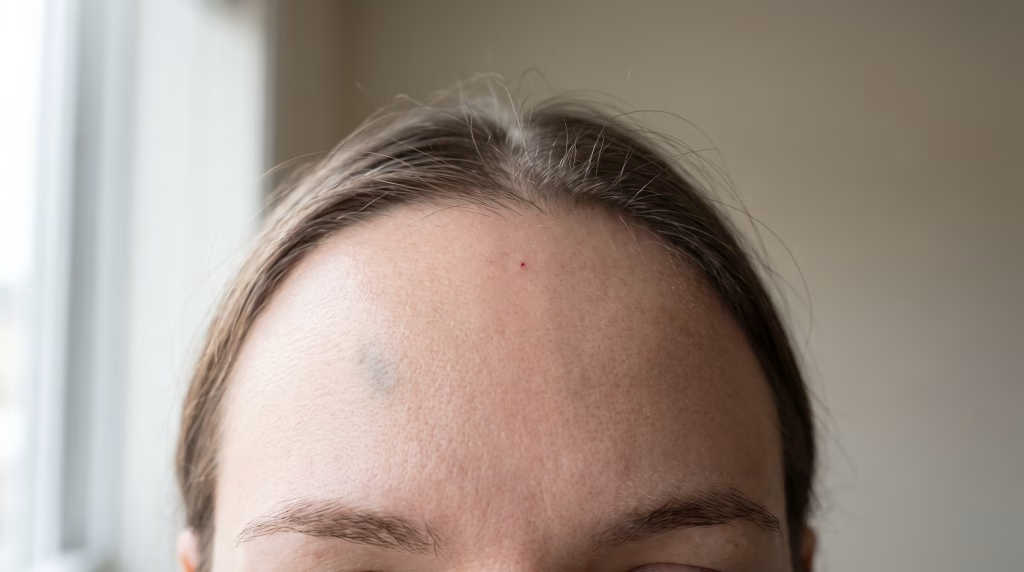
You've had anti-wrinkle injections around your forehead or eyes, and now you're studying your face in the car mirror, wondering whether that tiny bump, faint bruise or heavy feeling is normal. I'm Natasha, the sole practitioner at House of Glam HQ in Southsea, Portsmouth, and I've been carrying out clinical treatments for more than seven years. Most reactions I see are mild and settle without intervention, but vague reassurance isn't enough when a treatment involves a prescription medicine.
This guide separates expected local reactions, symptoms that deserve a call to your injector, and the rare warning signs that need urgent medical help. The UK regulator has strengthened warnings for botulinum toxin type A products after rare cases of botulism, with symptoms potentially appearing up to four weeks after treatment, so patients should know what to watch for beyond the injection site (MHRA safety update).
What You Will Probably Notice After Anti-Wrinkle Injections
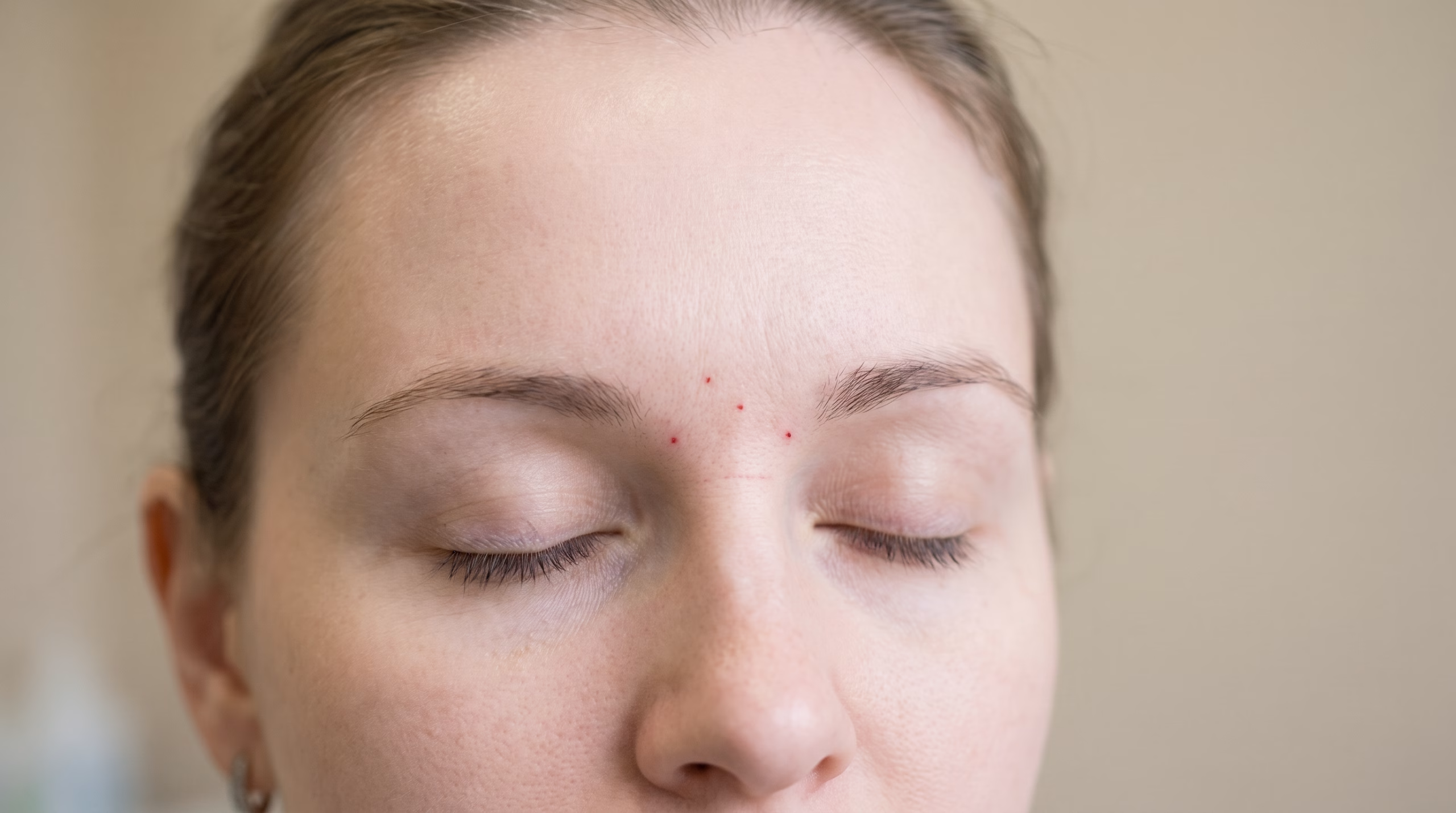
You're sitting in the waiting area of a small clinic after treatment around the eyes or forehead. The most obvious marks are usually the tiny raised bumps at each injection point. They flatten quickly, often within about twenty minutes, while faint pinkness may have faded by the time you reach the car.
A small bruise near the crow's feet is also possible. It can look more noticeable later that day, especially if a tiny blood vessel has been caught, but that doesn't automatically mean anything has gone wrong. Mild tenderness, a tight sensation or a dull headache can happen too.
Practical rule: A mark at the injection site is usually much less concerning than a new symptom affecting swallowing, breathing, speech or strength elsewhere in the body.
The full effect doesn't appear immediately. Results commonly begin to show after three to five days, then settle at around fourteen days. I explain this because patients can become anxious if one eyebrow seems higher than the other on day two, or if one side appears to respond before the other. Early changes aren't the finished result.
The Botox results timeline from Natasha gives a clearer day-by-day explanation of what may change as the treatment takes effect. The brand name Botox is used commonly in conversation, but the treatment itself is anti-wrinkle injections, using botulinum toxin type A.
Small bumps, mild pinkness and a little bruising sit in the expected category. They're local, visible and usually short-lived. The rest of this guide deals with reactions that need observation, a clinical review or urgent action.
How Anti-Wrinkle Injections Work and Why That Causes Side Effects
Anti-wrinkle injections, commonly known as Botox, the brand name for botulinum toxin, temporarily reduce the nerve signal that tells a selected facial muscle to contract. When that muscle moves less, the skin above it creases less and expression lines usually soften.
I describe the effect like a dimmer switch, not a light-off switch. The aim is generally to reduce excessive movement while retaining useful expression. If too much effect reaches a nearby muscle, though, that muscle may also become weaker.
The product is placed into specific muscles, but its effect isn't confined to a perfectly sharp dot. It can spread a small distance from the injection point. That's why side effects are usually linked to nearby muscles receiving an unintended amount of toxin, rather than damage to the skin itself.
A placement that sits too close to the muscles controlling the upper eyelid can contribute to eyelid drooping. Treatment that reduces the wrong part of the forehead muscle can leave the brow feeling heavy. Effect around the mouth can produce a temporary uneven smile. These reactions can also reflect individual anatomy, muscle strength and how the face moves before treatment.
The wrinkle injections from a sole practitioner page explains the treatment in practical terms. A face-to-face prescriber consultation is required before anti-wrinkle treatment, and an online form is never a substitute for it.
Common Side Effects You Can Realistically Expect
After treatment, the first changes are usually small and local. The needle may leave redness, slight swelling, tenderness or a pinpoint bruise. A mild headache can appear during the first few hours. Some patients also describe short-lived fatigue or a flu-like feeling.
NHS hospital patient information lists injection-site pain or bruising, fatigue, headache, temporary muscle weakness, rash or itching, and occasional swallowing problems among the possible effects of botulinum toxin treatment. The setting and dose differ between medical and cosmetic treatment, but the list is useful. A reaction is not always visible on the skin.
A UK review of cosmetic botulinum toxin recorded an overall complication rate of 16% across 17,352 injection sessions. Bruising occurred in 5% of sessions, headache in 3%, and facial paresis in 2%, with the recorded reactions mainly minor (UK clinical review). These figures describe the reviewed evidence, not an individual prediction. Your result depends on the area treated, your anatomy, injection technique and how your body responds.
Common reactions at a glance
| Side effect | Approximate frequency | Typical duration |
|---|---|---|
| Bruising | 5% of sessions in the cited UK review | Often several days, sometimes longer |
| Headache | 3% of sessions in the cited UK review | Usually short-lived |
| Facial paresis | 2% of sessions in the cited UK review | Temporary, assessed clinically |
| Redness, swelling or tenderness | Commonly described in NHS patient information | Usually hours to a few days |
| Fatigue or flu-like feeling | Listed in NHS patient information | Usually short-lived |
A separate MHRA registry analysis recorded 188 adverse events from 1991 to 2020, alongside an estimated 900,000 cosmetic procedures annually (MHRA Yellow Card scheme). That record cannot capture every mild reaction. Treat it as a formal reporting picture, not a complete count of what patients experience.
Bruising can spread slightly downwards as it fades, particularly around the eyes. It may take up to a week or longer to clear. The notes in my results timeline explain preparation and practical expectations. If redness, swelling, pain or another reaction is worsening rather than settling, contact the treating clinic for advice.
Less Common Reactions and What Causes Them
A drooping upper eyelid, known as ptosis, is different from a small injection-site bruise. It can happen when the product affects muscles involved in lifting the eyelid. A heavy brow may occur when the frontalis muscle has been weakened too low, while an asymmetric smile can result when nearby muscles around the mouth are affected unevenly.
Other reactions include a pronounced outer brow, sometimes called a Spock brow, dry eye, a headache that persists beyond the initial period, or bruising that tracks downwards. These effects are usually local rather than systemic, but they can be frustrating because they're visible and may alter how the face feels when you speak or smile.
What usually helps
Ptosis generally improves as the toxin's effect wears off, often over several weeks. A prescriber may consider prescription drops such as apraclonidine or oxymetazoline to raise the lid temporarily. Those medicines aren't suitable for everyone, so they need proper clinical assessment.
An uneven result may settle as both sides reach their final effect. Gentle eyebrow exercises may be suggested in some cases, but forceful massage or adding more product too early is rarely a sensible response. The better approach is assessment, documentation and time.
Dry eye tends to improve as activity around the eye returns. Lubricating treatment may be appropriate, depending on the cause and your symptoms. If your eye feels painful, your vision changes or you can't close the eye properly, contact your injector or seek medical advice rather than waiting without guidance.
The complimentary review at House of Glam HQ takes place at fourteen days, when the result has had time to settle. If a reaction hasn't improved by that point, your injector should assess it properly rather than treating your concern as an opportunity to sell another vial.
Rare but Serious Reactions and When to Seek Help
The rare risk patients need to understand is distant spread of botulinum toxin beyond the treated area. The MHRA warns that symptoms can appear up to four weeks after treatment and may include difficulty swallowing, slurred speech, difficulty breathing and muscle weakness (MHRA professional safety information).
These symptoms are uncommon in cosmetic treatment, but they aren't theoretical. A UK hospital patient information resource also warns that very rarely, toxin can spread beyond the injection site and cause generalised weakness severe enough to require hospital care, particularly where breathing or swallowing is affected (UK NHS hospital guidance).
Local reaction versus systemic red flag
| Reaction | Likely cause | Typical duration | Action required |
|---|---|---|---|
| Small bruise or pink injection point | Needle irritation or a small vessel | Days, sometimes longer for bruising | Follow aftercare and contact the clinic if worsening |
| Heavy brow or drooping eyelid | Unintended effect on a nearby facial muscle | Often several weeks | Arrange clinical assessment |
| Uneven smile | Nearby mouth muscle affected | Usually temporary | Contact the injector for review |
| Difficulty swallowing | Possible distant toxin spread | Can develop later | Seek urgent medical help |
| Slurred speech or widespread weakness | Possible systemic toxin effect | Requires assessment | Call 111 or attend A&E |
| Difficulty breathing or wheezing | Possible systemic or allergic reaction | Emergency symptom | Call 999 immediately |
Facial swelling, hives, wheezing, blurred vision or double vision that doesn't settle also need prompt medical attention. Breathing difficulty is an emergency. Don't wait for a routine appointment, and don't rely on a message to the clinic as your only action.
A droopy eyelid is usually a local, cosmetic complication that needs assessment and patience. Difficulty swallowing or breathing is a medical problem. That distinction matters as much as knowing the possible side effects of dermal filler injections, because every injectable treatment needs its own safety advice.
A responsible prescriber will ask about conditions such as myasthenia gravis, Eaton-Lambert syndrome, pregnancy and breastfeeding. They'll also ask about swallowing problems, neurological symptoms and relevant medicines before prescribing.
How to Reduce Your Risk Before and After Treatment
Risk reduction starts before the needle appears. In the UK, botulinum toxin is a prescription-only medicine, and prescribing guidance requires a face-to-face consultation with a qualified prescriber before it's prescribed. An online tick-box form isn't an adequate replacement for a proper assessment.
Tell the prescriber about every medicine and supplement you take. That includes antibiotics, blood thinners, muscle relaxants, fish oil, vitamin E and St John's Wort. Don't stop prescribed medicines to avoid bruising unless the clinician managing that medicine has told you it's safe.
Before treatment
- Check the prescriber: Confirm that the prescriber is a suitably qualified doctor, dentist or independent nurse prescriber registered to practise in the UK.
- Ask about the product: You can ask to see the product information, including the brand, batch number and expiry details.
- Discuss suitability: Mention allergies, neurological conditions, swallowing problems, pregnancy, breastfeeding and previous cosmetic treatments.
- Be realistic about dosing: Conservative placement may be preferable when preserving movement matters more than maximum muscle relaxation.
After treatment
Stay upright for four hours and avoid rubbing or massaging the treated area for twenty-four hours. Skip strenuous exercise, saunas, alcohol and facials for the rest of the day, and avoid lying face-down.
The first day matters because rubbing, pressure and heat may increase irritation or encourage unwanted movement of product away from the intended area. Makeup should only go on once the injection points have closed, and application should be gentle.
Hormonal change affects facial skin too, and anti-wrinkle injections will not address every cause of a line. If the concern is texture, dryness or volume rather than movement, the treatment plan should say so.
The single strongest practical safeguard is choosing an injector who understands facial anatomy, uses controlled dosing and knows how to respond when a result isn't behaving as expected. My Botox aftercare for your best result guidance sets out the main restrictions in plain language.
How I Approach Anti-Wrinkle Injections at House of Glam HQ
At House of Glam HQ in Southsea, I don't treat anti-wrinkle injections as an injection-only appointment. I assess whether treatment suits you first, then discuss what you want changed and what the treatment won't do.
That conversation covers your medical history, current medicines, allergies, previous cosmetic procedures, neurological symptoms, swallowing problems, pregnancy and breastfeeding. I also look at how your facial muscles move at rest and during expression. A line may be visible without being a good target for toxin, and a strong treatment isn't automatically a better treatment.
I explain the possibility of swelling, bruising, temporary muscle weakness, ptosis and uneven movement before treatment. The £25 prescriber consultation is legally required before a first treatment and is paid once per prescription period. It is charged on top of the treatment price, and it is published up front rather than appearing as an unexplained extra.
What happens in the appointment
I use a measured approach, record the product and units, and map placement to your facial movement. Aftercare is written clearly so you're not trying to remember instructions while walking out of the clinic.
Anti-wrinkle injections are priced at £170 for one area, £210 for two areas and £250 for three areas. Advanced options include a lip flip, bunny lines, brow lift and chin dimpling at £150 each, masseter treatment at £180, and hyperhidrosis treatment from £350. Results usually begin within three to five days, settle at fourteen days and last around three to six months. Klarna is available on treatments over three monthly payments.
The complimentary fourteen-day review applies to anti-wrinkle injections only. It gives me the right point at which to assess asymmetry or concerns. It doesn't mean every difference should be corrected, because additional product before the first treatment has settled can create a second problem.
If a reaction falls outside the expected pattern, contact the clinic. Breathing, swallowing, speaking or widespread weakness symptoms need emergency care, not a routine review. My aim is informed consent, restrained treatment and access to appropriate follow-up.
Anti-Wrinkle Injection Side Effects Questions I Get Asked Most
How long do side effects last?
Redness, small bumps and tenderness usually settle within hours or a few days. Bruising can take one to two weeks to fade. Eyelid or brow ptosis is uncommon and generally improves over several weeks as the botulinum toxin effect wears off, but the clinic should assess it.
Can I prevent bruising?
You can reduce avoidable irritation by following pre-treatment advice and avoiding alcohol or strenuous exercise around treatment. Don't stop aspirin, prescribed blood thinners or other medicines without medical advice. Supplements such as vitamin E, fish oil and omega oils should be discussed with the prescriber rather than stopped automatically.
When can I wear makeup?
Follow the instructions given by your injector. In general, wait until the injection points have closed and avoid rubbing or applying pressure for twenty-four hours.
Are headaches normal?
A mild headache can happen, particularly shortly after treatment. A severe, persistent or worsening headache should be reported to the clinic and assessed appropriately.
When should I seek urgent help?
Breathing or swallowing difficulty, slurred speech, facial or widespread weakness, marked swelling, wheezing or a rapidly worsening allergic reaction need immediate medical attention. Call 999 for severe breathing problems, or call 111 for urgent symptoms that aren't immediately life-threatening.
Can I have treatment while pregnant or breastfeeding?
Anti-wrinkle injections are generally deferred during pregnancy and breastfeeding. Tell your prescriber your situation and follow current clinical guidance.
| Question | Practical answer |
|---|---|
| Are small bumps normal? | Usually, yes. They commonly flatten quickly after injection. |
| Is bruising a sign of poor treatment? | No. A small bruise can occur even with careful technique. |
| Should I massage an uneven area? | No. Contact the injector and follow their advice instead. |
| Does a drooping eyelid need emergency care? | It needs clinical assessment, but it's different from breathing or swallowing difficulty. |
| Can symptoms appear later? | Yes. UK safety guidance states that serious toxin-spread symptoms can appear up to four weeks after treatment. |
| Should I wait if I'm struggling to swallow? | No. Seek urgent medical help. |
If you're unsure whether a symptom is expected, contact House of Glam HQ rather than searching online or adding another treatment yourself.
Book Anti-Wrinkle Injections in Portsmouth
I carry out every treatment myself at House of Glam HQ, 1A Auckland Road East, Southsea. One area is £170, two areas £210 and three areas £250, plus the £25 prescriber consultation that is legally required before a first treatment and paid once per prescription period. The fourteen-day review is included. Every price is published on the anti-wrinkle injections page before you book, and Klarna is available on treatments over three monthly payments.
- Book on Fresha: Book with Natasha on Fresha
- WhatsApp: Message Natasha on WhatsApp
- Call: 07831 846273
- Email: houseofglamhq@gmail.com

