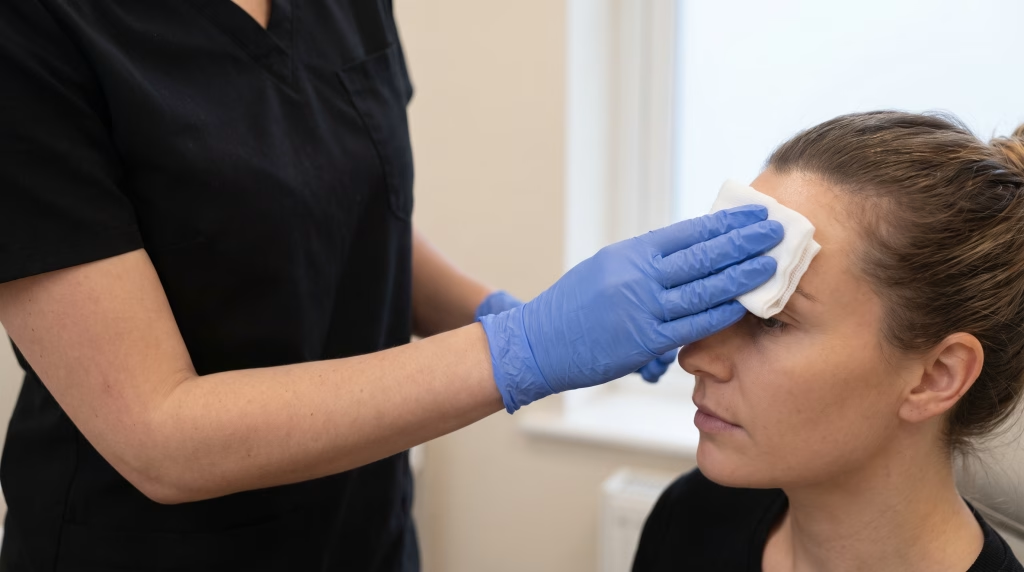
Stay upright for 4 hours after anti-wrinkle injections, don’t rub or massage the area for 24 hours, and avoid heat, strenuous exercise, alcohol, and lying flat in that immediate window. Those are the core anti-wrinkle injection aftercare instructions that matter most, because the goal is simple: no heat, no pressure, and no disturbing the product while it settles.
If you’ve just had treatment, or you’re booked in and trying to remember what matters, this is the part to focus on. There is a lot of noise online. Some of it is harmless. Some of it makes aftercare sound far more complicated than it needs to be. I’m Natasha, sole practitioner at House of Glam HQ in Southsea, Portsmouth, and after 7+ years in clinic I can tell you this plainly: patients generally don’t need a dramatic recovery plan, they need clear instructions and the reason behind them.
Anti-wrinkle injections (commonly known as Botox, the brand name for botulinum toxin) are a prescription-only medicine. If it’s your first treatment, a prescriber consultation is legally required, and that’s £25. The 14-day review is included. From there, aftercare is mostly about protecting placement, reducing bruising risk, and not doing anything daft in the first day. Full written aftercare comes with every anti-wrinkle injection treatment in Portsmouth at House of Glam HQ — this guide is the expanded version.
Your Essential Aftercare Starts Now
You leave the clinic feeling fine, then a few hours later real life kicks in. A hot shower. Gym plans. A glass of wine that evening. A quick facial booked for the next day. This is usually where people accidentally chip away at a good result.
The first day does not need to be complicated. It does need a bit of common sense.
After 7+ years treating clients in clinic, I keep aftercare focused on what actually matters: keep the product where it was placed, keep heat down, and keep pressure off the area. A lot of the online advice goes off course here. Fancy skincare will not “lock in” your result, but poor aftercare in the first day can increase swelling, irritation, and the chance of bruising.
My core advice is simple:
- Stay upright for 4 hours after treatment
- Don’t rub, press, or massage the treated areas for 24 hours
- Skip strenuous exercise for at least 24 hours
- Avoid heat such as hot showers, saunas, steam rooms, hot tubs, and intense sun
- No alcohol for at least 24 hours
- Don’t lie flat in that early settling period
That list covers the rules that make the biggest difference for most clients. The details matter too. People tend to remember “don’t touch it” and forget the less obvious things, like booking a facial too soon, sleeping face-down, or letting very hot water hit the treated area on the same day. Those are the habits I end up warning about most, because they sound harmless and often are not.
I would rather give you six clear instructions than twenty fussy ones you will ignore.
Practical rule: For the first day, avoid heat, pressure, and anything that increases blood flow more than normal.
If you want the treatment basics before you book, including who it suits and pricing, read the anti-wrinkle injections Southsea page. Treatments usually start from £170 for 1 area. I am always happier when someone understands the process properly before going ahead.
The 24-Hour Rules Explained

The logic behind aftercare is simpler than the internet makes it sound. It comes down to two principles: don’t add heat, and don’t add pressure.
Why staying upright matters
After treatment, I want the product to stay where I placed it. That’s why I tell clients to stay upright for around four hours and not lie flat straight after. It’s a straightforward precaution to reduce the chance of unwanted movement while everything settles.
That doesn’t mean you need to pace around your kitchen for four hours. Sit upright, work, read, go about your day normally. Just don’t go for a nap, flop face-down on the sofa, or head off for a massage.
Why touching the area is the biggest mistake
If there’s one rule I want people to remember, it’s this one. I ask clients to avoid rubbing, massaging, or pressing the treated areas for a minimum of 24 hours, because mechanical pressure can displace the product into nearby muscles and lead to unwanted effects such as brow droop or asymmetry.
That’s why I’m fussy about more than obvious massage. It also includes:
- Leaning on your face when you’re scrolling in bed
- Firm cleansing tools or aggressive exfoliation
- Heavy-handed skincare application
- Pressing hard with makeup brushes
- Face-down sleeping straight after treatment
If pressure can shift it, skip it.
Why heat, alcohol and exercise are grouped together
These all push things in the wrong direction. Heat increases blood flow. Hard exercise increases blood flow. Alcohol can make bruising worse. None of that helps in the immediate settling period.
So for the first 24 hours, keep things calm. No gym session, no sauna, no steam room, no hot yoga, no drinks “just because it’s only one”. A quiet day gets you further than trying to test the rules.
A normal gentle walk is usually fine. A HIIT class isn’t. There’s a difference.
Aftercare Tips People Often Forget

This is the bit other guides often skim past, and it’s where people accidentally undo their own good result.
Facial treatments need a pause
I don’t want anyone booking anti-wrinkle injections and then lying flat for a facial, having a facial massage, or going in for microneedling a few days later. That’s the sort of thing people forget to ask about.
Guidance referenced in this aftercare summary covering exercise and facials advises avoiding strenuous exercise for up to 2 days and facials for 10 days. In practice, I’m cautious with anything that involves pressure, friction, or lying flat, and I’d hold off on facials, facial massage, microneedling, and similar treatments for a couple of weeks.
If you also have skin treatments at different times of year, my honest chemical peel aftercare advice helps explain why timing matters when your skin has already been treated.
Heat isn’t just the gym
A lot of clients remember “no exercise” and forget the bigger issue is often temperature.
Avoid:
- Saunas and steam rooms because the heat is the problem
- Hot yoga because it combines heat with exertion
- Hot tubs because they keep the face warm for longer than people realise
- Very hot showers straight after treatment if you’re prone to flushing
And yes, this still links back to the same two rules. No heat. No pressure.
Sleep and makeup matter more than people think
The first night, try to sleep on your back rather than on your face. It doesn’t need to be perfect. I know not everyone naturally sleeps like a statue. But if you can avoid grinding one side of your forehead or brow into the pillow, that helps.
Makeup is another one. Be gentle. Light application is one thing, but scrubbing with a dense brush or pushing heavy skincare into the area is another.
You don’t need to baby your face for weeks. You do need to stop treating it like a floor tile for the first day.
How You Can Help Minimise Bruising
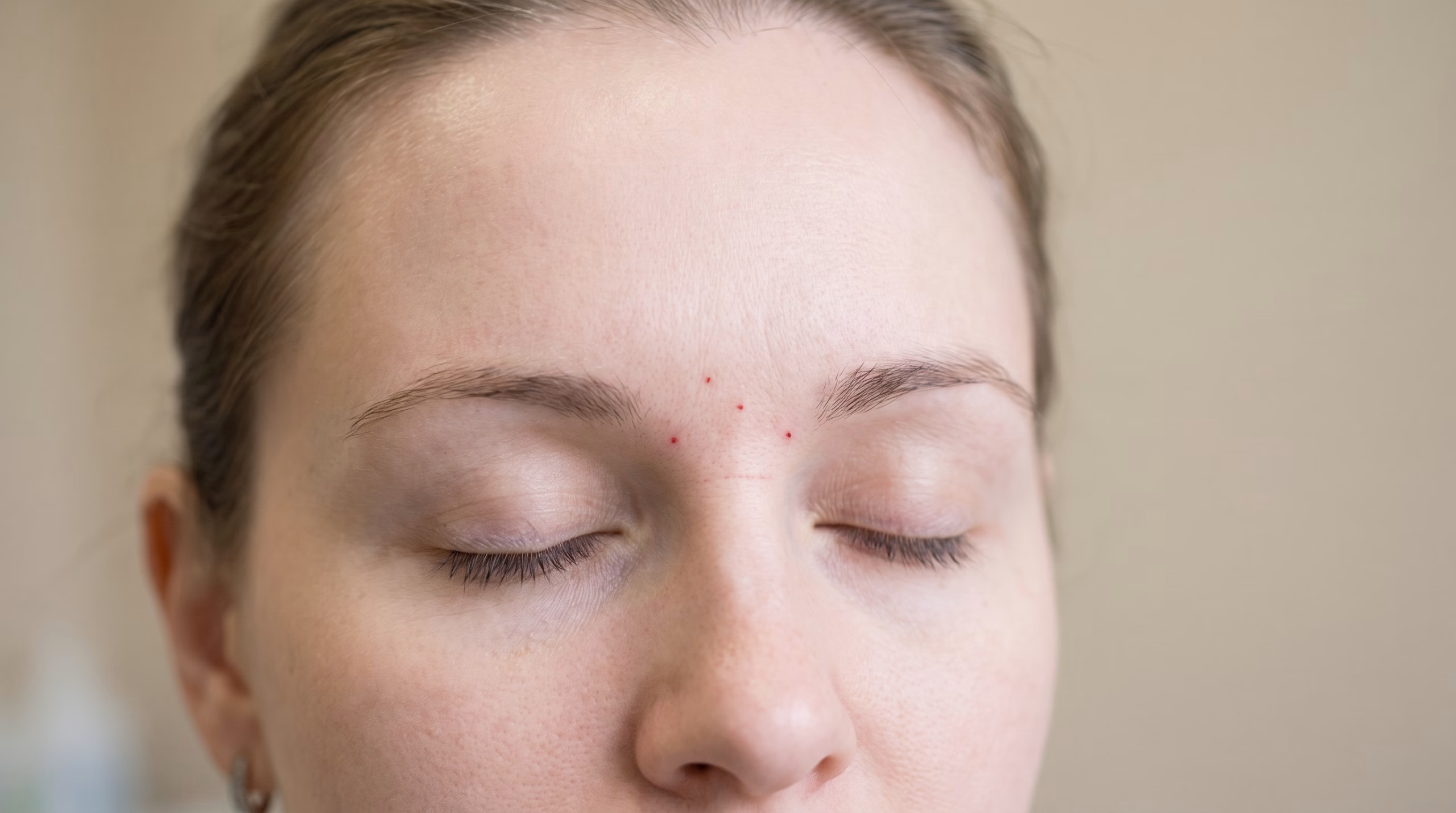
Let’s be honest about bruising. It can happen, but anti-wrinkle injections use a very fine needle, so significant bruising is uncommon. Small steps can still stack the odds in your favour.
Before treatment
If it’s medically safe for you, avoiding blood-thinning factors in the days before treatment can help reduce bruising. That includes alcohol the night before and supplements people often forget about, such as fish oil, vitamin E and high-dose omega.
One line needs to be crystal clear: never stop any prescribed medication without asking your GP. That is a medical decision, not a beauty one.
After treatment
A UK-aligned protocol set out in this alcohol and aftercare guidance advises avoiding alcohol for at least 24 hours to reduce bruising risk. Staying upright and avoiding heat and strenuous exercise in that first day helps too.
A few simple reminders:
- Be honest about supplements because they can matter
- Keep post-treatment calm so blood flow doesn’t ramp up
- Expect a tiny mark sometimes because a needle has still entered the skin
Arnica is the other thing clients ask me about a lot. My honest answer is that the evidence is mixed. Some people feel taking or applying arnica around treatment helps them bruise less and settle quicker. I don’t present it as a miracle, but it’s generally harmless and plenty of people like using it.
And if you’re comparing healing patterns across injectable treatments, lip filler behaves very differently. I’ve written about that in this timeline for lip filler swelling.
The Honest Truth About Making Your Results Last Longer
You leave your appointment, buy a new serum, drink more water for a week, and hope it will keep your anti-wrinkle treatment going for longer. I understand why people think that. The beauty industry loves to blur the line between improving skin quality and prolonging muscle relaxation.
Here’s the honest version from clinic life. Anti-wrinkle injections usually last around 3 to 6 months, and the biggest factors are your metabolism, your muscle strength, and how expressive that area is day to day. Skincare can improve how the skin looks while the treatment is working. It does not add extra months to the effect in the muscle.
That distinction matters.
How skincare helps
Good skincare supports the finish of your result. If your skin is dehydrated, sun-damaged, or irritated, even a well-placed treatment will not look as polished as it could. I tell clients to focus on the basics that make a visible difference:
- Daily SPF, because UV damage breaks down collagen and makes lines look worse
- Hydration, because plump, settled skin reflects light better and shows the result more cleanly
- Active skincare used sensibly, such as retinol or vitamin C once the skin has fully settled and there is no irritation
I also spend a lot of time correcting the myth that more products means better longevity. It doesn’t. Good skin maintenance helps your overall appearance. It does not change how long the injected muscle stays relaxed.
The aftercare points people forget are often the ones that protect the result best in the early stage. Leaving the area alone, skipping facials for a short period, and not crushing your face into the pillow straight away matter more than chasing a miracle cream. Those choices help you avoid avoidable disruption while the treatment settles.
If one of your long-term goals is better skin quality as well as softer movement, my honest guide to increasing collagen is a useful next read.
I’d rather be straight with you than oversell it. Treatments can soften lines and freshen the face. Skincare can improve skin condition. They work well together, but they do different jobs.
Your Follow-Up Is Part of the Treatment
You walk out feeling fine, then spend the next few days checking the mirror and wondering if it is working evenly. That is normal. Anti-wrinkle injections do not show their final result on the day of treatment, and judging them too early is one of the main reasons people get anxious for no good reason.
I tell clients to give it the full two weeks to settle properly. That is why the 14-day review is included with every treatment. I use that appointment to check movement, symmetry, and how the product has settled in your face, not in theory. If a small adjustment is appropriate, I do it then.
Follow-up matters because faces do not respond in exactly the same way every time. Dose, muscle strength, expression pattern, and how strongly you use one side of the face can all affect the finish. Seeing you again lets me assess the actual result rather than guessing based on a photo or a message.
Why continuity matters
There is a big difference between reading notes and knowing a face over time. Because I do the treatment and the review myself, I know what was placed, how you responded last time, and whether there is a pattern that needs an individualized plan next time. That kind of continuity usually leads to more consistent results.
It also gives clients somewhere clear to go if they are unsure. I would always rather you ask than sit at home spiralling over something minor.
If something feels off, or you’re unsure whether what you’re seeing is normal, message me.
When to ask for help
A little redness, a small raised bump at an injection point, or mild bruising can happen early on and usually settles. What I want clients to watch for is anything that feels unusual for them, gets worse rather than better, or does not seem to fit what we discussed in clinic. In that situation, contact me promptly or seek medical advice.
One final practical point for new clients. Before a first treatment, a prescriber consultation is legally required and costs £25. It is part of making sure the treatment is appropriate, safe, and planned properly from the start.

