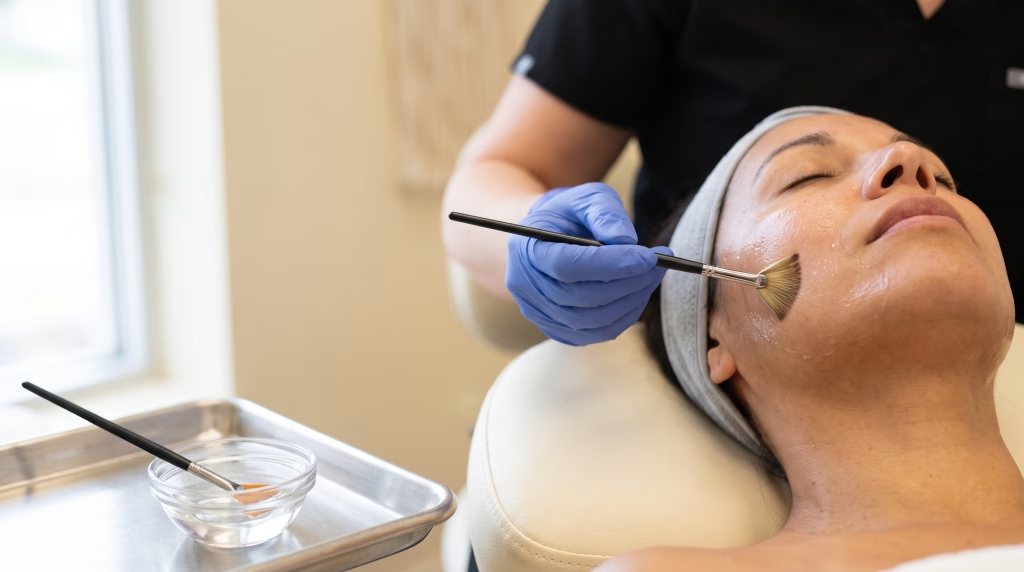
You’ve got a simple choice on paper, but the skin doesn’t always make it simple in practice. If you want hydration, radiance and an instant glow with no downtime, a HydraFacial is the calmer option. If you want more corrective work on pigmentation, acne marks, stubborn congestion or texture, a chemical peel is the one that works harder, but it asks for some recovery.
I’m Natasha, sole practitioner at House of Glam HQ in Southsea, Portsmouth, and I’ve spent over 7 years seeing where people get caught out with these two treatments. The biggest mistake is assuming one is “better”. They do different jobs, and the right answer depends on what your skin needs, how much downtime you can take, and when you need to look presentable again.
Before we go further, one thing you should know. I don’t offer HydraFacial at House of Glam HQ. It’s a genuine treatment and it’s worth understanding, so I’ve compared it properly here. But if it’s what your skin needs, you’ll be booking it elsewhere. What I do offer is chemical peels from £50 and seven facials from £45, and I’ll point at those where they fit.
| What you want | HydraFacial | Chemical peel |
|---|---|---|
| Main goal | Gentle glow, hydration, maintenance | Deeper correction, resurfacing |
| Downtime | No downtime | Varies by strength, from mild flaking to longer peeling |
| Best for | Dullness, dehydration, congestion, event prep | Pigmentation, acne marks, texture, fine lines |
| Comfort | Usually very comfortable | Can tingle, then peel |
| Speed of visible result | Same day | Usually over the following days |
| Available at House of Glam HQ | No | Yes, from £50 by area |
Table of Contents
- HydraFacial vs Chemical Peel, the Quick Answer
- How Each Treatment Works and What That Means for Your Skin
- Which Concerns Each Treatment Targets Best
- Comfort Speed and Recovery Compared Honestly
- The Honest Truth About Combining Both Treatments
- Long Term Skin Health Maintain versus Correct
- How to Decide Which Treatment Is Right for You
HydraFacial vs Chemical Peel, the Quick Answer
You book in because your skin looks tired, and you want the quickest sensible fix. That’s where the split becomes obvious. A HydraFacial is the gentler choice, it deep-cleanses, exfoliates and floods the skin with serums in one session, so you leave looking fresher with no downtime. Chemical peels use acids to resurface more actively, so they go further on specific concerns, but they can bring some flaking or recovery depending on strength.
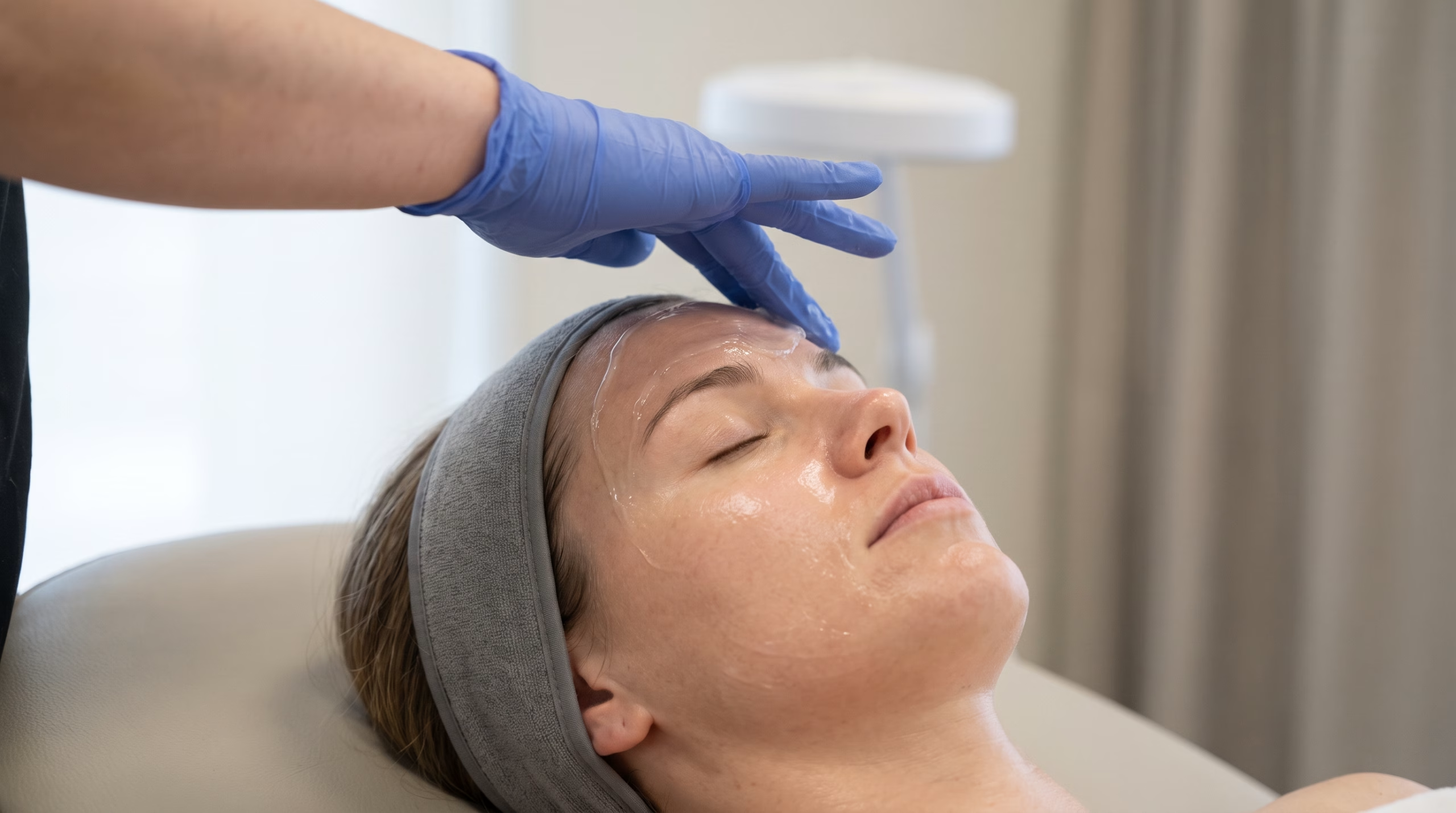
If someone’s asking me for the honest short version, I keep it simple. A hydrating facial gives you a gentle glow now. A peel gives you targeted correction with a little recovery. That’s the comparison, not which one sounds more impressive on paper.
If you’ve got an event, a meeting, or travel coming up, the safer bet is usually the treatment that leaves skin calm straight away.
That’s also why these two sit in different places in the UK market. Chemical peels have historically sat in a patchy part of the aesthetics sector, while HydraFacial is a device-led treatment with a very standardised protocol. The UK regulatory setting matters here, because chemical peels have been treated as lower-risk resurfacing treatments in recent consultation work, but the sector still doesn’t have the same uniform structure everywhere. For a practical comparison, that means one treatment is more flexible and gentle, the other is more corrective and more dependent on strength and aftercare.
If you want the version I’d give a new client in the room, it’s this. Go for a hydrating facial when the goal is radiance and comfort. Go for a peel when the goal is a stronger change in the skin itself.
How Each Treatment Works and What That Means for Your Skin
A HydraFacial and a chemical peel can both leave skin smoother, but they do it in different ways. HydraFacial combines cleansing, exfoliation, extraction and serum infusion in one treatment. A chemical peel uses selected acids to lift away dead surface skin and prompt renewal. That difference is why the two treatments feel different on the day and behave differently afterwards.
A HydraFacial is a practical reset for skin that looks dull, dehydrated or congested. It is a standardised system, and BeautyHealth reported that the HydraFacial flagship brand reached 30,000 devices worldwide in 2023 Business Wire. That scale says a lot about how device-led the treatment has become compared with chemical peels, which still vary more because they depend on the product used and the practitioner’s approach.
Why the mechanism matters
A chemical peel works by encouraging the skin to shed more actively. That makes it useful when the concern sits lower in the skin, such as pigmentation, post-acne marks or rough texture. A HydraFacial is more surface-focused. It clears debris, adds hydration and improves the look of the skin without the same recovery window. Both can improve appearance, but they are not asking the skin to do the same job.
Practical rule: if the issue is mainly congestion and dullness, a facial often makes more sense. If the issue is mainly uneven pigment or texture, resurfacing usually offers more.
The UK regulatory backdrop also explains why peels are often seen as routine but still vary from one clinic to another. The Royal Society for Public Health has pointed out that chemical skin peels do not always sit neatly inside a registerable or licensable treatment category in many areas, and government consultation has been moving the sector toward clearer risk-based treatment tiers. That history matters because the result of a peel depends not just on the acid, but on its strength, the practitioner and the aftercare. For a peel for tired-looking complexions, the treatment can be very effective, but only when those variables are matched to the skin in front of me.
If you are comparing facials in Portsmouth, my facials in Portsmouth page covers everything I offer at House of Glam HQ, and HydraFacial isn’t on it. Seven facials run from £45, and they cover the same ground with different tools: cleansing, steam, extraction, exfoliation and dermaplaning. The practical point stays the same. A HydraFacial focuses on cleansing and hydration. A peel focuses on resurfacing.
Which Concerns Each Treatment Targets Best
The best way to choose is to stop asking which treatment is “stronger” and start asking what your skin needs. A HydraFacial is best when the main issue is hydration, radiance, congestion or blackheads. Chemical peels are better when the concern is pigmentation, acne marks, texture or fine lines. That’s the split I work from in practice, because it’s the split the skin usually gives you.
HydraFacial for maintenance and freshness
A HydraFacial suits skin that needs regular care rather than heavy correction. A peer-reviewed study found that six treatments over 12 weeks produced a significant improvement in acne severity by both investigator and patient assessment, and another clinical report found a six-session series improved hydration scores by 47% and reduced pore visibility by 32% versus a standard facial regimen PMC review. That doesn’t make it a miracle fix, and it doesn’t mean one treatment will clear every concern. It does show that repeated treatment can make a real difference when the goal is skin quality.
The same logic applies to my own facials. The Steam & Extraction Facial at £50 is the one I’d use for congestion and blackheads, and the Ultimate Glow Facial at £65 is the one for dullness and rough texture. Both are maintenance treatments, and both work best repeated rather than as a one-off.
Peels for correction
Chemical peels are the better match when the concern sits lower in the skin. They’re used more for epidermal pigmentation, post-acne marks and texture, and deeper formulas tend to give the strongest corrective effect. That’s also why people often ask whether a HydraFacial is a true alternative for acne marks or pigmentation. Usually, it depends on the type of mark and how much change you’re expecting. Repeated treatment and strict sun protection matter here, because surface procedures rarely give a one-off fix for stubborn pigment.
If you want a broader read on resurfacing for tired-looking skin, the article on peel for tired-looking complexions gives a useful general overview. And if your main question is specifically about the aftermath of breakouts, the what chemical peels fix after acne page is the more relevant place to start.
Darker skin tones need extra care with either route, because post-inflammatory hyperpigmentation is a real risk after procedures that increase exfoliation. That’s one reason I don’t frame this as “glow versus correction”. It’s more useful to match the concern, the skin tone, and the amount of follow-up the skin can tolerate.

Comfort Speed and Recovery Compared Honestly
If you want the easiest appointment, a HydraFacial usually wins. One comparative source lists it at about 30 minutes, with no downtime, while chemical peels take 15 to 60 minutes depending on strength and recovery varies by peel depth Resurrect Skin MD. That’s the practical difference you notice immediately.
What the appointment feels like
A HydraFacial is usually the more comfortable option. The device feels active but not harsh, and most people describe it as pleasant rather than challenging. You walk out looking brighter the same day, and there’s nothing to hide afterwards. My facials sit in the same bracket for comfort and downtime. Chemical peels are different. They can tingle during application, then the visible change comes later as the skin renews.
A comparative clinic guide notes that light peels may flake for 1 to 3 days, while medium TCA peels can involve 7 to 14 days of peeling ID Cosmetic Clinic. That’s why I always ask about diaries, not just skin concerns. If you’ve got work, events or travel, recovery matters as much as the result.
What that means in real life
If you want the quickest, most comfortable glow in one session, a facial is the better fit. If you want a stronger resurfacing effect and you can live with a bit of peeling, a peel makes more sense. Neither is “better” overall. They suit different priorities, and that’s the point.
For anyone deciding based on recovery rather than results alone, the chemical peel healing schedule page is worth a look before you book. I’d rather clients know what their skin may do than be surprised mid-week with flaking they didn’t plan for.
The Honest Truth About Combining Both Treatments
People often assume the answer is to stack everything together. That’s not how I’d plan it. A HydraFacial already includes its own gentle exfoliating and hydrating serums, so it’s a complete balanced facial in itself, and the same is true of mine. I wouldn’t treat skincare like a cocktail and mix peel acids into the same appointment just because more sounds like better.
Why one session should stay one approach
The skin does better when the treatment matches the day’s goal. If the aim is deeper correction, choose a peel. If the aim is hydration, glow and maintenance, choose a facial. More active ingredients in one sitting don’t automatically produce better skin, they often just make the skin more reactive.
The right treatment is the one your skin can tolerate cleanly today, not the one that looks busiest on a menu.
Where the two approaches do work well is across a plan. Chemical peels can handle the corrective work on pigmentation and texture, then hydrating facials can sit between them to keep skin hydrated and clearer looking. That’s a smarter long-term rhythm than trying to force both into one appointment.
If you’re someone who also considers other exfoliating services, the dermaplaning with chemical peel tips page is useful reading, because timing matters more than stacking. I’ll always look at the whole picture first, including sensitivity, skin condition and whether the skin has been overworked already.
The simple answer is this. Combine them over time if it suits your plan. Don’t combine them casually in the same session. That’s how you keep the skin calm while still moving it forward.
Long Term Skin Health Maintain versus Correct
Regular hydrating facials, a HydraFacial among them, sit in the maintain category. They keep skin consistently hydrated, clear and healthy over time because you’re routinely deep-cleansing and replenishing the skin. People who have them regularly often just look more looked-after. Fresh. Less congested. More even in day-to-day life.
Regular chemical peels sit in the correct category. Done as a sensible course, they can bring cumulative change, with gradual improvement in pigmentation, tone, texture and clarity as each peel builds on the last. That’s why people often benefit from both across the year, peels for the stubborn stuff, facials for upkeep.
If you’re interested in wider skin maintenance, the skin booster injections page sits in the same general conversation about supporting skin quality rather than chasing quick fixes. Different treatment, different mechanism, same honest goal, better-looking skin that still looks like your skin.
Consistency matters more than drama.
What I won’t promise is permanence. Neither treatment changes skin forever. Both support skin health over time when they’re used properly, and both work best when expectations stay realistic. That honesty saves people money and disappointment.
How to Decide Which Treatment Is Right for You
Start with the result you want, then work backwards from your skin type, your diary and how much recovery you can allow. If your priority is hydration, radiance and an instant glow with zero downtime, a facial is the more practical choice, whether that’s a HydraFacial elsewhere or one of mine. It is also the gentler option for skin that may not tolerate a stronger peel, and it fits better before an event when redness or flaking would be difficult to manage.
If the concern is pigmentation, acne, stubborn congestion or texture, a chemical peel usually has more to offer. It does more corrective work, but it asks for more patience and stricter aftercare. That trade-off is fair when the skin needs deeper resurfacing, and it is often the better answer for concerns that do not shift much with a hydration-led treatment alone.
Season matters in the UK. Exfoliating treatments and peels make skin more sensitive to sunlight, so SPF has to be used properly, especially in brighter months or if travel is on the horizon. If sunscreen tends to fall away in summer, or you expect a lot of time in strong sun, a hydrating facial is often the lower-risk choice. Darker skin tones need even more care, because irritation can lead to post-inflammatory hyperpigmentation more easily.
The right treatment can also come down to cost, but price should narrow the choice rather than make it for you. HydraFacial isn’t a treatment I offer, so there is no price for it here. At House of Glam HQ, chemical peels are £70 for a Jessner face peel or £80 for a BIEN TCA face peel, with neck peels from £50 and body areas priced separately. Facials run from £45. A standalone consultation is £15 on Fresha and it is deducted from your treatment, because the correct recommendation depends on the skin in front of me, not the treatment list on its own.
If you are still unsure, book the consultation first. I will look at your skin, talk through likely downtime, and point you towards the option that fits your goals and your routine. You can read every price on the chemical peels page or the facials page.

