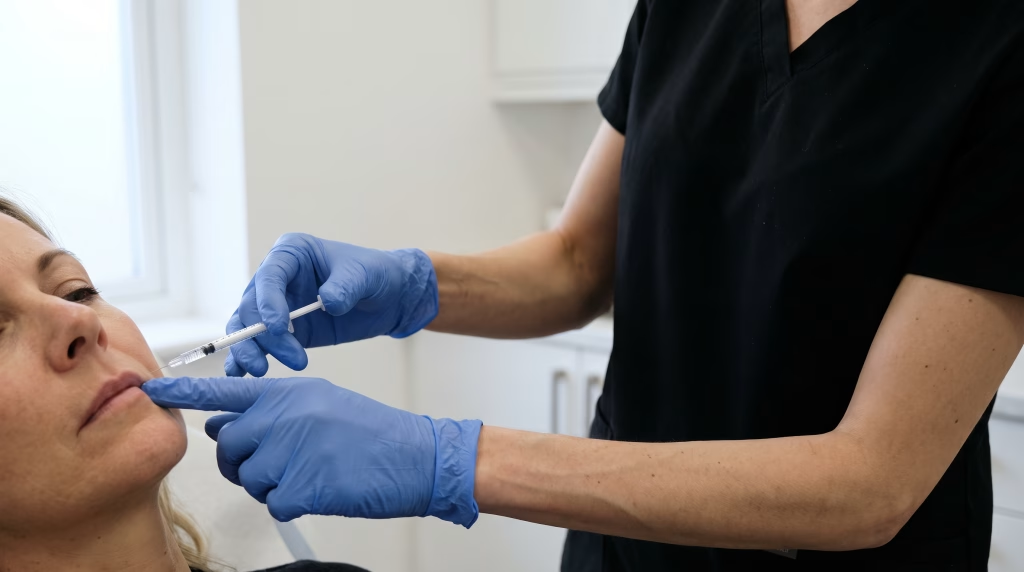
You notice it in the mirror first. A line that wasn’t there a few years ago sits by the mouth, and suddenly you’re trying to work out whether it needs filler, anti-wrinkle injections, or nothing at all. That’s the honest answer many want, because around the mouth wrinkles covers several different lines, and each one behaves differently.
At House of Glam HQ in Southsea, I keep the approach simple. Anti-wrinkle injections relax muscle movement, dermal fillers restore lost support and volume, and the right choice depends on which line you have. Sometimes the right answer is treatment. Sometimes it’s restraint. And around the mouth, restraint matters more than most areas because this part of the face is central to smiling, speaking, eating and drinking. Softening this area properly is exactly what dermal fillers in Portsmouth at my clinic are designed for — with restraint built into the plan.
Table of Contents
- Why One Line Around the Mouth Is Never Just One Problem
- The Different Lines Around the Mouth and How to Spot Them
- Why These Lines Form in the First Place
- Anti-Wrinkle Injections vs Dermal Fillers: Matching Treatment to Line Type
- Consultation and Treatment Process
- Prevention and Aftercare for Long-Term Smoothness
- Common Questions About Treating Around the Mouth Wrinkles
- Book a Consultation and Work Out Which Line Is Yours
Why One Line Around the Mouth Is Never Just One Problem
You can stand in front of the mirror and point at “the line by my mouth”, but that phrase hides a lot. A downturn at the corners, a crease from the nose to the mouth, and fine vertical lines on the lip itself are different problems, even if they all show up in the same area. That’s why I don’t start with a product. I start with the line.
Practical rule: if you don’t name the exact line, you’re guessing at the treatment.
The age pattern also helps. In clinical literature relevant to UK practice, the first lip wrinkle is estimated to appear at 32 to 33 years and become clearly visible at 45 years, often around the start of menopause in females, and one cited study found severe perioral wrinkling in 33.3% of women compared with 6.6% of men (UK-relevant clinical review). That doesn’t mean everyone follows the same timeline, but it does show these lines are a common age-related change, not a random flaw.
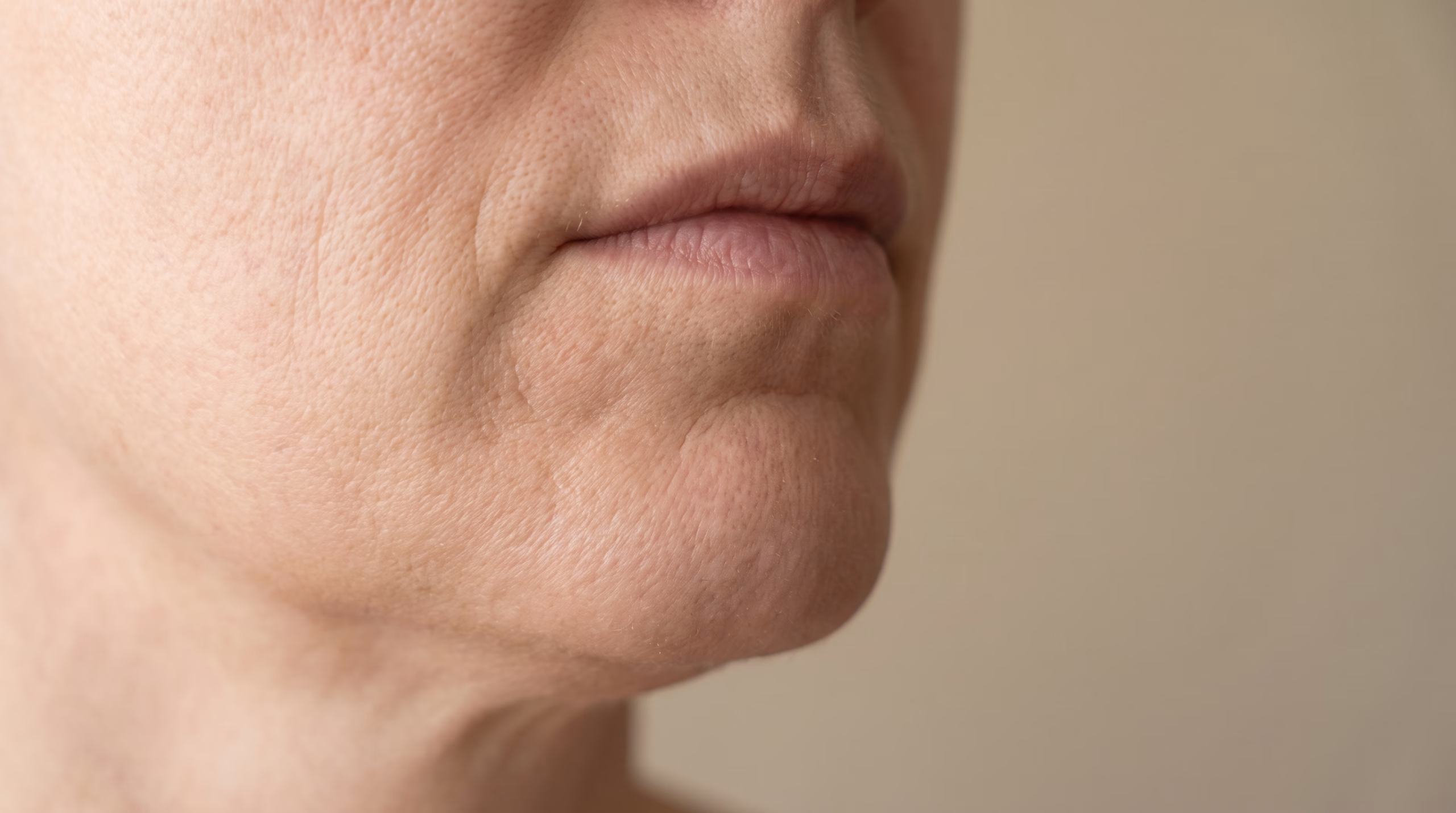
I see the same pattern in consultations. Someone usually comes in saying they want “their mouth lines sorted”, but once I look properly, the issue is often a mix of volume loss, muscle movement, and skin quality. That’s why a single recipe rarely gives a natural result.
If you’re trying to make sense of your own face, the useful question isn’t “what’s the best treatment for around the mouth wrinkles?”. It’s which line do I have, and what is causing it?
The Different Lines Around the Mouth and How to Spot Them
Marionette lines and nasolabial folds
Marionette lines run from the mouth corners down towards the chin. They often make the mouth look tired or downturned, even when your face feels relaxed. Nasolabial folds run from the side of the nose to the mouth and tend to sit higher up the lower face.
These are usually linked with lost support and volume, so they’re generally better suited to dermal filler than muscle-relaxing treatment. If the fold is the main issue, filler can restore structure rather than trying to chase the crease itself. That’s the part a lot of people miss.
Fine lip lines and movement-driven lines
The fine vertical lines on the lip itself are often called smoker’s lines, even in people who don’t smoke. They sit on or just above the lip and tend to show more when the lips purse, sip from a cup, or speak. These lines are more delicate, and I assess them very carefully.
A small amount of anti-wrinkle injections can sometimes help if movement is a big part of the problem, but lip lines are not an area to treat heavily. Sometimes the most natural choice is to leave them alone or keep treatment very conservative. That’s especially true if the lips still move well and the lines only show in expression.
You can compare the lip-focused treatment route here if you’re considering lip enhancement, but I’d still want to look at the whole lower face before deciding anything.
A quick way to tell them apart
- Corners pulling down: think marionette lines.
- Crease from nose to mouth: think nasolabial folds.
- Fine vertical lines on the lip: think cautious assessment, not automatic treatment.
- Lines that deepen with puckering or pursing: movement is part of the story.
The visible pattern matters because the cause matters. And the cause decides whether filler, anti-wrinkle injections, or nothing at all is the right move.
Why These Lines Form in the First Place
A line around the mouth rarely has one cause. It usually starts with movement, then the skin changes underneath it and the line begins to stay behind. The orbicularis oris muscle, the circular muscle around the mouth, works every time you speak, sip, smile, or purse your lips, so the same fold gets repeated again and again.
Over time, that repeated folding meets thinner skin and weaker support. The skin around the mouth becomes drier and less elastic with age, and the fibres that help it spring back do not behave as they used to. The lips and lower face also lose support, so a line that only showed during expression can start to show at rest as well.
Practical rule: if the line is visible when your face is relaxed, movement is only part of the picture.
Two things speed this up in UK practice. UV exposure breaks down collagen and elastin, and smoking pushes wrinkle formation around the mouth faster. That is why public-health advice keeps coming back to sun protection and smoking cessation. I see the effect most clearly in fine lip lines, but the same forces also deepen folds lower down the face.
The mouth is a busy area all day. That makes it different from the forehead or frown, where relaxing muscle can often do more of the work. Around the mouth, repeated motion and lost support usually sit together, so the fix has to match the main cause rather than the label people use for the wrinkle.
If you are already using microneedling skin treatment, or you are thinking about it as part of skin quality work, that can help texture and support over time. It still will not replace the need to separate a movement line from a support problem. The biology decides the plan, not the name of the wrinkle.
Anti-Wrinkle Injections vs Dermal Fillers: Matching Treatment to Line Type
A mouth line that looks like one problem can come from different causes. If the skin folds when you smile, the crease may be driven by movement. If the line sits there even when your face is relaxed, support loss is usually part of the picture. Around the mouth, that is why I separate the line itself from the cause before I choose treatment.
Anti-wrinkle injections relax muscle activity. Dermal fillers restore lost volume and support. The difference sounds simple, but it matters around the mouth because many of the lines people point to are mixed lines, part movement, part thinning skin, part loss of structure.
Which treatment suits which line
Marionette lines usually respond better to dermal filler. These are the lines that pull down from the corners of the mouth, and they often come from loss of support in the lower face. Restoring support can soften that downward look, but I still keep the treatment conservative so the mouth does not start to look heavy.
Nasolabial folds are also usually a filler job. The crease beside the nose often reflects changes in the midface, so treating the support above and around the fold tends to make more sense than chasing the line itself. In some faces, the cheek needs attention first, because that is where the primary change sits.
Fine lip lines need the most caution, and I’ve written separately about using lip filler on smoker’s lines. A little movement reduction may help selected cases, but these lines sit in an area that moves every time you speak, eat or smile. If I soften them too much, the result can look unnatural, so sometimes the best choice is to leave them alone and focus on skin quality instead.
Muscle-driven lines can sometimes be helped by small, careful doses of anti-wrinkle injections. I am cautious with this around the mouth because expression matters here more than in many other parts of the face. If the line is only mild and the smile already looks strong, I would rather under-treat than freeze movement.
That is the honest trade-off. Around the mouth, filler usually does more of the work because support loss is often the main issue. In some faces, the cheeks or lower face need treatment before the line itself changes much. If the problem is mainly skin texture, then neither filler nor muscle-relaxing treatment will fully solve it on its own.
Match the line to the cause, then choose the least amount of intervention that gives a worthwhile change.

Consultation and Treatment Process
I start with a no-obligation consultation. I look at the exact line, how it sits at rest, how it moves when you smile or purse your lips, and whether the main issue is support loss, movement, or skin quality. There is no template. I decide case by case, because the lower face does not reward guesswork.
A line beside the mouth is often not treated on its own. A marionette line may need support in the lower face, a nasolabial fold may need a small amount of volume in the right place, and fine lip lines may need a much lighter touch or no injectable treatment at all. That is why I spend time mapping the face before I talk about a product.
If anti-wrinkle treatment is being considered for a first appointment, a £25 prescriber consultation is legally required before treatment, and the 14-day review is included. That is part of safe practice, not an optional extra. For anyone new to injectable treatment, that compliance step matters.
On the day, hyaluronic acid dermal filler is the usual filler type I use in this area. It is reversible with hyaluronidase, which matters in a mouth area that needs restraint and precision. Lip and mouth-area filler typically lasts 6 to 12 months, while some other filler areas can last up to 18 months. The face moves, so longevity varies by area. If you want to see how a treatment plan is framed in practice, the dermal filler treatment Portsmouth page shows the kind of service I provide.
I keep the principle simple. Less is more around the mouth. That area is central to speaking, eating, drinking and expression, so over-treatment can change how the mouth moves. I will not rush it, and I will not try to flatten every line if that would spoil the natural smile.
For pricing context, anti-wrinkle injections start from £170 for one area, and marionette lines or nasolabial folds filler is £150.
I am the sole practitioner at House of Glam HQ, so every treatment is done by me personally. That keeps the consultation, planning, and treatment consistent from start to finish.
Prevention and Aftercare for Long-Term Smoothness
If I had to pick one habit that helps over time, it would be daily SPF. Sun exposure breaks down the collagen and elasticity that help skin hold its shape, and that matters in the UK as much as anywhere else. Protection matters before and after treatment, because prevention supports the result far more than a quick fix ever will.
Hydration helps too. Drinking water will not erase lines, but hydrated skin shows fine lines less, and well-formulated hydrating skincare can make the area look calmer. That matters most for the fine lip lines that sit right on the surface.
Smoking is a big one. It speeds up ageing around the mouth and is strongly tied to the lines people call smoker’s lines. If someone smokes and wants to keep mouth lines softer for longer, stopping matters more than any single aesthetic product.
A sensible skincare routine can support the area over time. Retinol and vitamin C can help the skin behave better long term, and injectable skin support can sit inside that broader plan if the skin quality itself needs work. If you are comparing options, injectable skin boosters belong in that support category rather than a line-chasing approach.
Practical rule: keep up maintenance rather than letting everything lapse and starting again from scratch.
That applies after filler and after anti-wrinkle treatment. The goal is steadier upkeep, not constant correction.
Common Questions About Treating Around the Mouth Wrinkles
Can lip lines actually be treated
Yes, but not always in the way people expect. Most clients see softening, not erasure, and around the lip area I’m often conservative on purpose. If a line only shows with movement and the mouth still looks balanced, I may recommend leaving it alone or treating very lightly.
How long do results last
For lip and mouth-area filler, I usually think in terms of 6 to 12 months. In other filler areas, results can last up to 18 months, depending on the area and how much movement it sees. Anti-wrinkle injections are temporary and need maintenance if you want to keep the effect going.
Is it painful
Most people find it manageable. Discomfort is usually brief, and anaesthetic options can be used where appropriate. The lip area is sensitive, though, so I always keep the treatment calm and measured rather than trying to rush through it.
Can anti-wrinkle injections and filler be combined
Yes, and around the mouth that’s often the smarter answer. If a fold is partly caused by support loss and partly by movement, combining approaches can make more sense than forcing one treatment to do everything. Sometimes treating the cause higher up, like support in the cheek, gives the most natural look.
The honest answer on mouth lines is still the same. Some are worth treating. Some are better left alone. And some need a different plan than the one people expected when they booked.
Book a Consultation and Work Out Which Line Is Yours
You can stand in front of the mirror and see a line, then realise it is not the same line every time you smile, speak, or rest your face. That is usually the point where a consultation helps. I’ll look at the exact line, work out whether it is a movement line, a support issue, or a crease that should be left alone, then tell you whether treatment is likely to make a real difference.
I’m Natasha, sole practitioner at House of Glam HQ in Southsea, Portsmouth, and I’ve got 7+ years of clinical experience. I see clients from Portsmouth, Southsea, Fareham, Gosport, Havant, Waterlooville and the wider Hampshire area, and I’ve set the clinic up around one-to-one care, clear advice and natural-looking results. We also have verified reviews across Google, Fresha and Facebook.
If you want to read the treatment pages first, start with the anti-wrinkle injections service page. If you’d rather talk it through, email houseofglamhq@gmail.com or call 07831 846273 for a consultation.
House of Glam HQ offers consultations, personal treatment with me as the sole practitioner, and honest advice on what suits your face. If around the mouth wrinkles are bothering you, visit House of Glam HQ and choose the treatment page that matches your lines, then book in and I’ll look at it properly.

