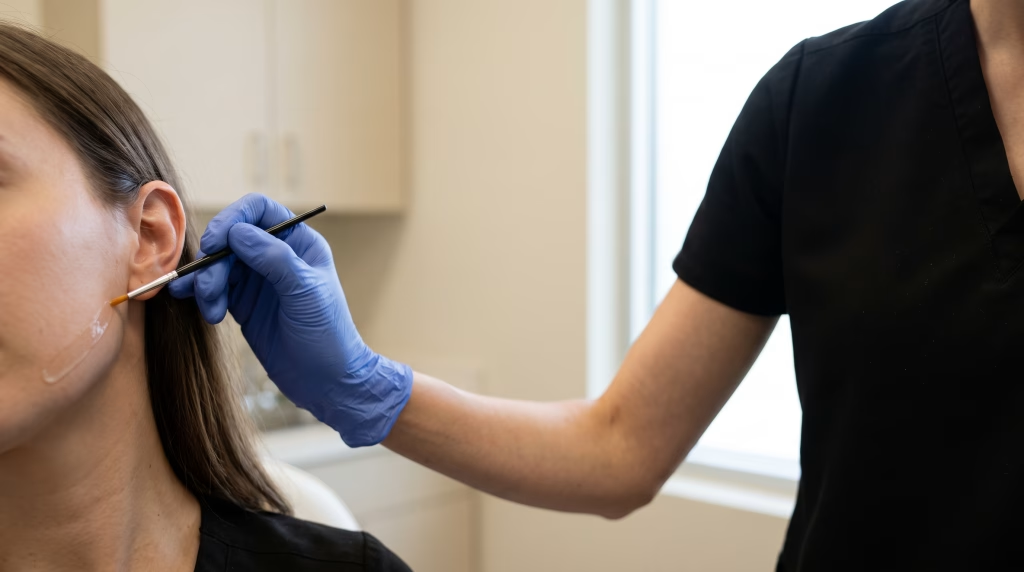
The most common advice I hear is, “If your skin is sensitive, avoid peels completely.” I don’t agree with that.
I’m Natasha, sole practitioner at House of Glam HQ in Southsea, Portsmouth, and after 7+ years in clinic, I can tell you this plainly: a chemical peel for sensitive skin can work very well, but only when the peel is chosen properly, started gently and monitored properly. Sensitive skin isn’t excluded. It just needs more care, more honesty and less guesswork.
What usually goes wrong is the aggressive approach. The wrong acid, too strong, left on too long, layered on top of an already irritated routine. That’s when people decide peels are “too harsh”. Often, the peel wasn’t the problem. The plan was.
Can You Have a Chemical Peel with Sensitive Skin
Yes, you can.
But I’m not talking about throwing a strong acid onto reactive skin and hoping for the best. I’m talking about a superficial peel, because peels are classified by depth as superficial, medium and deep, and superficial peels are the safe category for sensitive skin because they work at the epidermis level rather than going deeper into the dermis.

What sensitive skin actually needs
Sensitive skin doesn’t need force. It needs control.
That means I look at how easily your skin flares, whether it stings with active products, whether you’re prone to redness, and whether your barrier already looks stressed. Some clients call their skin sensitive when it’s over-exfoliated. Others have reactive skin that needs a much slower pace. Those are not the same thing, so they should never get the same peel.
Practical rule: If your skin reacts quickly, the answer isn’t usually “go stronger”. It’s usually “go gentler and watch closely”.
A lot of the fear around peels comes from the word “peel” itself. People picture sheets of skin coming off and days of inflammation. For reactive skin, that isn’t the goal. I’m aiming for controlled exfoliation, improved brightness, smoother texture and a calmer overall response from the skin.
What I tell cautious clients
If your skin is sensitive, I’d rather give you a treatment that feels manageable and can be built on than push for a big reaction. That’s how you get progress without setting the skin back.
And if I think a peel isn’t right for you, I’ll say so. I’m not interested in forcing a treatment onto skin that’s already struggling.
The Right Peels and Strengths for Reactive Skin
Reactive skin does not need the strongest peel it can survive. It needs the mildest peel that can improve the skin without starting a flare.
That is the mistake I see most often. Clients come in asking for a stronger acid because they want a visible result. With sensitive skin, visible peeling is not proof that the treatment was right. In many cases, it is a sign the skin was pushed past what it could handle well.
For that reason, I start with peels that give me more control over irritation and recovery. A superficial peel with lactic acid or mandelic acid is often the better starting point for reactive skin, because both can exfoliate in a gentler way than more aggressive options, as explained in this sensitive skin peel overview.
Why I often begin with lower-strength acids
Lactic acid is one of my most reliable starting points for skin that is prone to stinging, redness, or tightness. It can help with dullness and rough texture without stripping the skin in the way a harsher peel often does.
Mandelic acid can also be useful, especially if the skin is reactive but also dealing with congestion or post-breakout marks. The point is not to pick the trendiest acid. The point is to choose one the skin is more likely to tolerate, then control the strength, layer count, and contact time carefully.
That combination matters more than clients expect.
A peel that looks mild on paper can still be too much if the barrier is already stressed. A stronger peel can be unnecessary if a lower-strength option is enough to start improving tone and texture. This is why I do not work from a fixed formula for sensitive skin.
Here is what I assess before deciding on strength:
- Acid choice: I usually start with acids known for a gentler profile on reactive skin.
- Concentration: Lower strengths are often the safer first step.
- Exposure time: Shorter contact can make a suitable peel more tolerable.
- Current barrier health: Dry, inflamed, or over-exfoliated skin often needs a slower start.
Where a gentler peel can fit
For some clients, a low-strength lactic or mandelic peel is a better fit than a stronger exfoliating peel, especially if they want skin refreshment with less obvious surface disruption. It can suit skin that needs a cautious approach and does not cope well with heavy resurfacing.
At House of Glam HQ chemical peels, I choose that kind of treatment based on what your skin is doing in real time, not on a standard menu or a one-size-fits-all protocol.
The right peel for sensitive skin is the one your skin can recover from calmly enough to repeat.
What I avoid with reactive skin
I am careful with stronger peel routes if someone has a history of flushing, eczema, rosacea, psoriasis, or prolonged irritation after active skincare. In those cases, chasing a faster result often creates a longer recovery and less consistent progress.
I also avoid copying another person’s treatment plan. “Sensitive skin” covers several different patterns. One client is over-exfoliated. Another has a naturally reactive barrier. Another is inflamed from acne products. Those clients may all describe their skin the same way, but they should not get the same peel.
Why a Gentle Approach Gets Better Results
Reactive skin often does well with peels for one simple reason: I don’t treat it like resilient skin.
The clients who usually settle best are often the ones who’ve been doing too much at home. Retinol one night, acid the next, scrub at the weekend, then a “brightening” cleanser twice a day. Their skin isn’t lacking effort. It’s overloaded. Once that calms down, a gentle professional peel can improve the look of the skin without the constant irritation that harsh home routines keep triggering.
Why stronger is often worse
When sensitive skin gets pushed too hard, it doesn’t usually thank you for it. It gets red, tight, flaky and unhappy. Then progress stalls because the skin is busy trying to recover.
A lighter course is usually the smarter route. To maintain results from a refreshing, light peel, you may need 3 to 5 peels rather than relying on one aggressive session, according to the American Academy of Dermatology chemical peel FAQs.
That fits what I see in clinic. Steady, repeatable treatments tend to suit reactive skin far better than trying to force a quick result.
A common pattern I see
If you’re dealing with post-blemish marks or uneven texture as well as sensitivity, I may also look at how peels fit into a wider skin plan. In some cases, concerns overlap with scarring, and that’s where a separate treatment path may be more appropriate, which I explain on my chemical peels for acne scarring page.
What matters is matching the pace to the skin.
- If your skin is over-treated: the first win is often reducing irritation.
- If your skin is reactive by nature: progress usually needs to be built slowly.
- If you want dramatic change fast: sensitive skin may not be the right place to chase that.
I’d rather you see a smaller improvement comfortably than trigger a flare by doing too much.
That’s the honest version. Sensitive skin can improve very nicely. It just usually improves in stages, not overnight.
How I Assess Your Skin and Test for Tolerance
Sensitive skin is rarely “just sensitive.” In clinic, I need to work out whether I’m looking at a damaged barrier, background inflammation, frequent flushing, product overuse, or a skin condition that makes peels a poor fit for now. The treatment choice depends on that distinction.
Every peel starts with a consultation. I assess your skin type, your Fitzpatrick classification, your current routine, any history of reactions, and how your skin behaves between flare-ups. I ask practical questions. Do you sting with basic moisturisers? Do certain sunscreens make you itch? Does redness settle within an hour, or linger into the next day?
What happens at the first appointment
I do not pick a peel by label alone. I look at your baseline skin first, then decide whether your skin is calm enough to proceed and how much room there is for error. With reactive skin, that margin is small.
If treatment is appropriate, I start with the gentlest suitable option and a conservative contact time. Then I watch closely. Early feedback matters. Excessive heat, rapid redness, stinging that builds instead of settling, or delayed irritation the next day all tell me more than the words “my skin is sensitive” ever will.
Here’s the framework I use:
| Situation | How I approach it |
|---|---|
| Skin looks irritated from too many home actives | Pause the actives, repair the barrier first, then reassess for a very gentle peel |
| Skin is sensitive but stable | Start mild, check recovery carefully, and increase only if the skin stays calm |
| Skin is flaring or medically unsettled | Postpone treatment and consider whether a peel should be avoided altogether |
That cautious approach is how I reduce setbacks. Clients with reactive skin often do better with measured changes and close monitoring, not a brave first session followed by days of regret. Good honest advice on sensitive skin usually comes back to the same principle. Respect the barrier before asking the skin to do more.
How I test tolerance over time
One appointment does not prove full tolerance. Sensitive skin can look calm on the day and still object later, so I assess the full response. I want to know how your skin behaves in the treatment room, that evening, and over the following days before I decide whether to repeat, adjust, or stop.
That is why I usually plan peels as a gradual course rather than a one-off push. In practice, that means allowing recovery time between appointments and changing only one variable at a time, such as strength, layers, or contact time. As noted earlier, lighter peels often need repeat sessions to build results safely.
I also set expectations before we start. If your skin is dry, highly reactive, or already inflamed, the first goal may be tolerance, not transformation. Sometimes the best clinical decision is to delay the peel and focus on barrier repair and a simpler routine first. If you want to read the recovery side in more detail, my guide on what to do after a chemical peel explains how I support skin between sessions.
Your skin should be understood before it is treated.
If I think a peel is the wrong choice, I will say so plainly. Protecting sensitive skin means being selective, even when that means postponing treatment.
Your Aftercare Plan for Calm and Happy Skin
After the peel, I neutralise and remove it, then I apply a calming post-peel product to support the skin as it settles. You don’t leave guessing. I give full aftercare guidance, including what to use, what to avoid and what’s normal over the next few days.

Keep it simple for the next few days
People often overdo it. They want to “help” the skin by adding more products. Usually, that makes things worse.
For reactive skin, less is better for a short while.
- Cleanse gently: Use cool water and a soap-free cleanser.
- Skip harsh actives: No retinol, no strong acids, no scrubs.
- Protect daily: Use broad-spectrum SPF every day.
After a light chemical peel the skin stays more sensitive for a while, so I ask for cool water, a soap-free cleanser and broad-spectrum SPF 30 or higher every day for several weeks afterwards.
What’s normal and what isn’t
With a light peel, some redness, dryness or mild flaking can happen. For sensitive skin, I want that process to stay controlled. Calm support is the goal, not visible drama.
If you want to keep a reactive routine simple, it comes back to the same basic principle I give clients: don’t overload irritated skin.
You can also read my own aftercare advice for peels if you want a clearer idea of what recovery usually looks like.
Freshly peeled skin is more vulnerable to sun and pigmentation, so SPF isn’t optional.
When Peels Are Not the Answer and What to Try Instead
Sometimes a peel is the wrong call.
If you’ve got facial dermatitis, a history of post-inflammatory hyperpigmentation, or skin that can’t tolerate the products needed around treatment, a proper pretreatment assessment is legally required for safety, as set out in these chemical peel care guidelines. If your skin is in an active eczema flare, a rosacea flare, broken, inflamed or generally unstable, I may advise waiting. In some cases, I’ll tell you to check with your GP or dermatologist first.
When I pause instead of treating
I’d rather delay a peel than make reactive skin worse.
That applies if:
- Your barrier is clearly compromised: skin feels hot, sore, over-exfoliated or visibly irritated.
- You’re in an active flare: especially if redness or inflammation is already high.
- Your history suggests high pigment risk: careful assessment matters even more here.
What I may suggest instead
If a peel isn’t right, that doesn’t mean you’re out of options. Sometimes a gentle facial makes more sense if the aim is hydration, light resurfacing and a cleaner, fresher look without the same level of exfoliative stress. My Rejuvenating Facial is £50 and sits comfortably with reactive skin. In other cases, texture concerns may be better addressed later with a cautious microneedling plan, and I explain that in more detail on my SkinPen microneedling page.
The point is simple. I’m not trying to force one treatment onto every face. I’m looking for the safest route to skin that looks healthier and feels more settled.
If you’re wondering whether a chemical peel for sensitive skin is realistic for you, book a consultation with House of Glam HQ. Every treatment is carried out by me personally in Southsea, Portsmouth. I’ll assess your skin properly, tell you whether a peel is suitable, and talk you through the options. Every price is on the chemical peels treatment page: a Jessner peel is £70 for the face, £50 for the neck or £70 for the chest, and a TCA peel is £80 for the face, £60 for the neck or £80 for the chest. Courses of 3 and 6 are available, so ask me for the course price. You can also contact me directly at houseofglamhq@gmail.com or call 07831 846273.

