You’ve probably done this already. Stood in front of the mirror, tilted your face towards the window, and looked at the bits your skincare never seems to shift. The old acne marks on the cheeks. The rougher texture around the nose. The pores that look more obvious when the light hits from the side. The dullness that makes your skin feel tired even when it’s clean, exfoliated, and moisturised.
That’s usually when people start searching for skin pen microneedling.
And fair enough. It’s one of the few skin treatments that makes sense when your issue isn’t really “dirty skin” or “dry skin”, but the structure underneath. Creams can support the skin barrier. They can brighten. They can hydrate. But if you want to improve the appearance of acne scarring, uneven texture, fine lines, or skin that has lost some bounce, you usually need a treatment that pushes the skin to rebuild.
That’s where professional microneedling comes in. It isn’t a miracle fix, and I’m not going to sell it to you like one. But used properly, at the right depth, over the right timeframe, it can make a real difference.
Your Guide to Smoother and Clearer Skin
A lot of clients come to me after trying everything they can at home. Acids, masks, scrubs, barrier creams, expensive serums. Sometimes those products help with brightness or breakouts, but the skin still doesn’t look smooth. It still catches makeup. It still shows old acne damage. It still feels uneven to the touch.
That’s the point where I usually explain the difference between skincare and professional microneedling. Skincare works on the surface and supports skin function. Microneedling works by creating controlled micro-channels in the skin, so your body starts a repair response and lays down fresh collagen and elastin.
When this treatment tends to make sense
If your concern is more about the look and feel of the skin rather than constant active acne, microneedling can be a very sensible option. I most often discuss it for:
- Old acne scarring, especially rolling and boxcar scarring
- Rough texture that makeup sits on badly
- Pores that look stretched, where the aim is refinement, not permanent shrinkage
- Dull skin that needs stimulation rather than more exfoliation
- Early lines and mild creasing
If your main concern is pore visibility, I’d also look at whether pore minimising treatment options are a better fit on their own, or whether microneedling is the stronger choice because texture is the actual issue.
Most people don’t need more products. They need the right treatment for the right skin problem.
I’m also honest when microneedling isn’t the right place to start. If your acne is very active, your skin barrier is irritated, or your expectations are “one session and sorted”, I’ll say so.
Some clients also ask whether supplements help the skin while they’re doing a course. They can support overall skin health, although they don’t replace treatment.
How Professional Microneedling Rebuilds Your Skin

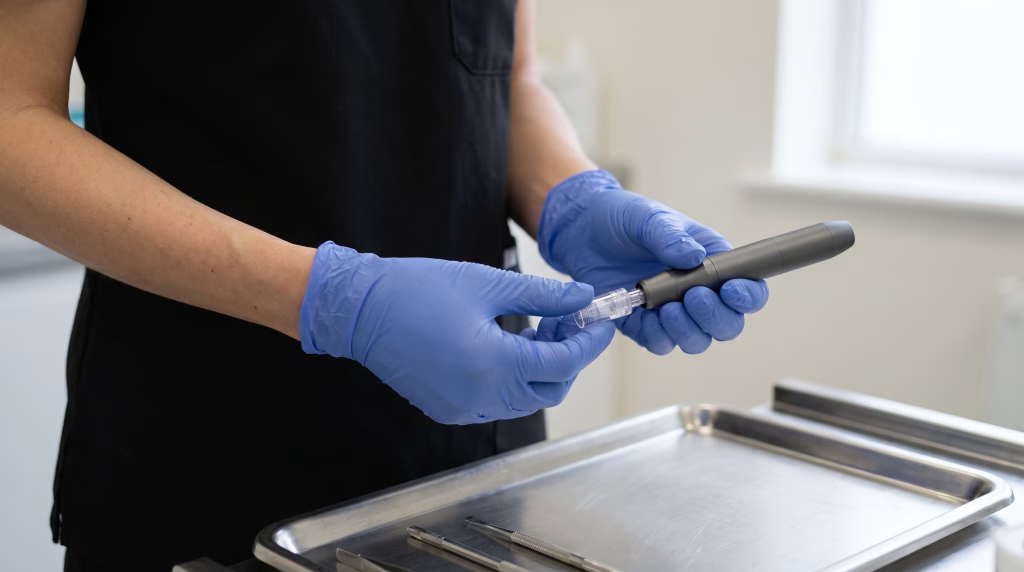
Microneedling sounds more dramatic than it is. In practice, it’s a precision treatment using a professional device with sterile single-use needle cartridges. The device creates thousands of tiny, controlled micro-channels in the skin.
That controlled injury is the whole point.
Your skin reads those channels as damage it needs to repair. It responds by starting a wound-healing process and stimulating collagen and elastin production. Those are the proteins that help skin look firmer, smoother, and more even.
No heat, no chemicals
One reason I like microneedling for the right client is that it’s mechanical. It doesn’t rely on heat. It doesn’t rely on light. It doesn’t depend on putting a strong acid into the skin. That matters, especially when I’m assessing skin that may not tolerate aggressive resurfacing well.
If the skin has developed uneven texture or shallow scar depressions, you’re not trying to scrub that away from the top. You’re trying to encourage healthier rebuilding from within. That’s why results don’t appear overnight.
Why results build slowly
Fresh collagen takes time. So do changes in texture.
The skin usually looks brighter first. Then smoother. Then, if you’re treating scars or lines, the deeper changes start showing more gradually. That’s also why this treatment is often done as a course rather than a one-off. A useful practical benchmark is that microneedling is commonly positioned for concerns like acne scars, fine lines, enlarged pores and early skin laxity, with most concerns requiring a course of 3 to 6 sessions.
Practical rule: If someone is selling microneedling as instant resurfacing, they’re overselling it.
I treat skin according to the concern in front of me, not off a generic pattern. Thicker skin and scarred areas need a different approach from delicate areas such as around the eyes. But the principle stays the same. Controlled stimulation, then time for the skin to respond.
What Microneedling Treats and The Real-World Results

I think people need the straight version, not the glossy one.
Microneedling can improve the appearance of several common concerns. But different concerns respond at different speeds, and some are much more course-dependent than others.
What it can help with
In clinic, I look at microneedling for concerns such as:
- Acne scars, especially rolling and boxcar scars
- Fine lines, where the skin needs support rather than freezing or filling
- Uneven texture, including roughness and post-breakout irregularity
- Pigmentation, where careful assessment matters
- Dull skin, when the skin looks flat and tired
- Stretch marks, which are a form of scarring
For acne scarring in particular, the evidence is strong enough to be worth mentioning properly. Clinical trials for a leading regulated microneedling device reported 90% improvement in the appearance of facial acne scars at 6 months post-treatment follow-up, as detailed in the FDA review documentation for microneedling acne scar outcomes.
That doesn’t mean every person gets the same result. It does tell you this treatment has proper clinical grounding for scar improvement.
What the timeline really looks like
The most common case I see for microneedling is acne scarring on the cheeks. Not fresh inflamed acne, but the marks left behind after years of breakouts. In that type of case, I’d typically recommend a course of 6. Scar work is gradual, and trying to rush it usually just frustrates people.
Most clients notice an early improvement in general skin quality first. The skin looks fresher. It feels smoother. Makeup often sits better. But scar softening is slower, because collagen needs repeated stimulation and time to build.
A realistic pattern looks more like this:
| Concern | What you may notice first | What takes longer |
|---|---|---|
| Mild texture | Smoother feel, brighter skin | Ongoing refinement across the course |
| Fine lines | Fresher look to the skin | Softening as collagen builds |
| Acne scarring | Better overall skin quality | Gradual softening of scar edges and depth appearance |
| Stretch marks | Surface improvement | Longer-term textural change |
Results tend to build over the course and keep developing for around 12 weeks after the final session. That’s why I don’t frame microneedling as a quick fix.
If you’re deciding between treatment types, this guide on chemical peel vs microneedling can help you work out whether your skin concern sits more on the surface or deeper in the skin.
Anyone promising dramatic acne scar change after one appointment isn’t being straight with you.
Is Microneedling Safe for Your Skin Tone
This is one of the biggest reasons microneedling gets my attention as a practitioner. It’s suitable across a wide range of skin tones because it doesn’t use heat or light.
That matters.
Heat-based treatments can carry added pigmentation risk for deeper skin tones. Microneedling doesn’t have that same heat-related issue because the treatment is purely mechanical. In practical terms, it can be a very good option across Fitzpatrick I to VI, including darker skin.
Lower risk is not no risk
This is the part that gets missed online. People hear “safe for all skin tones” and assume there’s nothing to think about. That isn’t true.
Post-inflammatory hyperpigmentation, or PIH, is still a consideration, especially in deeper skin tones or in skin that’s already reactive. So my approach isn’t aggressive for the sake of it. I assess the skin, the history, the trigger pattern, and whether there’s any sign we need to slow down or prep the skin first.
In the UK, this matters for a large number of clients. A cited overview on skin-of-colour microneedling notes that more than 14% of the England and Wales population identified with an Asian, Black, Mixed, or Other ethnic group in the 2021 Census, which is why clear protocol differences matter for real-world practice in guidance discussing microneedling and skin of colour in a UK context.
How I manage that risk in practice
I keep it simple and cautious:
- I assess first. If your skin history suggests a higher pigmentation risk, I’ll factor that into whether we treat now, later, or more gently.
- I treat conservatively. More depth isn’t always better. More passes aren’t always better.
- I insist on aftercare. Sun exposure and rushing back into active skincare is where people often create problems.
- I don’t force treatment. If your skin isn’t in the right state, waiting is smarter.
Skin tone doesn’t rule microneedling out. Poor assessment does.
And if you’ve been told your skin is “too dark” for resurfacing in general, that doesn’t automatically mean microneedling is off the table. It means your practitioner needs to understand the difference between lower heat-related risk and no pigmentation risk at all.
The Treatment Plan Costs and Essential Aftercare
If you book microneedling with me, it starts with a consultation. I assess the concern, your skin behaviour, whether the treatment is suitable, and whether your expectations match what microneedling can realistically do.
If it’s the right fit, I map out the plan properly. Sessions are usually spaced 4 to 6 weeks apart so the skin has time to complete its healing and collagen cycle. That spacing matters. Rushing treatment doesn’t speed results up.
Pricing
Here’s the current pricing:
- Single session (face), £80
- Course of 3, £215
- Course of 6, £410 (this is often the route I recommend for acne scarring)
- Face and neck, £120
- Face, neck and décolletage, £170
- Stomach microneedling, including stretch marks, £120
Klarna is available over three monthly payments on treatments.
If you want more detail on session spacing, this guide on how often to have microneedling explains the reasoning in a bit more depth.
What you need to do after treatment
Aftercare isn’t complicated, but it does matter.
For the first 48 hours:
- No active skincare. That means retinol, acids, and vitamin C stay off the skin.
- No makeup. Let the skin settle cleanly.
- No direct sun. This is a big one.
- Keep it simple. Gentle hydration only.
One should expect the skin to look pink or mildly red for 24 to 48 hours, a bit like light sunburn.
The two points I’m firmest on are SPF and leaving actives alone. Those are the things people underestimate most, and they make a real difference to how well the skin settles.
A useful reassurance here is tolerability. Clinical data from a regulated microneedling system reported that 87.5% of subjects expressed satisfaction with the treatment procedure itself in a neck wrinkle study, which supports the idea that the treatment is generally well tolerated with minimal downtime in the microneedling user manual summarising clinical satisfaction data.
You’ll leave with written aftercare, because I’d rather you have clear instructions in your hand than try to remember everything from memory.
Why Trust Me With Your Microneedling Treatment
Microneedling is simple to describe. It isn’t simple to do well.
The result depends on proper assessment, the right treatment intensity, clean technique, and being honest about whether your skin is suitable in the first place. That’s where experience matters more than hype.
What you get when you book with me
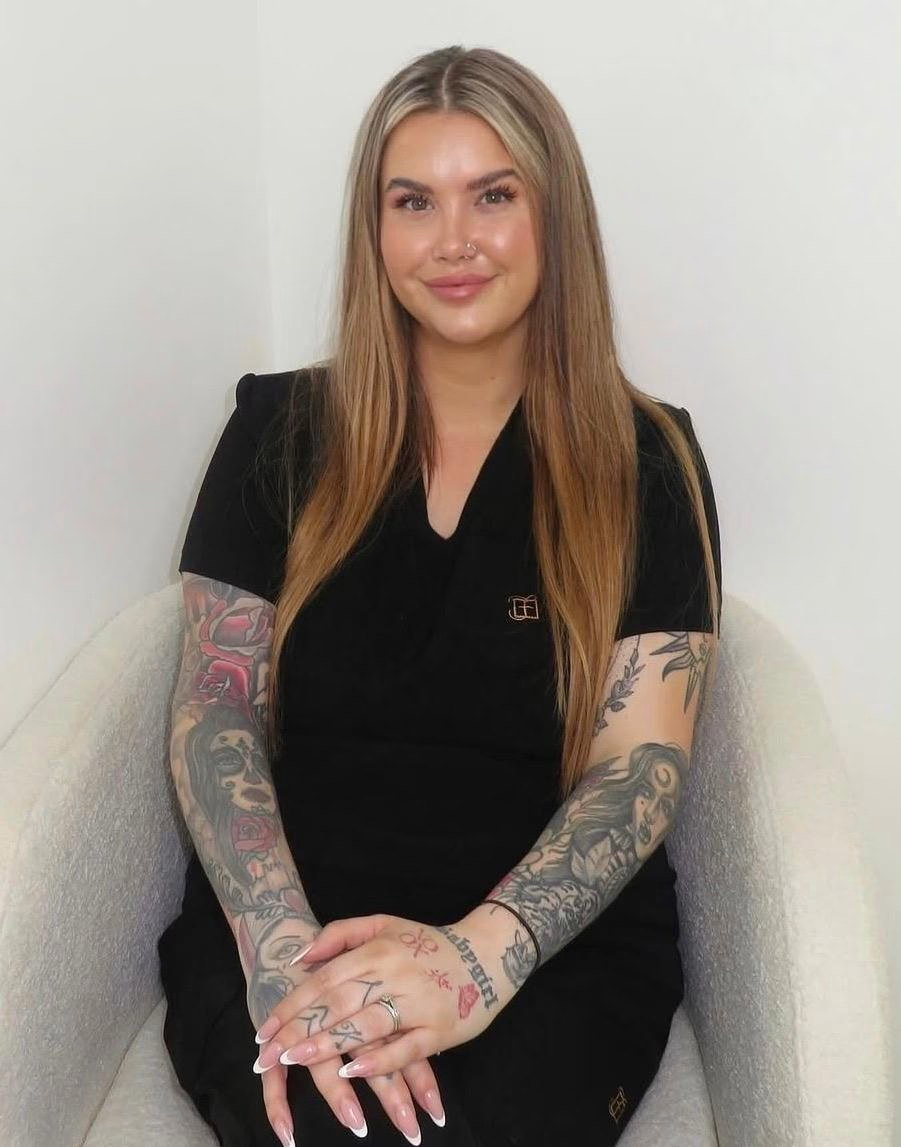
I’m Natasha, the sole practitioner at House of Glam HQ in Southsea, Portsmouth. I’ve got 7+ years of clinical experience, and every microneedling treatment is performed by me personally. There’s no handover, no rotating staff, and no guesswork about who you’re seeing on the day.
I use sterile single-use cartridges for every client, and I keep treatment plans individual. Depth is matched to the concern and the area. Delicate zones aren’t treated like acne-scarred cheeks. Thicker scar tissue isn’t treated like mild dehydration lines.
Honest advice matters more than selling a treatment
I’d rather tell you microneedling isn’t the best fit than take your money for something unlikely to help. If your acne is too active, if your skin needs calming first, or if another treatment route makes more sense, I’ll say it plainly.
That’s also why I don’t make silly promises. Scars can be softened in appearance, not erased. Pores can look more refined, not permanently shrunk. Results usually build with consistency, not one dramatic appointment.
Good microneedling is controlled, consistent, and realistic.
If you want to look into the treatment itself, pricing, or booking details, microneedling at House of Glam HQ is where you can see the service page and request your consultation.
I’ve also built the clinic around one-to-one care. You’re not coming into a conveyor belt setup. You’re being assessed and treated by the same person throughout, with proper aftercare and clear advice. And with verified reviews across Google, Fresha and Facebook, people can already get a feel for how I work before they book.
If you’re in Southsea, Portsmouth or nearby and you’re tired of spending money on products that don’t touch texture or scarring, microneedling may be worth a proper conversation. Not because it’s magic. Because when it’s the right treatment, done properly, it gives the skin a real reason to rebuild.
If you want an honest opinion on whether microneedling is right for your skin, book a consultation with House of Glam HQ. I’ll assess your skin properly, talk you through the realistic options, and tell you plainly if this treatment is likely to help. You can also contact me directly on houseofglamhq@gmail.com or 07831 846273.