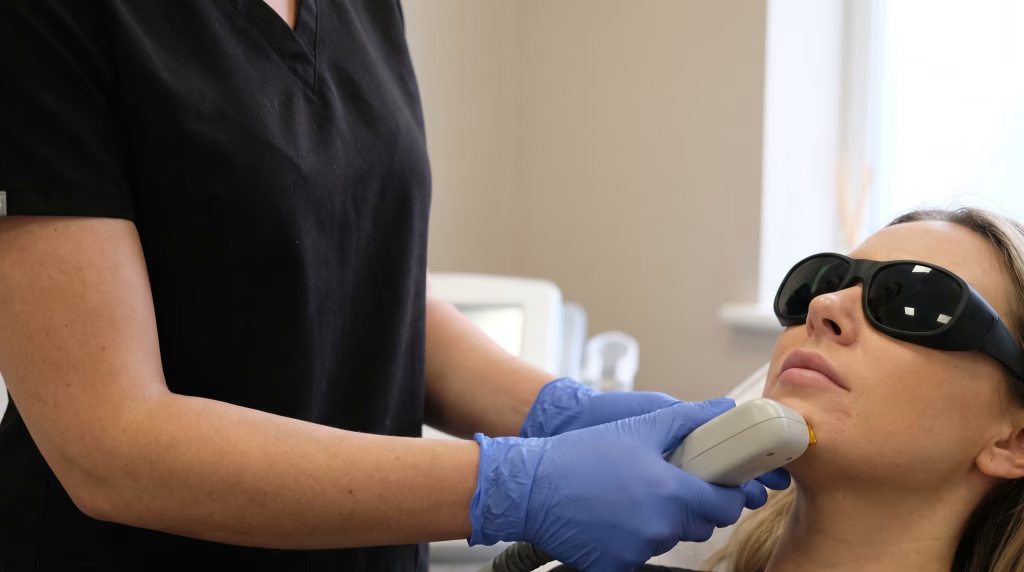
Most advice on facial hair says the same thing. Wax it, thread it, shave it, laser it. Pick one.
That’s exactly where women get misled.
After 7+ years in clinic, I can tell you the right method for facial hair removal for women depends first on what kind of hair you’re trying to remove. If it’s dark and coarse on the top lip, chin or jawline, laser can be a very good option for long-term reduction. If it’s soft peach fuzz on the cheeks or across the face, laser usually isn’t the right tool at all. Dermaplaning is.
And I’m very blunt about that in consultation. I’d rather tell you a treatment isn’t suitable than sell you a course that won’t do what you want.
The Honest Truth About Facial Hair Removal
There isn’t one “best” facial hair removal method for every woman. There’s only the method that matches your hair type, skin, and what you want from treatment.
Some women come in because of a few stronger chin hairs. Some are fed up with upper lip shadow. Others hate the soft layer of fuzz that catches makeup and makes skin look textured. Those are different problems, so they need different solutions.
What I tell clients straight away
If your hair is dark and coarse, laser may be the right route.
If your hair is fine, pale and fluffy, that usually points to dermaplaning instead.
Practical rule: Match the treatment to the hair, not to whatever treatment is trending online.
That’s the bit most articles skip. They lump waxing, shaving, creams, threading, laser and dermaplaning together as if they’re interchangeable. They’re not. They differ in how they remove hair, how long results last, how much maintenance they need, and how likely they are to irritate the skin.
A lot of women also assume laser is the answer for everything on the face. It isn’t. Laser needs something specific to target. If that target isn’t there, you’re wasting your time and money.
The two treatments I use most for this
In clinic, the decision usually comes down to these two:
- Laser hair reduction for darker, stronger facial hair where long-term reduction is the goal.
- Dermaplaning for peach fuzz and surface smoothness where the issue is fine vellus hair, not coarse growth.
That’s the honest split.
Why Your Hair Type Is the Most Important Factor
Laser works by targeting melanin, which is the pigment in the hair. Darker hair gives the laser more to lock onto. Fine, pale facial fuzz doesn’t.

Why laser works for some facial hair and not others
Think of laser like a treatment that needs a visible target. Dark upper lip or chin hairs usually have enough pigment for that. True peach fuzz usually doesn’t.
So if you’ve got:
- Darker, coarser hairs on the lip, chin or jaw, laser may be suitable.
- Very fair, grey or red hairs, laser response is usually poor, which I go into properly in my guide to laser hair removal on blonde hair.
- Soft peach fuzz on the cheeks or across the face, dermaplaning is usually the better fit.
That distinction matters more than people realise. I see women who’ve been told “laser works for facial hair” with no one explaining that which facial hair makes all the difference.
Skin tone matters too
Generic advice also tends to gloss over skin tone and maintenance. Public-facing guidance notes that professional laser often needs six to eight sessions plus maintenance visits, and that treatment choice should be based on hair colour, skin type, irritation risk, and maintenance burden, not a one-size-fits-all answer, as outlined in this consumer guidance on facial hair removal methods.
That’s why I assess before treating. Darker skin tones can absolutely be treated, but only when settings are chosen properly. Sensitive skin also changes the conversation. Some women care most about long-term reduction. Others care more about avoiding irritation or visible stubble.
The wrong treatment doesn’t fail because you did something wrong. It fails because it wasn’t built for your hair type in the first place.
Laser Hair Removal for Darker Facial Hair
If you’re dealing with darker facial hair on the top lip, chin or another small facial area, laser is usually the route I look at first.
I use a SMARTDiode diode laser, which is a medical-grade, CE-marked device, and I treat all skin types once I’ve assessed and calibrated properly at patch test. If you’ve got a deeper skin tone, that doesn’t automatically rule laser out. It means the settings need to be chosen with care.
What happens first
Your first appointment is always a £15 patch test and consultation, and that amount is deducted from your first treatment if you go ahead.
At that appointment I check:
- Fitzpatrick skin type, because skin tone affects how I set the laser
- Hair colour and thickness, because pigment matters
- Medications and contraindications, because safety comes first
- Skin condition on the area, because facial skin can be reactive
If your facial hair is very fair, grey or red, I’ll tell you plainly if laser is unlikely to give you a result worth paying for.
What a laser course actually looks like
Facial laser isn’t one appointment and done. Dermatology guidance describes laser hair reduction as a treatment done in a series of 6 to 8 sessions, usually spaced about 8 to 12 weeks apart, because the laser only affects follicles in the active growth phase, as explained in this dermatology guide to hair removal methods.
My clinic recommendation for facial laser is usually a course of 6. For small areas like the top lip or chin, treatment is £26 per session, and booking a course of six takes 20% off. Every area and price is listed on my laser hair removal in Portsmouth page.
Most clients who complete a full course see around 80 to 90% reduction in hair growth in the treated area. After that, top-ups every 12 to 18 months are commonly enough to maintain the result, although facial hair can be more persistent for some women.
If you’ve got darker skin and want more detail on suitability, have a look at my page on laser hair removal for dark skin.
I’m not interested in overselling facial laser. I’m interested in whether your hair is suitable, whether your skin can be treated safely, and whether the maintenance makes sense for you.
A Note on Hormones and Persistent Hair
This is the part some clinics keep too quiet.
Sometimes facial hair in women is less about grooming and more about hormones. If the hair is new, suddenly getting heavier, or spreading more quickly than it used to, I don’t think the first question should be “Which removal method?” I think it should be “Why is this happening?”
When I tell clients to speak to their GP
UK-facing guidance linked to the NHS position is clear that hirsutism can be associated with conditions such as PCOS, and that new or rapidly increasing facial hair warrants medical review rather than starting another cosmetic routine.
That matters because I treat the hair. I don’t diagnose the cause.
Both can matter. They just do different jobs.
What hormones mean for laser results
Hormonal facial hair can still respond to laser. But it can also be more persistent, and maintenance may be needed more often than for someone whose hair growth is stable.
So if we talk about laser in consultation, I’m looking at two things at once:
| Factor | Why it matters |
|---|---|
| Existing hair | I can assess whether it’s dark and coarse enough to target |
| Ongoing stimulation | Hormones can keep triggering new stronger hairs |
If you’re weighing up methods, my comparison of laser hair removal vs electrolysis can help clarify where each one fits.
Dermaplaning The Right Choice for Peach Fuzz
If what bothers you is peach fuzz, laser usually isn’t the answer. Dermaplaning is.
That’s because peach fuzz is fine vellus hair. It sits differently, looks different, and behaves differently from stronger facial hair on the chin or upper lip. It’s usually too light and too fine for laser to target properly.

What dermaplaning actually does
Dermaplaning is a facial treatment where I use a sterile blade to remove fine surface hair and dead skin from the top layer of the face.
The result is immediate. Skin feels smoother straight away, makeup tends to sit better, and the face looks cleaner and fresher because you’ve removed that soft surface build-up.
I offer:
- Express Dermaplaning from £45
- Deluxe Dermaplaning from £65
Results typically last 3 to 4 weeks.
What it does and what it doesn’t do
Dermaplaning is brilliant for surface fuzz. It is not a long-term follicle treatment in the way laser is. The hair is removed at the surface, so it grows back as part of your normal cycle.
And no, it doesn’t make the hair grow back thicker or darker. That’s one of the oldest myths in facial hair.
If your goal is smoother skin and better makeup sitting on the face, dermaplaning makes sense. If your goal is reducing stubborn dark chin hairs over time, it usually doesn’t.
If peach fuzz is your issue, book the treatment that suits it. I’ve also got more on dermaplaning and facial treatments in Southsea.
How to Get Started and Book Your Appointment
By this point, the choice should be a lot clearer.
If you’ve got dark, coarse facial hair, especially on the lip or chin, laser is usually the direction to explore first. If you’ve got fine, light peach fuzz, dermaplaning is usually the more sensible treatment.
Two clear routes
For laser, start with a proper assessment. My first step is always the £15 patch test and consultation, because that’s where I check skin type, hair colour, thickness, medications and suitability. You can book that through my laser patch test page.
For dermaplaning, you can book straight in if your concern is peach fuzz and skin smoothness rather than darker rooted hair.
What you’ll get from me
I’m the sole practitioner, so every treatment is carried out by me personally. No handover. No guessing who you’ll see on the day.
And I’ll be honest with you. If laser is right, I’ll say so. If dermaplaning is the better fit, I’ll say that instead. If your facial hair looks hormonal and needs a GP conversation first, I’ll tell you that too.
That’s the standard I work to in clinic in Southsea. Clear advice, realistic expectations, and treatment matched to the actual problem.
If you’re ready to sort facial hair properly, start with the route that fits your hair type. For darker, coarser facial hair, book a patch test through House of Glam HQ. For peach fuzz, book dermaplaning and get the smooth finish you want. If you’re unsure which applies to you, contact me on houseofglamhq@gmail.com or 07831 846273 and I’ll point you in the right direction.

