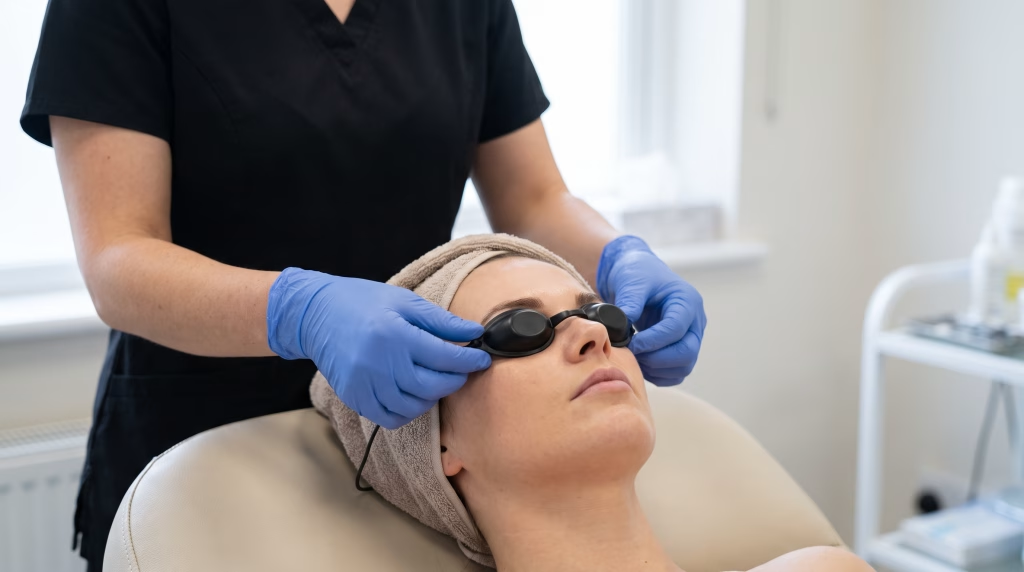
Regarding skipping the patch test for laser hair removal and going straight to treatment, the short answer is no.
I don’t treat it as a box-ticking appointment, and I don’t use it to slow people down. I use it because laser is a medical-style treatment decision, not guesswork. Skin can look straightforward in a consultation and still react differently once the laser hits it. That’s the gap a patch test closes.
Why a Patch Test Is Not Optional for Laser Hair Removal
I say this plainly in clinic: a patch test for laser hair removal is a safety step, not a sales step.
Laser hair removal is usually done as a course, not a one-off, and major clinical guidance suggests that 4 to 8 treatments are typically required for best results, with the clinician choosing settings that suit that person’s skin and hair rather than using a generic approach, as outlined by the Mayo Clinic’s guide to laser hair removal. So the first decision matters. If the starting settings are wrong, that affects the whole course.
A consultation tells me a lot. It does not tell me everything. The patch test is where I stop talking in theory and check how your skin responds in real life, on a small area, with the settings I am considering for you.
My rule in clinic: if I haven’t seen your skin handle the laser properly, I don’t move to a full area.
That matters even more if your skin tone is deeper, if you’ve had pigmentation issues before, if you’ve had recent sun exposure, or if medication could be making your skin more reactive. In those situations, rushing is where trouble starts.
You don’t assume. You assess first.
And if laser isn’t right for you, or isn’t right yet, I’ll say so. I’d rather lose a booking than treat someone unsafely.
What Happens During Your £15 Patch Test and Consultation
Wondering what happens in a patch test, and why I charge for it instead of treating it like a free add-on?
The short answer is that this appointment is doing real clinical work. It is not a sales chat dressed up as one. The £15 covers the consultation and the patch test together because I need both to decide whether treatment is safe, what settings are realistic, and whether we should go ahead at all.
I start by checking the details that can change treatment decisions on the spot. That includes your medical history, current medication, pregnancy status, skin conditions, past pigmentation problems, recent sun exposure, and fake tan. I also ask what area you want treated and what outcome you expect, because the plan has to match both safety and reality.
Some of the most important information sounds minor to clients. A new prescription. A weekend in the sun. A patch of irritation that has nearly settled. In clinic, those details are not minor.
Once I have that background, I assess the treatment area itself. I look at skin tone, hair colour, hair density, and any signs that the skin barrier is irritated or recently exposed to heat or UV. Then I choose a small, discreet part of the actual area you want treated for the patch test. The reason is simple. Your underarm, face, bikini line, and lower legs can all behave differently, so I need the test to be relevant to the skin we plan to work on. Guidance from the British Medical Laser Association supports using a discreet test area and then observing it over 24 to 48 hours for delayed reactions.
The test itself is quick. I cleanse the skin, prepare the area, and deliver a small number of pulses using the settings I am considering for you. The sensation is usually a quick hot flick. Brief, but noticeable.
What I learn from that small test is more useful than many people realise. I can see whether your skin produces the kind of immediate response I expect, whether the hair and skin are taking up energy in the way they should, and whether my starting settings need to be adjusted before a full treatment. A consultation gives me the theory. The patch test lets me check your skin in practice.
I do not patch test a random spot just to tick a box. I also do not patch test and treat the full area in the same appointment. If I have not given your skin time to declare itself, I have not finished assessing it.
Before you leave, I explain exactly how to look after the area and what to keep an eye on over the next two days. If anything worries you, you contact me. If the skin settles as expected, I can book treatment with more confidence and with settings based on your skin, not guesswork.
The 48-Hour Wait What I Am Actually Looking For
The wait after a patch test is where the useful information shows up.
A lot of people think I’m only checking whether the skin goes red. That’s part of it, but it isn’t the full picture. Temporary redness, swelling, and irritation can happen after laser hair removal and usually settle within a few hours to 3 days, while more serious effects such as blistering or scarring are uncommon but possible, which is why the test area is used first on a tiny scale according to the American Academy of Dermatology’s laser hair removal FAQs.

Redness is only the start
On the day, I expect some reaction. Laser creates heat in the follicle. So a bit of redness doesn’t automatically mean anything has gone wrong.
What matters is how that reaction behaves.
I’m looking at:
- How quickly the redness settles
- Whether the area stays calm or becomes more irritated later
- Whether swelling is mild and expected, or looks like a warning sign
A skin response that settles cleanly tells me something very different from a response that keeps building.
Pigment changes matter more than people realise
Experience matters. Some reactions don’t look dramatic at first. They show up later as subtle darkening or lightening in the skin.
That’s why I tell clients not to judge the patch test after ten minutes in the mirror. The useful part is the delayed response over the next day or two. If pigment shifts start to show, I need to know that before I treat a larger area.
A patch test isn’t there to prove you’re “fine”. It’s there to show me what your skin actually does with that level of energy.
This matters for every skin tone, but it matters even more on deeper skin. If the settings are too aggressive for the amount of melanin in the skin, pigmentation problems can follow.
I am also confirming your settings
The patch test is a calibration step. That is the part generic explanations often miss.
I use the response from that small area to help confirm whether the settings are suitable for you. If your skin tolerates them well, that gives me a proper starting point. If it reacts more than expected, I adjust. Sometimes I delay treatment. Sometimes I advise against laser for now.
Here is what the patch test can tell me that a consultation alone can’t:
| What I assess | Why it matters |
|---|---|
| Skin reaction at the intended settings | It shows whether the planned energy is sensible for your skin tone and area |
| Speed of recovery | It helps me judge whether the response is routine or too strong |
| Delayed irritation | Some issues don’t appear immediately |
| Pigment response | This is one of the main reasons I don’t rush deeper skin tones |
| Comfort tolerance | It gives a realistic sense of how the treatment may feel for you |
And that’s why I won’t treat everybody the same. Same machine, same body area, same hair colour, none of that means the same settings.
Skin Tones Medications and Sun Exposure
Some clients need a more cautious patch-test process. That’s normal. It doesn’t mean laser is off the table. It means I assess properly first.
Deeper skin tones need accurate settings
I use a SMARTDiode diode laser, and it is suited to all skin types including darker tones such as Fitzpatrick 5 and 6. But suited to doesn’t mean automatic. It still needs proper assessment.
With deeper skin tones, the settings need more care because higher melanin means the skin can absorb energy differently. If the settings are wrong, pigmentation is the risk I’m thinking about first. That’s exactly why the patch test matters so much.
If darker skin is your concern, read the clinic’s page on laser hair removal for dark skin. It explains the treatment approach in more detail.
Other things that can change the plan
These are the common reasons I slow down, postpone, or say no for now:
- Recent sun exposure or tanning: if your skin has caught the sun, laser may need to wait.
- Fake tan on the area: this can interfere with safe treatment.
- Certain medications: especially anything that may make skin more reactive to light or heat.
- Pregnancy: I don’t treat through pregnancy, and I explain why I wait until after pregnancy to treat.
- Some skin conditions: active irritation, flare-ups, or damaged skin need assessing first.
- A history of pigmentation issues: if your skin has marked easily before, I take that seriously.
Sometimes the safest answer is “not yet”. Sometimes it’s “laser isn’t the right treatment for you”. I’d rather be honest than push ahead.
How to Book Your Laser Patch Test in Portsmouth
Wondering how to book a patch test without turning it into a back-and-forth over messages? Keep it simple, but do it properly. The booking itself is quick. The useful part is making sure I have enough information to judge whether your skin is ready to be tested safely.
Before you book, tell me anything that could affect the result of the test. Recent sun exposure, fake tan, skin irritation, new medication, or a change in your skin health can all alter what I do on the day. I would rather know that upfront than patch test skin that is not in a safe condition to assess.
If you are in Portsmouth or Southsea and want to arrange it, use the laser patch test contact page. Every appointment is carried out by Natasha personally, so the screening and the treatment plan stay consistent from the first patch through to your course.
Here is the booking process I want clients to follow:
- Request the patch test and consultation
- Say if anything has changed with your skin, medication, or sun exposure
- Come with clean skin on the area
- Let the patch test settle for the review period before booking full treatment
The patch test costs £15, and that amount comes off your first laser appointment. Treatment itself runs from £26 for a mini area up to £280 for full body, and every price is listed on my laser hair removal prices in Portsmouth page. I do not treat it as an admin fee or a sales step. It is the part of the process that lets me test a small area first, check how your skin handles the settings used, and decide whether I should proceed, adjust, delay, or stop.
In a one-practitioner clinic, appointment time matters, because each patch test slot is time set aside to assess one person safely, not to squeeze people through quickly.
If I can offer you an appointment that week, I will. If I cannot, I will give you the next honest slot. I would rather book you at the right time, with skin in the right condition to test, than rush the first step and get unreliable information from it.
Your Patch Test Questions Answered
Can I have the full treatment on the same day?
No. I need the observation period after the patch test first. If someone is willing to patch test and treat the full area immediately after, they are skipping the part that makes the patch test useful.
Does the patch test hurt?
You’ll feel it. I won’t pretend otherwise.
For most clients it’s brief and very manageable, more like a quick heat flick than ongoing pain. The sensation also gives you a realistic feel for treatment, which is useful before starting a course, and I go into how much laser hair removal actually hurts in more detail.
What if I react to the patch test?
Then the patch test has done its job.
A reaction on a tiny area is far better than the same reaction across a full treatment zone. Depending on what I see, I may adjust settings, delay treatment, advise extra caution, or tell you laser isn’t suitable right now.
Can a patch test still miss a reaction?
Yes, it can. And I think clients deserve a straight answer on that.
A patch test is a strong safety check over 24 to 48 hours, but it is a risk-management tool, not a guarantee. It can still miss a later sensitivity, which is one of the reasons settings may need adjustment if the full treatment area responds differently, as explained in this piece on the importance of patch testing in laser hair removal.
Is this about permanent hair removal?
No. The correct term is permanent hair reduction or long-term reduction. Most clients see a strong reduction over a course of treatment, but laser is misrepresented if someone promises “100% permanent”. If you want a clear explanation of what that really means, read is laser hair removal permanent.
Why do you make such a point of this step?
Because I have no interest in treating someone just because they’re ready to book.
I want to know how your skin behaves, whether the settings are right, and whether it’s sensible to proceed. That’s the standard I work to. It protects the clients who go ahead, and it protects the clients who shouldn’t.
If you’re considering laser and want a proper safety-first start, book your patch test and consultation with House of Glam HQ. It’s a straightforward appointment, the £15 comes off your first treatment, and it gives me the information I need to treat you properly, or advise you if it’s not suitable.

