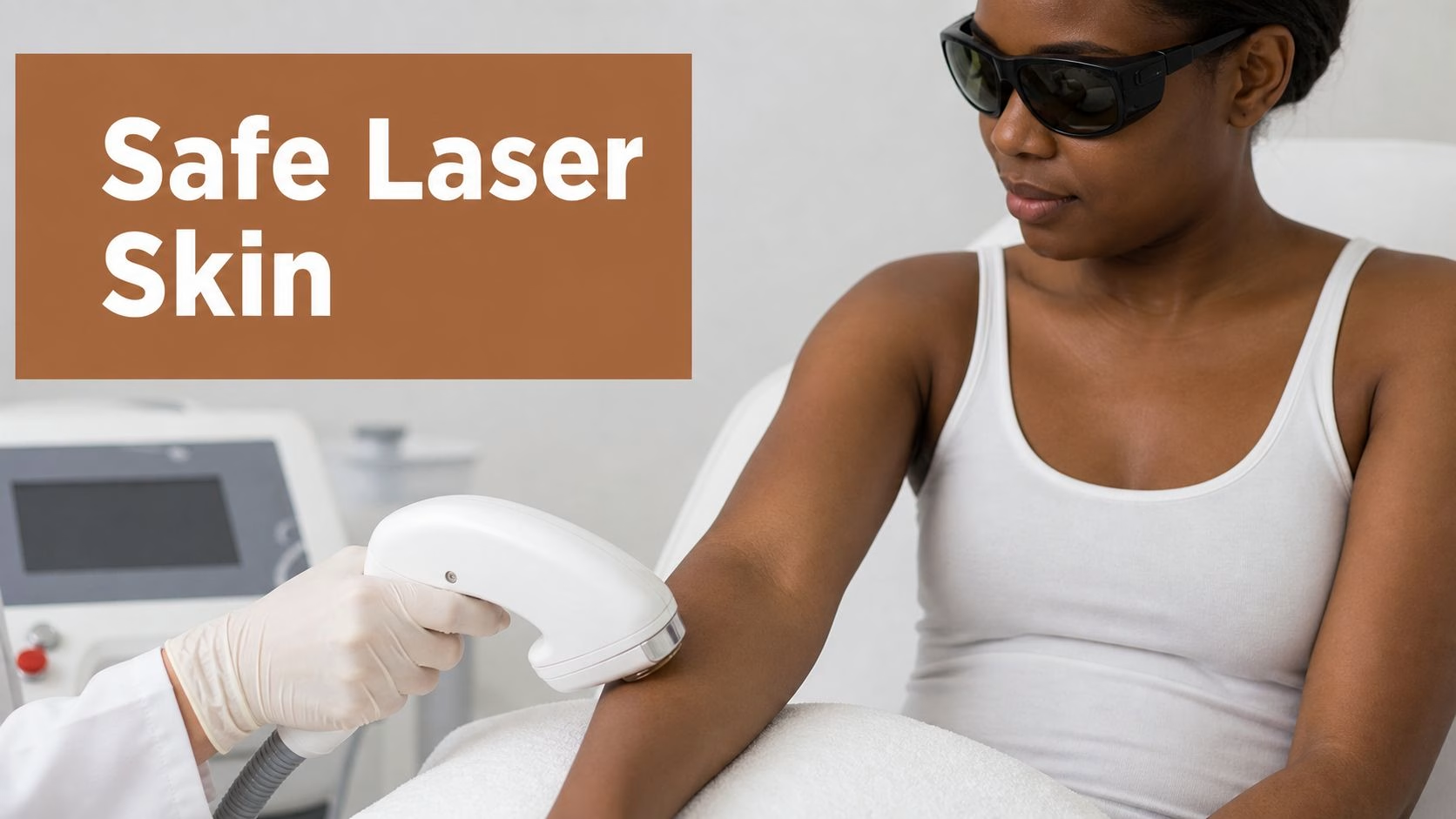
If you’ve been told your skin is “too dark for laser”, or you’ve seen someone left with marks after the wrong treatment, I understand why you’d be cautious. I’m Natasha, sole practitioner at House of Glam HQ in Southsea, Portsmouth, and after 7+ years of clinical experience I can tell you this plainly: darker skin usually isn’t the problem. The wrong machine is. Generic settings are. And so is a rushed operator.
I treat laser hair removal as a safety-led treatment first. Especially on deeper skin tones. Because careless treatment can trigger burns or pigmentation changes, and once that happens, it’s distressing and avoidable. The honest picture is much more reassuring than what a lot of women have been told. Darker skin can often be treated safely and effectively, but only with the right laser, the right assessment, and the discipline to do it properly from the first patch test onwards. We will also point you towards our main laser hair removal in Portsmouth page, where you can explore areas treated, clinic locations and next steps.
Tired of Being Told Laser Isn’t for You?
A lot of women come to me already frustrated.
They’ve enquired somewhere else and been told they’re “not suitable”. Or they’ve had that awkward conversation where nobody quite explains why. Or worse, they were treated anyway on the wrong system and the skin reacted badly, so now they’re nervous about trying again.
What I say in clinic is simple. When a place says, “we can’t treat your skin”, that often really means, “our machine can’t treat your skin safely”, or “we don’t have the experience to do this properly”. Those are very different things.
That distinction matters, because it changes the whole conversation. It puts the focus where it belongs, on the technology and the operator, not on blaming your skin tone as if laser is automatically off limits. If you’re researching laser treatment because shaving is relentless, ingrown hairs are bothering you, or you just want long-term reduction without the cycle of waxing and regrowth, you deserve a proper answer.
What I hear most often in consultations
Some women tell me they assumed laser just wasn’t made for them. Others say they were warned off entirely because of pigmentation risk. And some have done a lot of reading online and ended up more confused than when they started.
All of that is understandable.
Being turned away doesn’t always mean laser won’t work for you. Sometimes it means the clinic in front of you doesn’t have the right setup for your skin.
I’d rather be very honest than vague. If a treatment isn’t right, I’ll say so. But I won’t tell someone with deeper skin that laser hair removal is impossible when the underlying issue is that not every machine is suitable, and not every practitioner calibrates with enough care.
The fear is valid, but the conclusion is often wrong
Darker skin does carry a higher risk of pigmentation problems if treatment is done badly. That’s real. So the caution makes sense.
But caution should lead to better laser selection and stricter protocols, not blanket avoidance.
That’s the difference between an informed no and an outdated one.
Why Your Skin Is Not the Problem The Machine Is

For laser treatment for dark skin, the first thing that matters is the type of energy being used. The chosen energy type is a common source of problems. If the system can’t separate hair pigment from skin pigment well enough, the risk goes up fast.
I use SMARTDiode, which is an 808nm diode laser. That wavelength is well suited to deeper skin tones because it targets the pigment in the hair while being safer for the pigment in the skin than older options were. That doesn’t mean anyone should be casual with it. It means the tool is appropriate when it’s used properly.
Why older systems and generic approaches cause trouble
The issue with darker skin has never been “laser can’t work”. The issue is that some machines are far too blunt in how they treat pigment. And broad, generic settings are exactly how skin gets overstimulated.
That’s why I’m cautious about any place that talks more about speed than assessment.
For darker skin, UK best practice recognises that longer wavelengths are safer because they’re less absorbed by surface melanin, which helps reduce the risk of post-inflammatory hyperpigmentation or hypopigmentation, and that’s also why a proper patch test is mandatory before full treatment for Fitzpatrick IV to VI skin types in UK best practice for darker skin laser safety. The principle is what matters here. The laser must be chosen and handled in a way that protects the skin while still treating the follicle.
Why diode can work well on deeper skin tones
Darker-skinned clients often have one factor working in their favour. Hair that’s dark and coarse tends to respond well to laser. So from a hair-targeting point of view, there’s often good potential.
The safety aspect is where the true skill lies. I don’t publish settings because I don’t believe darker skin should ever be treated from a fixed formula. Your skin is assessed properly, your cooling is calibrated with the treatment, and the balance is checked carefully. Enough energy to treat the follicle, without provoking the surrounding skin.
Here’s the simple comparison:
| Approach | What happens |
|---|---|
| Right machine, individually calibrated | Hair can be treated while skin pigment is protected as much as possible |
| Wrong machine or one-size-fits-all settings | The skin absorbs too much heat and that’s when marks, burns, or uneven pigment become a real risk |
The safest machine in the wrong hands can still be a problem. And a decent operator on the wrong machine is still limited.
That’s why I don’t accept the old idea that deeper skin should automatically avoid laser. Done carelessly, yes, it can go wrong. Done properly, it can be a very good option.
Your Safety Checklist The Patch Test and Operator

A machine matters. But the person using it matters just as much.
I’m a sole practitioner, so every laser treatment is performed by me personally. Nobody assesses you, then passes you to someone else. For darker skin, that continuity matters because safe treatment depends on reading the skin properly at each appointment and adjusting with care as the course progresses.
What I’m looking at before I treat
I assess your skin tone properly, look at the area being treated, check for recent tanning, ask about products you’re using, and look at the hair itself. I also want to know if you’ve had previous laser elsewhere and how your skin responded.
I don’t rush this part. I can’t.
A safe treatment plan for deeper skin means the laser has to be calibrated to your Fitzpatrick type, with skin protection built in from the start. UK safety guidance is clear that practitioners should use the lowest possible effective fluence, longer wavelengths, and sufficient epidermal cooling, and that laser is contraindicated if someone has a recent or very dark tan compared with their natural skin colour, as outlined in UK guidance on safe parameter selection for darker skin tones.
Why the patch test is not admin
My £15 patch test is required, and for darker skin it is not a formality. It’s the single most sensible safety step in the whole process. I use it to confirm that the plan is safe on a small area first, before moving ahead with full treatment.
That’s what makes ensuring safe laser hair removal more than a slogan. It’s a process.
A good patch test tells me:
- How your skin responds, not how someone assumes it will respond
- Whether the calibration is appropriate, with skin protection and effective follicle targeting in balance
- Whether anything needs adjusting before a full appointment is booked
What I won’t do
I won’t publish settings online. And I won’t treat dark skin off a standard template.
That’s not me being awkward. That’s me protecting your skin.
Practical rule: if someone seems casual about patch testing on deeper skin tones, leave.
The operator’s judgement is a huge part of what keeps laser safe. For darker skin, who treats you is not a small detail. It’s central.
The Pre-Treatment Rules I Am Strict About

Pre-care matters more than people think. On deeper skin tones, it’s one of the main things that helps prevent pigmentation trouble.
For some laser procedures, the risk gap is stark. In darker skin types, post-inflammatory hyperpigmentation has been reported at 11.6% for Fitzpatrick IV and 33% for Fitzpatrick V, compared with 0.26% for fair skin, which is why strict prep and careful treatment choices matter so much in clinical data on laser-related PIH in skin of colour.
The rules before your appointment
I’m strict because I’d rather prevent a problem than deal with one later.
- No fake tan for about 4 weeks beforehand. Artificially darkened skin raises the risk of the laser interacting with skin pigment.
- No sun exposure or sunbeds on the area. Tanned skin is not safe skin for laser.
- Come with clean, product-free, un-tanned skin. I need to see your true skin clearly.
- Shave the day before. Don’t wax or pluck, because that removes the hair target the laser needs.
- Avoid irritating active skincare before treatment. If you’re using products that make skin more reactive, tell me before we proceed.
Why I won’t bend these rules
Laser works by finding pigment in the hair. If your skin has been darkened by sun or fake tan, you’re increasing the chance of heat landing where I don’t want it. On darker skin, that’s exactly the type of avoidable mistake that can lead to marks afterwards.
That’s why I will postpone if the skin isn’t ready.
A delayed appointment is inconvenient. Pigmentation is worse.
Here’s the simplest explanation:
| Before treatment | Why it matters |
|---|---|
| Untanned skin | Helps protect your natural skin pigment |
| Shaved hair | Leaves the follicle target in place |
| No waxing or plucking | The laser needs the hair root to do its job |
I’d much rather have a client slightly annoyed that I’ve made them wait than see them dealing with unnecessary skin stress because someone ignored obvious red flags.
What to Expect From Your Course of Treatment

Once we know your skin is safe to treat, the structure is very straightforward. The pace for darker skin is broadly similar to anyone else. The difference is that I stay especially focused on safety and skin response as we go.
A typical course is 6 sessions, spaced 4 to 6 weeks apart, with the plan adjusted as treatment progresses. Most women usually see 80 to 90% reduction by the end of the course. That’s permanent hair reduction, not a promise of every single hair disappearing forever.
How it feels and how results build
The sensation is often described as a quick hot flick. The cooling built into the treatment makes a real difference to comfort, but I’m always more interested in how your skin is responding than in pushing through quickly.
Hair doesn’t vanish on the day. It sheds over the following weeks, then each session catches new hairs in the next active cycle.
A realistic journey usually looks like this:
- Patch test first, because safety comes before speed.
- Early sessions thin the growth, so hair often starts feeling finer and less dense.
- Mid-course appointments build the reduction, especially when spacing is kept consistent.
- Later sessions tidy up more stubborn areas, where growth can be influenced by hormones or normal variation in the cycle.
What affects your result most
Two things matter above all: the machine and the operator. After that, your hair colour and thickness matter, your consistency matters, and your aftercare matters.
Dark hair usually responds best, which is often in your favour. Hormonal areas can be more stubborn, so sometimes maintenance is needed later to keep things where you want them.
The women who do best with laser usually aren’t the ones chasing the fastest fix. They’re the ones who stick to the schedule and protect their skin properly between sessions.
If you want more detail on timing and planning, I’ve also written about how many laser sessions are needed. But the short version is this: expect a course, expect gradual improvement, and expect honesty rather than overpromising.
Aftercare and How to Book Your Patch Test
Aftercare is where you protect the work we’ve done. On deeper skin tones, this is not the point to get casual.
The main aim after treatment is simple. Keep the skin calm, cool, and protected from anything that could trigger pigment changes while it settles.
What I want you to do afterwards
For exposed areas, use a daily high-factor SPF. And avoid sun on the treated area for at least 48 hours. Freshly treated skin is more vulnerable, and that’s exactly when I want you being careful.
I also tell clients to avoid heat, heavy exercise, and fake tan while the skin settles. If the area feels warm or a bit sensitive, don’t pile irritation on top of it.
A sensible aftercare routine includes:
- Daily SPF on exposed areas, because UV is one of the easiest ways to provoke pigmentation afterwards
- No intense heat straight away, including hard workouts if the area is still reactive
- No fake tan until the skin is settled, for the same reason I’m strict before treatment
- Pay attention to your skin, and tell me if anything doesn’t look right
Pigment protection between appointments
General sunscreen advice on its own can be a bit too basic for darker skin. Guidance for preventing post-laser hyperpigmentation also recommends tyrosinase inhibitors such as azelaic acid, kojic acid, or Vitamin C underneath SPF throughout the treatment course to help suppress new pigment formation, as outlined in guidance on pigment prevention after laser on darker skin.
That doesn’t mean everyone needs the same skincare routine, and I’ll always tell you to keep anything irritating away from freshly treated skin. But the principle is right. Protect the skin’s own pigment so it doesn’t react unnecessarily between sessions.
When you’re ready to start
If you’ve been turned away before, or you’re still unsure whether laser treatment for dark skin is safe for you, start with the step that gives the clearest answer. A proper patch test.
That’s why I lead with safety, not sales. I’d rather assess you properly than tell you what you want to hear.
If you’re ready, you can book a consultation and arrange your £15 patch test, which is deducted from your first treatment. That gives us the chance to assess your skin, check suitability, and plan treatment carefully from the start.
If you want honest advice and one-to-one care from me personally, House of Glam HQ is the place to start. I’m based in Southsea, Portsmouth, and I carry out every laser appointment myself. For darker skin, the safe first step is always the same: book the £15 patch test, let me assess your skin properly, and I’ll tell you clearly whether laser is suitable for you. You can contact me at houseofglamhq@gmail.com or call 07831 846273.
