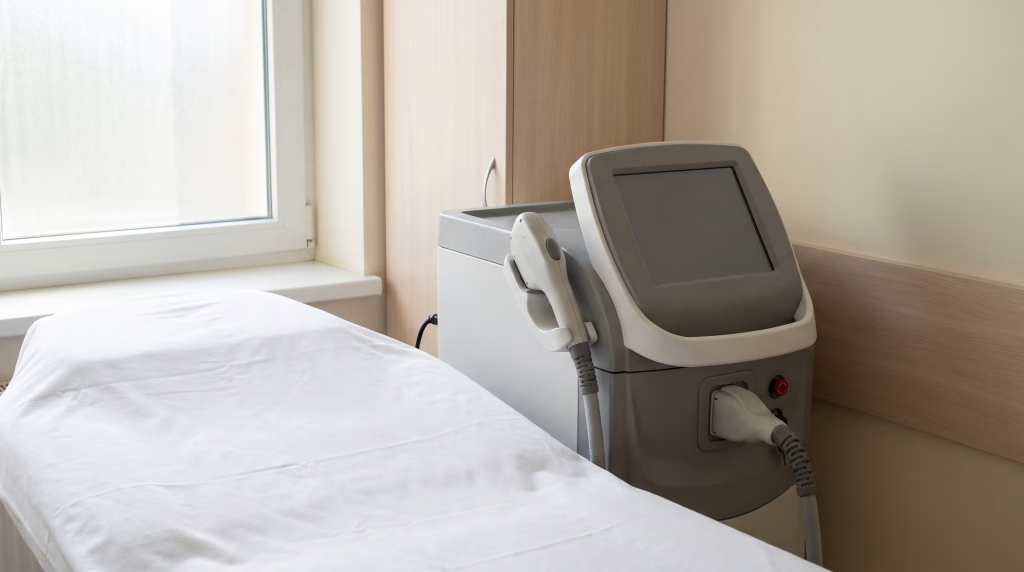
I don’t perform laser hair removal on pregnant clients, and most responsible clinics have the same policy, because there is no human safety data for this group. If you’re pregnant, or you’ve just found out you are, the right answer is simple: wait.
If you’re reading this, you’re probably in one of two situations. You were planning to start laser and now you’re pregnant, or you’re halfway through a course and worried everything has to stop. I understand both. And I’d rather give you a straight answer than a vague one.
I’m Natasha, sole practitioner at House of Glam HQ in Southsea, Portsmouth, and after 7+ years in aesthetics my approach is consistent: if a treatment isn’t right for you at that moment, I’ll say so. Laser hair removal while pregnant falls into that category. Not because it’s been proven harmful, but because it hasn’t been proven safe, and for an elective cosmetic treatment that matters.
Can You Get Laser Hair Removal While Pregnant?
No. I don’t carry out laser hair removal during pregnancy, and responsible providers in the UK follow the same line because there are no clinical studies evaluating the safety of laser hair removal specifically for pregnant women or their fetuses (Healthline on laser hair removal in pregnancy).
That’s the clearest answer I can give you.
If you’re pregnant, trying to conceive, or you’ve just had a positive test while planning treatment, I pause laser. No negotiation, no trying to squeeze in one last session, no “it’ll probably be fine.” For me, that’s basic professional responsibility. Laser hair removal is an elective treatment for long-term reduction, not something medically necessary, so when safety evidence is missing, the sensible option is to leave it alone.
Why my answer is firm
This isn’t me being dramatic. It’s a standard of care.
In practice, laser hair removal while pregnant raises a question that no responsible practitioner can answer with certainty: can I say this is safe for you and your baby? I can’t. And if I can’t say that, I won’t treat.
My rule in clinic: if the evidence isn’t there for pregnancy, the treatment waits.
A lot of women are also juggling loads of other decisions at the same time, scans, appointments, symptoms, birth planning. If you’re looking for broader pregnancy wellbeing support, I’d rather point you towards reliable reading such as Bornbir’s guide for prenatal acupuncture, and for anything medical I’d always say speak to your midwife or GP.
What this means in real life
If you ask me whether you can have laser while pregnant, the answer is no. If you ask whether I can make an exception for a small area, still no. If you ask whether one session matters, still no.
That clarity usually helps. You don’t need mixed messages when you’re pregnant. You need someone to tell you plainly what’s appropriate and what isn’t.
The Honest Reason My Answer Is Always Wait

The biggest misunderstanding around this topic is the difference between “proven dangerous” and “not proven safe.” They are not the same thing.
Laser hair removal during pregnancy hasn’t been proven dangerous. But it also hasn’t been proven safe. And that gap is the whole issue.
Why there isn’t proof
You can’t ethically run cosmetic treatment trials on pregnant women just to see what happens. That means there’s no proper body of evidence that lets a practitioner say, hand on heart, this is safe in pregnancy. So in aesthetics, where the treatment is optional, the responsible answer is to avoid it.
That’s exactly why responsible clinics refuse laser hair removal to pregnant clients. It isn’t because providers are being difficult. It’s because there’s no clear human safety data, and that matters when you’re deciding what’s acceptable treatment and what isn’t.
Why I won’t blur the line
I think clients deserve honesty. I’m not going to hide behind fluffy wording or make it sound like a grey area if my actual clinic decision is black and white.
Here’s the trade-off as I see it:
| Question | Honest answer |
|---|---|
| Is laser hair removal essential during pregnancy? | No |
| Is there safety evidence strong enough for me to treat? | No |
| Is waiting likely to cause harm? | No |
| Is waiting the safer option? | Yes |
I’d rather be cautious with you and your baby than treat when the evidence isn’t there.
That’s why my policy is a firm no, and why I’m comfortable being direct about it. Some treatments can be adapted. This one gets postponed. Simple.
This is precaution, not panic
If you had a session before you knew you were pregnant, don’t spiral. Pausing is a precaution, not an emergency response. The point is to stop once you know, not to frighten you about what’s already happened.
That calm approach matters. Pregnancy comes with enough noise already. My job is to give you a clear boundary, explain the reason properly, and take the pressure off.
The Practical Problem with Pregnancy Hormones

Even if safety wasn’t the question, pregnancy still isn’t a good time for laser from a results point of view. Hormones change the playing field.
During pregnancy, hair growth can become more active and more unpredictable. Some women notice thicker body hair, some notice facial hair that wasn’t there before, and some see changes come and go throughout the pregnancy. That makes treatment timing less reliable and results less consistent.
Skin can react differently
The other issue is pigmentation. Pregnancy-associated hyperpigmentation, often melasma, is common, and that raises the chance of skin reactions such as burns or lasting discolouration if laser is attempted.
Laser works by targeting pigment. So if your skin is already more pigment-prone than usual, that’s not ideal. It means the treatment can become a worse fit at the exact time you want to be extra careful.
Waiting gives you a better chance of safer treatment and more predictable results.
Why it’s usually a poor investment during pregnancy
I’m very practical about this. If a treatment is likely to be less predictable, I’ll tell you before you spend time or money on it.
Pregnancy can affect:
- Hair growth patterns, which means new growth may appear while hormones are shifting
- Skin sensitivity, so the area may feel more reactive than normal
- Pigment response, which matters because laser targets melanin
If you want a fuller picture of what hormone-driven change can look like later in pregnancy, even outside aesthetics, baby’s growth in third trimester is a useful read because it helps explain just how much is changing in the body at that stage.
And if you’re wondering about longer-term expectations from treatment in general, my guide on whether laser hair removal is permanent explains how permanent hair reduction works and why ongoing hormonal shifts matter.
What If You Get Pregnant Midway Through a Course?

This part is usually the one women worry about most, and it’s much simpler than people expect. If you get pregnant during a laser course, we pause. That’s it.
You tell me as soon as you know, and I stop your sessions straight away. No drama. No judgement. No pressure.
What pausing actually means
Pausing doesn’t mean you’ve ruined your course. It doesn’t mean everything done so far was pointless. It just means treatment stops, then resumes later when the timing is right.
The hair will still be there to treat afterwards. Your plan can pick back up once you’ve had your baby and you’re ready to return. I’d always rather a client tells me early so we can handle it properly, but this is a routine precaution, not a crisis.
If you fall pregnant mid-course, tell me and we pause. You won’t lose anything by doing that.
A common worry I hear
Women often ask if they’ll have to start from scratch. Sometimes yes, sometimes no, it depends on where you were in your course and what your hair is doing after pregnancy. But the key point is that stopping is the right move, and it doesn’t create some irreversible problem.
If you want to understand how courses are usually structured, my page on how many laser hair removal sessions you need gives a realistic overview. Pregnancy puts that schedule on hold.
Safe Hair Removal Alternatives During Pregnancy

While laser is off the table, you’ve still got options to keep things manageable.
The simplest one is shaving. It stays at the surface, it’s straightforward, and it doesn’t involve heat or active chemicals. That’s why temporary methods like shaving are commonly recommended as the safest alternative during pregnancy, especially when skin is more sensitive.
What’s fine, what I’d avoid
Here’s how I talk clients through it in real life:
- Shaving is the easiest choice. Quick, familiar, and easy to keep up with through pregnancy.
- Trimming is also fine. Especially useful if your skin feels touchy and you want the least fuss possible.
- Epilating can be okay. Some women are happy to continue with it, others find it too uncomfortable once sensitivity ramps up.
- Waxing may feel harsher than usual. Skin can be more reactive in pregnancy, so go gently and pay attention to how your skin responds.
- Avoid hair-removal creams. I don’t recommend depilatory creams during pregnancy. The chemicals just aren’t worth bothering with for a temporary fix.
- Avoid laser until after pregnancy. This one stays a no.
Comfort matters as well
Sometimes the best answer isn’t the most glamorous one, it’s the one that gets you through the next few months comfortably. If that means shaving more often, fine. If it means trimming instead of waxing, also fine.
And if pregnancy is already throwing nausea, tiredness, and skin sensitivity at you from all angles, practical help elsewhere can make a difference too.
If facial hair is the area bothering you most, I also have information on facial hair removal for women for when you’re ready to come back to proper laser treatment later on.
How and When to Resume Laser After Your Baby
Once your baby is here, the next question is usually when you can restart. In UK practice, laser hair removal is often resumed at 4 to 6 months postpartum, because that window is commonly linked to hormone normalisation and more reliable follicle targeting.
I also advise waiting until after pregnancy and breastfeeding are complete before restarting. That gives your body time to settle and gives me a much clearer picture of your skin and hair again.
The timing matters
If you come back too early, you may still be dealing with shifting hair growth, sensitivity, or pigment changes. Waiting a bit longer is frustrating in the moment, but usually gives you a better base to work from.
For anything pregnancy-specific or medical, check with your midwife or GP. I treat hair, I don’t give pregnancy advice, and I’m very clear about that boundary.
How restarting works
When you’re ready, restarting is straightforward:
- Get medical reassurance if you need it. If there’s anything unusual in your pregnancy, birth recovery, skin, or general health, speak to your midwife or GP first.
- Wait until the timing is right. Usually that means after birth, after breastfeeding, and often around the 4 to 6 month postpartum point.
- Book a new patch test. A £15 patch test is required before starting or resuming treatment because skin response can change.
- Review the area again. Hair patterns after pregnancy can be different from before, so I reassess and plan from there.
If you want to know what that step involves, my page on the patch test for laser hair removal explains it clearly.
When you’re ready, that’s the phrase that matters here. Not sooner, not because you feel pressure to get back on track, and not because anyone’s trying to rush you. The treatment can wait. Your safety comes first.
When you’re ready after pregnancy, I’ll be here to help you restart properly. You can read more about treatment areas, patch testing, and what to expect on the House of Glam HQ laser hair removal page. If and when the time is right, you can book your £15 patch test and we’ll take it from there, calmly and with no pressure.

