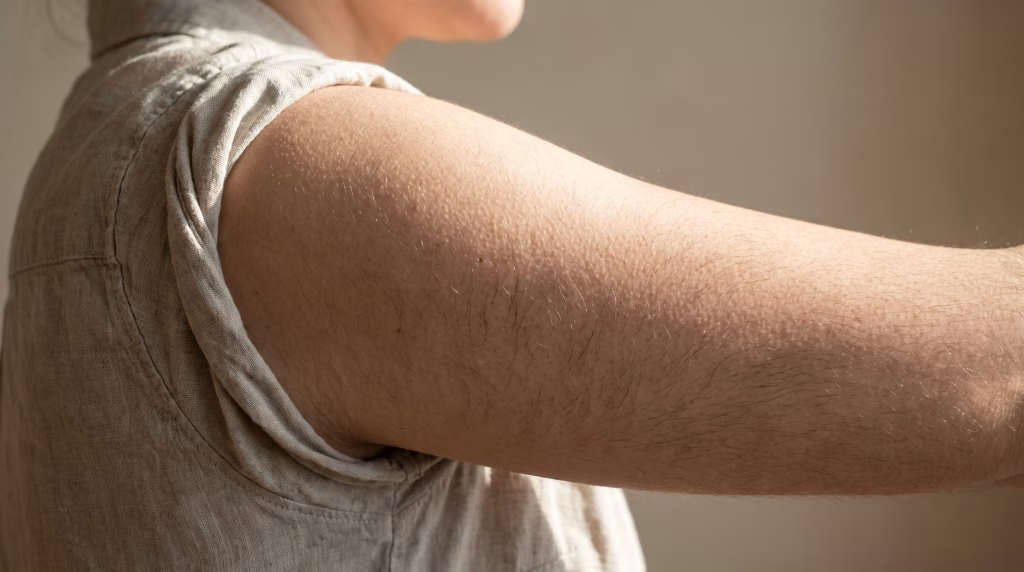
Yes, you can shave your arms, and it’s safe, common, and perfectly fine. And no, shaving does not make arm hair grow back thicker, darker, or faster.
Table of Contents
- Yes, You Can Shave Your Arms, and the Thick Hair Myth Is Wrong
- How to Shave Your Arms With the Least Irritation
- Why Shaving Is the Correct Prep for Laser Hair Reduction
- Practical Laser Prep Pointers for Arm Sessions
- Shaving Versus Laser, an Honest Maintenance Comparison
- Where to Go From Here and When to Ask a Practitioner
Yes, You Can Shave Your Arms, and the Thick Hair Myth Is Wrong

Shaving your arms is a normal grooming choice. It’s also one of the simplest ones, because arm skin is usually less reactive than areas like the underarms or bikini line, so many tolerate it without much trouble.
The biggest myth is the claim that shaving makes hair come back thicker, darker, or faster. It doesn’t. Shaving cuts hair at the skin surface, so it cannot change the follicle or alter how the hair grows back, and any perceived coarseness comes from the blunt regrowth tip rather than a change in follicle function, as noted in this practical arm-shaving explanation.
Practical rule: if the hair feels rough after shaving, that’s usually the cut edge, not a new hair type.
Why does the myth feel believable? Because unshaved hair naturally tapers to a finer point, while shaved regrowth starts blunt. That can make the hair feel stubbly for a short while, and when skin is smooth beside that new stubble, the contrast makes it look more obvious than it really is.
The key point stays the same, though; hair colour, thickness, and growth rate are set by genetics and hormones, not by the razor.
How to Shave Your Arms With the Least Irritation
Start with a clean, sharp blade. A blunt razor pulls at the hair instead of cutting it cleanly, and that extra drag is what usually leads to redness, rash, or small nicks.
Use a gel or cream rather than shaving dry. Dry skin creates more friction, which raises the chance of razor rash, micro-cuts, and that sore, tight feeling after shaving, so pre-cleansing, lubrication, and an alcohol-free moisturiser are the safer basics as set out here.
The routine that usually works best
Begin with warm water, not hot, and rinse the area first. That lifts surface debris and helps the blade glide more easily.
Shave with light pressure. If your skin is prone to irritation, move in the direction of hair growth instead of pressing hard against it, and avoid going over the same patch again and again. Repeated friction is where a lot of arm-shaving problems start.
Keep the stroke short around the forearm and near the elbow. The curve of the skin makes it easier to slip there.
Afterward, rinse with cool water, pat the skin dry, and apply a plain fragrance-free moisturiser. I’d also keep the area calm for the rest of the day, so skip harsh scrubs and avoid hot baths straight after. If the skin is already sore or visibly bumpy, stop shaving until it settles.
For people who want the skin care side of shaving in more detail, the House of Glam HQ facial guide is useful because the same logic applies, gentle prep, light pressure, and good aftercare.
Why Shaving Is the Correct Prep for Laser Hair Reduction
If you want to keep shaving arms forever, that’s fine. But if you want a longer-term reduction route, laser is the method that fits that goal, and shaving is exactly the right prep for it.
Laser works by targeting hair down at the root inside the follicle. That means the root has to still be there. Shaving removes only the hair at the surface, which leaves the follicle intact for the laser to target. Waxing, plucking, or threading remove the hair from the root, so they take away the thing the treatment needs to find.
The logic is simple. Shave, don’t wax, if you’re going into laser. Shaving the day before a laser session gives the skin time to settle, while waxing or plucking in the weeks beforehand removes the root the laser needs to target. That is clinic guidance rather than a research finding, though body shaving does turn up in research well outside aesthetics, including this study on swimmers who shaved the arms, legs and torso.
This is why a shaved arm is not a problem before laser, it’s the ideal starting point. And for anyone who wants to explore a longer-term route, the laser hair removal treatment Portsmouth page is the relevant service option.

UK grooming habits also show that body hair removal is mainstream rather than niche, with 55% of consumers in the UK saying they had removed underarm hair in the past year, according to Mintel’s 2023 Shaving Hair Removal report as reported by The Guardian report context here. Arms sit in the same wider grooming conversation, which is why the shaving question keeps coming up.
Practical Laser Prep Pointers for Arm Sessions
If you choose laser, shave the day before. Give the skin time to settle overnight so any redness or lingering sensitivity has eased before your appointment.
Keep the treatment area clean and free from heavy products on the day. No thick creams, no oils, and no deodorant on the skin that is being treated. Residue can leave the surface less even and make the session feel less comfortable.
What to avoid before your session
- No fake tan: it can make the skin harder to assess properly.
- No recent sun exposure: freshly warmed or reddened skin is more reactive.
- No waxing or plucking beforehand: those remove the root, which is the part the laser needs.
- No same-day rough shaving: if you’ve already irritated the skin, let it settle first.
House of Glam HQ requires a patch test before the first treatment, and the £15 patch test fee is deducted from the first treatment. The House of Glam HQ patch test page is the place to check the practical setup before booking.
Laser should be described as permanent hair reduction or long-term reduction, not a guaranteed permanent result. That is the more realistic framing, and it is the one I use in clinic.
Shaving Versus Laser, an Honest Maintenance Comparison
If you are happy to keep up with routine grooming, shaving arms is a perfectly reasonable choice. If you want to avoid seeing regrowth so quickly, laser is the lower-maintenance option to consider.
Shaving gives you an immediate result, costs little to start, and is easy to do at home. The trade-off is that the upkeep never really stops. Arm stubble often shows again within a few days, so people who want a consistently smooth look usually end up shaving weekly or every 1 to 2 weeks, depending on hair density and how obvious the regrowth feels on their skin.
Laser works differently. It is usually done as a course, and regrowth tends to become finer and sparser over time rather than disappearing in one session. That suits readers who are tired of repeated maintenance more than readers who only want the occasional tidy-up.
| Factor | Shaving arms | Laser hair reduction |
|---|---|---|
| First result | Immediate | Gradual over a course |
| Upkeep | Regular repeat shaving | Fewer maintenance sessions over time |
| Skin feel | Can cause stubble and irritation | Often reduces the need for constant shaving |
| Best for | People fine with quick, at-home maintenance | People wanting long-term reduction |
For a fuller maintenance comparison, the hair removal guide from Natasha is a practical clinic resource to read alongside this.
The honest answer is straightforward. Shaving works if you are willing to keep doing it. Laser is for the reader who wants to reduce that cycle over time.
Where to Go From Here and When to Ask a Practitioner
If you only came here for the general answer, you have it. Yes, you can shave your arms, the thick-hair myth is wrong, and the right choice is the one that fits your skin and your tolerance for upkeep.
If shaving leaves you with recurring bumps, persistent irritation, or ingrown hairs, that’s the point where I’d stop and reassess. A practitioner can help you decide whether you should trim instead of shave, change your razor routine, or move to a longer-term reduction plan.
If you want to talk it through, you can book a consultation or email houseofglamhq@gmail.com. You can also call 07831 846273 for a straightforward chat about laser prep, patch testing, and whether arm hair reduction makes sense for you.
And if you’re booking laser with me, remember the process is calm and one-to-one, with the patch test before your first session and clear prep guidance before you arrive. There’s no wrong route here, only the route that suits your skin, your schedule, and how much maintenance you’re willing to keep doing.
If you want a longer-term option for arm hair, House of Glam HQ in Southsea offers medical-grade laser hair reduction with clear prep and honest aftercare. Visit House of Glam HQ to read more about the service, or get in touch if you want to ask whether shaving, trimming, or laser fits your skin best.

