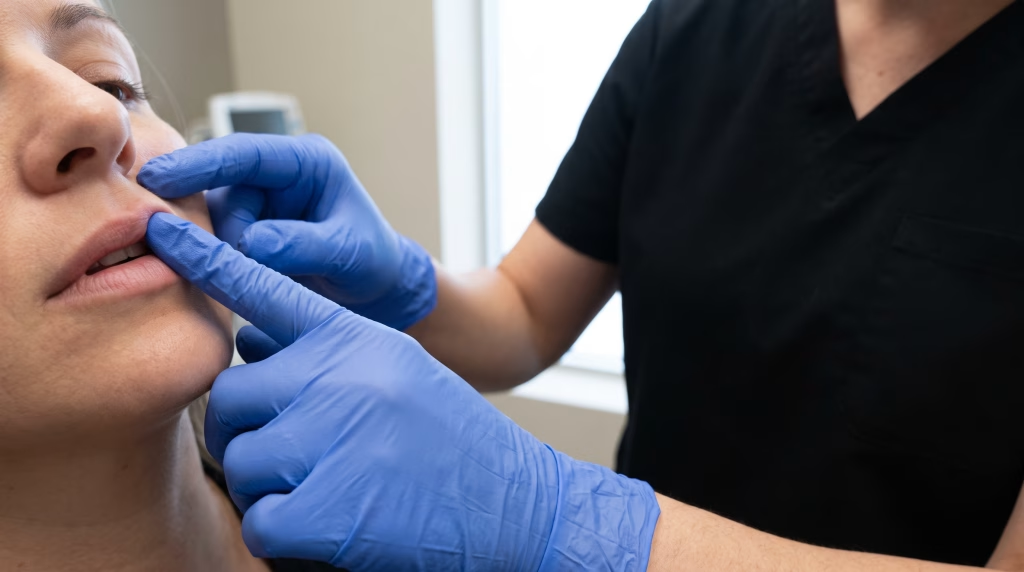
A small lump after lip filler can feel alarming, especially when you’ve just paid attention to every tiny change in your lips and then something feels uneven. I’m Natasha, the sole practitioner at House of Glam HQ in Southsea, Portsmouth, and I’d rather you read this calmly than sit at home worrying about the wrong thing. Most early lumpiness is swelling and filler settling, but a true lip filler nodule is different, and it’s worth knowing the difference so you can act sensibly.
Every treatment I do is personal, private, and assessed properly before anything goes near the lip. That matters because a careful approach reduces risk, and because you deserve a straight answer if something doesn’t feel right. If a lump is making you anxious, use this as a calm guide, not a reason to poke, press, or guess.
Table of Contents
- If You Have a Small Lump After Lip Filler, Read This First
- Normal Settling Versus a True Lip Filler Nodule
- What Causes Lip Filler Nodules and How Risk Is Reduced
- What to Do If You Think You Have a Lip Filler Nodule
- Why HA Filler Being Reversible Is Genuinely Reassuring
- Red Flags After Lip Filler That Need Prompt Attention
- How I Work at House of Glam HQ and How to Reach Me
- Common Questions About Lip Filler Nodules
If You Have a Small Lump After Lip Filler, Read This First
I know how unsettling it is to find a new lump in your lip and not know whether it’s normal or not. In the first week after treatment, that feeling often comes from swelling, the product settling, or the lip just being a bit uneven while everything integrates.
The honest picture is simple. Lip filler nodules are uncommon but recognised, and they’re important to understand because a persistent lump shouldn’t be ignored. The key is not to treat every lump as a crisis, and also not to brush off something that stays firm.
At House of Glam HQ, I work one-to-one in a calm, private setting, and every treatment is performed by me personally. That means if you’re worried about a lump, you’re not trying to explain it to someone new or wait for a rushed callback. You can get it looked at properly, with the focus on safety first.
If you want a general sense of how lips can settle after treatment, I’ve also written a House of Glam HQ lip filler guide, but the most important point stays the same. If in doubt, contact your practitioner rather than treat it yourself.
Normal Settling Versus a True Lip Filler Nodule
A new lump after lip filler is often just part of settling, especially in the first 7 to 10 days. Swelling, tenderness, small uneven areas, and a little firmness are common while the lips adjust. The lips move constantly when you talk, eat, and smile, so they can feel and look uneven before everything has fully integrated.
A true lip filler nodule behaves differently. It is usually firmer, more defined, and less willing to soften as the early swelling fades. You may see it, or you may only feel it under gentle pressure, but the key point is that it stays in place rather than gradually smoothing out.
Practical rule: if a lump is still there beyond about 2 weeks, it should be assessed. That does not automatically mean something serious, it means the area needs a proper in-person look instead of guesswork.

For anyone comparing their lips with what they expected, persistent matters more than lump. Early unevenness is often just tissue adjusting to filler. A firm area that does not improve deserves assessment, particularly if the appearance is not changing over time.
The most useful distinction is simple. Settling should soften. A nodule tends to remain definite. That is why I would rather see someone for an examination than have them keep watching a firm spot and hoping it changes on its own.
If you want to understand the treatment area in more detail, you can see my lip fillers Southsea page.
What Causes Lip Filler Nodules and How Risk Is Reduced
There isn’t one single cause, and that’s why blanket advice doesn’t help much. A lump can come from placement issues, an inflammatory response, product clumping, or infection. Published reviews also show that a lot of reported lip-filler complications are classed as some type of nodule, lump, mass, abscess, granulomatous reaction, or lesion, which is one reason the topic gets muddled online. Current literature on dermal filler injection
The practical causes
Superficial placement can leave filler sitting too close to the skin surface, which is why a visible or palpable lump may show up. Overfilling makes the problem more likely too, because the tissue has less room to settle cleanly. Infection is a separate issue, and delayed inflammatory nodules can appear months or even years later, which is why a lump that seems “late” still deserves attention. Review of lip-nodule cases
What genuinely lowers the risk
Risk is reduced by experience, proper assessment, CE-marked medical-grade hyaluronic acid filler, and sterile clinical technique. Conservative placement matters. Right product, right depth, right amount, with the lip anatomy respected rather than overloaded, is the approach that makes the most sense clinically.
A careful injector is thinking about structure, movement, and tissue response, not just volume.
The choice of who treats you matters. A gentle, conservative approach doesn’t sound dramatic, but it’s usually the safer way to work around lips, because the area is small, mobile, and unforgiving if filler is placed poorly.

If you’re comparing treatment areas, the same principles apply across all my dermal fillers in Portsmouth — including jawline filler — but the lips are less forgiving because they move so much more.
What to Do If You Think You Have a Lip Filler Nodule
Contact your practitioner first. That’s the right move, and it’s the one I’d always want a worried person to make. A lump should not be assumed to be a nodule, and it should not be treated blindly, because how it’s managed depends on what’s causing it.
Why self-treatment can backfire
A lump that’s just settling doesn’t need the same response as one that’s inflammatory or infected. Pressing, poking, or trying to force change at home can irritate the tissue and make the picture harder to read. In some cases, it can make swelling worse and delay proper assessment.
What I’d do in clinic is look at the lump, decide whether it seems inflammatory, and then choose the right next step. That might mean leaving it alone, showing a specific gentle technique in person if that’s appropriate, or moving to a different management plan if it’s not settling. If a lump is red, hot, painful, or growing, that’s a different conversation again.
I’d rather someone message me and it be nothing than sit at home worrying for days. That’s especially true with lips, because they can look odd while they’re still healing, and you don’t want to assume the worst without anyone seeing it.
If you’re thinking about what to avoid after filler treatment, the general rule is to stay off the area until it’s been assessed properly. You can read more on what to avoid after filler treatment, but with a suspected nodule the main message stays unchanged. Get it checked first.
Why HA Filler Being Reversible Is Genuinely Reassuring
One of the reasons hyaluronic acid lip filler feels safer for many people is that it can be dissolved if it needs to be. The enzyme used is hyaluronidase, and it’s a practitioner-led treatment, not something to attempt at home. If a nodule needs treating, that reversibility gives a real safety net.
That doesn’t mean dissolving is the first answer to every lump. It means there’s a well-understood option if a true problem is confirmed. In practice, that matters a lot when someone is worried that they’re stuck with a lump forever.
HA filler in the lips usually lasts around 6 to 12 months, because the lips are more mobile than many other areas. That mobility is one of the reasons the lips settle differently, and one reason HA is still such a useful choice in this area. If you want a broader overview of the material itself, the benefits of HA for face page gives the wider context.
If a practitioner confirms that a lump is related to the filler, they can decide whether dissolution is appropriate. Sometimes the answer is to leave it. Sometimes the answer is to treat it. The important part is that the choice is made in person, with the cause in mind.
Reversible filler doesn’t remove the need for assessment, it makes the worst-case scenario easier to manage.
Red Flags After Lip Filler That Need Prompt Attention
There are two different groups of warning signs here, and they shouldn’t be mixed together. The first group points towards infection. The second group is rarer, but more urgent, and can suggest a vascular issue.
Contact your practitioner promptly
If you notice redness, increasing or throbbing pain, warmth or heat, worsening swelling, or you feel generally unwell, contact your practitioner promptly. Those signs can mean the lump isn’t just a settling issue. They can point to infection, and that needs to be handled differently from a routine nodule.
Seek immediate medical help
If you develop severe pain, skin blanching that looks white, or unusual dark or blotchy discolouration soon after treatment, treat that as urgent. Those signs need immediate attention because they can point to a vascular problem, and time matters.
I’d always rather a client got in touch and it turned out to be nothing than sat worrying or trying to sort it out alone. If you can’t reach your practitioner and the symptoms are urgent, seek medical help straight away. That calm, early action is safer than waiting to see if it passes.
How I Work at House of Glam HQ and How to Reach Me
If you’re worried about a lip lump, I keep the first step simple. I look at it in person, I listen to what has changed, and I decide whether it is still settling or whether it needs closer attention. That is the safest way to handle a possible nodule, because a lump that is fading is a different situation from one that is persisting or worsening.
I’ve worked in clinical aesthetics for 7+ years, and I run consultations and treatment myself. At House of Glam HQ in Southsea, Portsmouth, the focus is calm, private, and straightforward, because lips need careful assessment rather than guesswork. The setting matters, especially when someone is already anxious about a lump.
My approach is deliberately conservative. I use CE-marked fillers, work in a sterile clinical way, and assess the lip anatomy before treatment instead of forcing a result that does not suit the tissue. That is how risk is reduced from the start, and it is also why I prefer honest review over quick assumptions when a patient comes back with a concern.
I will always tell you if something needs watching. If something does not look right, I would rather see it in clinic than have you try to manage it at home. Clear communication and proper aftercare matter more than any reassurance that is too quick to be useful.
If you think you may have a lip filler nodule, or you have a lump that is not settling the way it should, contact me for an honest assessment. You can reach House of Glam HQ at houseofglamhq@gmail.com or 07831 846273. If you are still deciding whether treatment itself is right for you, my lip fillers page is the place to start.
Common Questions About Lip Filler Nodules
Is a small lump a few days after treatment normal
Yes, it can be. A few days in, lips are often still swollen and settling, so small bumps or unevenness don’t automatically mean a nodule. The time pattern matters more than the first look.
When should I stop waiting and get it checked
If it’s still firm and clearly there after about 2 weeks, or it’s getting bigger instead of settling, get it looked at. That doesn’t mean panic, it means assessment. The section above on normal settling versus a true nodule is the best place to compare what you’re seeing.
Can nodules appear months later
Yes, they can. Delayed nodules are uncommon, but they’re recognised in the literature and may show up months or even years after treatment. That’s one reason a lip lump shouldn’t be dismissed just because the appointment was a while ago. Delayed-onset nodule review
What happens if a nodule is confirmed in clinic
That depends on the cause. A practitioner may leave it alone, review it over time, or treat it with a medical approach that fits what’s going on. If the filler is HA and dissolving is the right choice, hyaluronidase gives a practical route forward. The prices and the appointments involved are set out in my guide to lip filler dissolving.
If you’re sitting with a lip lump right now, you don’t need to guess, and you definitely don’t need to treat it yourself. I offer calm, honest assessment at House of Glam HQ, with lip filler care based on caution, clear aftercare, and proper clinical judgement. If you’d like that looked at properly, visit House of Glam HQ and get in touch.

