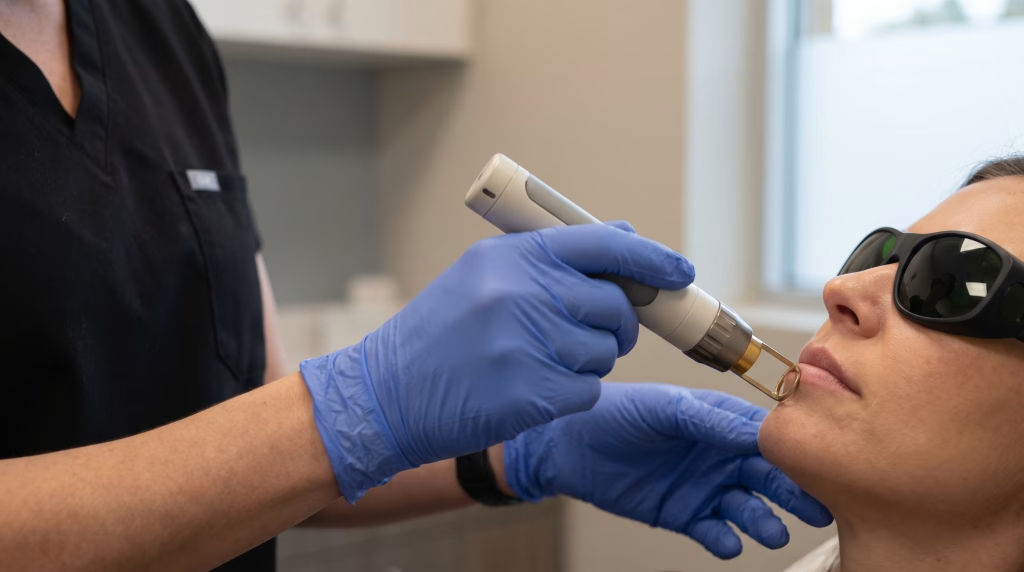
Most clients need a course of six sessions, spaced two to four weeks apart, to reach around 80% to 90% permanent hair reduction on the upper lip. If you’re reading this while checking the mirror, tilting your face towards the light and wondering whether laser hair removal for the upper lip is worth it, the honest answer is yes for the right hair type, but it needs the right plan.
I’m Natasha, sole practitioner at House of Glam HQ in Southsea, Portsmouth, and I’ve been working in aesthetics for 7+ years. I treat this area all the time. And the upper lip is one of those tiny areas that causes a lot of bother because it’s visible, easy to obsess over, and often more hormone-influenced than people realise.
The biggest mistake I see is people wanting a one-and-done fix. That’s not how this area works. The goal is long-term reduction, not “100% permanent removal”, and if anyone tells you otherwise, I’d be cautious.
The Realistic Result of Upper Lip Laser Hair Removal
Upper lip hair is frustrating because it’s front and centre. You notice it in daylight, in photos, in the car mirror, and usually at the worst time. What most women want is simple: less hair, less maintenance, less panic.
That’s where I keep things straight. With upper lip laser, most clients need six sessions to get to around 80% to 90% permanent hair reduction. The wording matters. UK guidance supports claims around permanent hair reduction (80% to 90%), not permanent hair removal, which is not a claim the evidence supports, as discussed in this clinical review on laser hair reduction claims.
What I tell clients at consultation
I don’t sell this as magic. I sell it as a sensible option if your hair colour and skin are suitable, and if you’re willing to follow the prep properly and stick to your timing.
My honest advice: if your upper lip hair is hormone-driven, you may get a great reduction from your first course and still need top-ups later. That doesn’t mean it hasn’t worked.
For some women, that’s a relief to hear, because it’s realistic.
If you want the full explanation of why the wording around permanence matters, I’ve broken that down here: is laser hair removal permanent.
How The Laser Works and Why a Course is Essential
Laser works by targeting the pigment in the hair and delivering heat down to the follicle. That’s the part that matters. The upper lip might be a mini area, but the biology is the same as anywhere else. The laser needs a target, and it needs that target at the right stage.
Many find this aspect challenging. Hair doesn’t all grow at once.
Why one session won’t do it
For the upper lip, lasers only work while follicles are in the active anagen growth phase, which is why most patients need 6 to 8 sessions spaced at around 4 weeks apart to catch follicles across their cycles and achieve long-term reduction.
In plain English, each appointment catches a different batch of hairs. Some are active and treatable on the day. Others are resting and won’t respond properly yet. That’s why spacing matters, and why I usually recommend two to four weeks between appointments for this area.
Why the upper lip can be more stubborn
The upper lip often behaves differently from somewhere like the legs. Facial hair can be more persistent, and it can be more influenced by hormones. So even when someone is doing everything right, the area can still need more patience.
I’d rather say that upfront than oversell it.
A proper course isn’t an upsell. It’s the treatment plan the hair cycle demands. If you want a clearer idea of course planning for different areas, I’ve covered that here: how many laser hair removal sessions do you need.
If you have one session and see some shedding, that’s encouraging. It isn’t the end result.
The Single Most Important Prep Tip You Need to Follow
If you pluck, wax or thread your upper lip before laser, you are making the treatment less effective. I see this all the time. Someone books in, wants good results, but keeps removing the root between appointments because that’s what they’ve always done.
For this treatment, that habit needs to stop.

Shave the day before
The best prep advice I give is this: shave the area the day before your appointment.
Yes, even on the face.
That feels wrong to a lot of women at first, because they’ve spent years trying not to shave facial hair. But shaving leaves the root in place under the skin. And that root is exactly what the laser needs to target.
Why plucking ruins your session
Plucking, waxing and threading remove the hair from the follicle. If the follicle has no hair in it, the laser has far less to work with. No root, no proper target.
That means:
- Less effective treatment: the energy can’t target the hair properly if you’ve pulled it out.
- Patchier progress: some follicles are available to treat, others aren’t, so results can look inconsistent.
- Wasted sessions: you’re still attending, but not giving the treatment the best chance to do its job.
The rule I repeat most often: shave between sessions, don’t pluck between sessions.
If you’ve threaded your upper lip for years, changing that routine can be the hardest part. But it does help. It’s one of the few things fully in your control that can improve your result.
A few simple prep points make a big difference:
- Keep the root there: shave, don’t wax, thread or tweeze in the lead-up.
- Turn up on schedule: long gaps make course progress slower.
- Tell me about skin changes: if your skin has been irritated, sun exposed, or you’ve started something new, I need to know before treating.
What Does Upper Lip Laser Feel Like
The upper lip is sensitive. I’m not going to pretend it feels like nothing. But it’s also one of the quickest treatments I do, and that changes the whole experience.
Most upper lip sessions take a minute or two. So even if it feels sharp, it’s over quickly.
What the sensation is actually like
The usual reaction is relief. People brace for something much worse than it is. The sensation is fast, warm, and stingy on certain pulses, but brief. And because it’s such a small area, you’re not lying there for ages waiting for it to end.
The SMARTDiode I use has integrated cooling running constantly while I treat, and that takes a lot of the sting out. I also talk through the pulses as I go, so nothing catches you off guard, and I can pause at any point if needed.
Small things that help
A few practical things can make the appointment easier:
- Book around your cycle: skin can feel more sensitive around your period, so a few days either side can be better.
- Come shaved as advised: stubble above the skin can make treatment feel sharper.
- Mention cold sores: upper lip laser can trigger a herpes simplex outbreak in people with a history of cold sores, and that’s something I discuss in consultation so we can decide whether any pre-treatment management is needed, as noted by the American Academy of Dermatology’s laser hair removal FAQs.
Most women leave saying it was far more manageable than they expected.
Will It Work For Your Hair and Skin Tone
I’ll be very blunt, because I’d rather lose a booking than take your money for something that isn’t likely to work well.
Laser is attracted to pigment in the hair. So dark upper lip hair is usually the best fit. The clearer the contrast between the hair and the surrounding skin, the easier it is for the laser to find its target.
Hair colour matters more than people think
If your upper lip hair is very fair, grey or red, laser often isn’t the right treatment. Those hairs don’t hold enough pigment for the laser to target properly. I’ll tell you that directly at your patch test rather than sell you a course that’s likely to disappoint you.
That can be frustrating to hear, but honesty saves people money.
A patch test is also where I can look at the hair properly, because upper lip hair isn’t always as dark as it seems in bathroom lighting. Fine hair can look obvious to you and still be a poor laser target clinically.
Skin tone is about safe settings
Skin tone affects the settings I use, not whether someone should automatically be ruled out. The SMARTDiode can be calibrated across all Fitzpatrick skin types, including deeper skin tones, but the upper lip needs care because facial skin is visible and pigmentation is the main thing I’m trying to avoid.
That is exactly why I insist on a patch test first.
If you’ve got a deeper skin tone and want to understand that side of treatment better, I’ve written more here about laser hair removal for dark skin.
The hormonal factor
A lot of the women I treat for upper lip hair have something hormonal going on in the background, whether that is PCOS, perimenopause or the menopause, and that can make the hair more persistent and sometimes means maintenance sessions after the initial course. There is a fuller answer in my guide to laser hair removal for PCOS. This discussion on hormonal facial hair covers the same ground if you want the wider picture.
That’s why I never promise the same course for everyone. Hormonal upper lip hair can keep trying to come back, whatever your colouring. Laser treats the hair. It doesn’t fix the underlying cause. If your upper lip hair has become sudden, excessive, or clearly changed, mention it to your GP as well.
Aftercare, Maintenance and Booking Your Patch Test
Aftercare for the upper lip is simple, but one part matters more here than on a lot of other areas. Wear SPF daily afterwards. The upper lip catches more sun than people realise, even walking to the car or sitting by a window, and that extra exposure raises the risk of pigmentation if you’re careless.
That’s the bit people often underestimate because the treatment itself is so quick.
What I want you to do after treatment
Keep it straightforward:
- Use SPF every day: this helps protect treated skin and reduces the chance of pigmentation.
- Expect a bit of short-term reaction: redness, swelling or mild discomfort can happen and typically settle within 1 to 3 days, with more serious reactions being rare when treatment is carried out properly.
- Leave the hair alone: don’t start plucking because you see hairs surfacing or shedding.
- Tell me if anything changes: medication, tanning, skin irritation, and health changes all matter.
The maintenance reality
Some women finish their course and only want the odd top-up. Others, especially with more hormonal upper lip growth, need maintenance from time to time to keep things where they want them. That’s normal. It isn’t failure. It’s the nature of facial hair.
At my clinic, the upper lip is a mini area at £26 per session. I usually recommend a course of 6, and there’s 20% off when booked as a course. The £15 patch test is required before your first treatment, and I deduct that from your first session. Klarna is available as well.
If you’re ready for a proper assessment, the first step is booking your laser hair removal patch test. That’s where I’ll tell you plainly whether your hair is suitable, what kind of result is realistic, and whether I think this is the right treatment for you.
If you want honest advice on laser hair removal for the upper lip, I do every treatment myself at House of Glam HQ, with no staff and no handover. You can read more about treatment options and book via the laser hair removal page, or contact me directly at houseofglamhq@gmail.com or 07831 846273. I’m based in Southsea, Portsmouth, and with verified reviews across Google, Fresha & Facebook, the focus is simple: clear advice, realistic results, and treatment that suits you properly.

