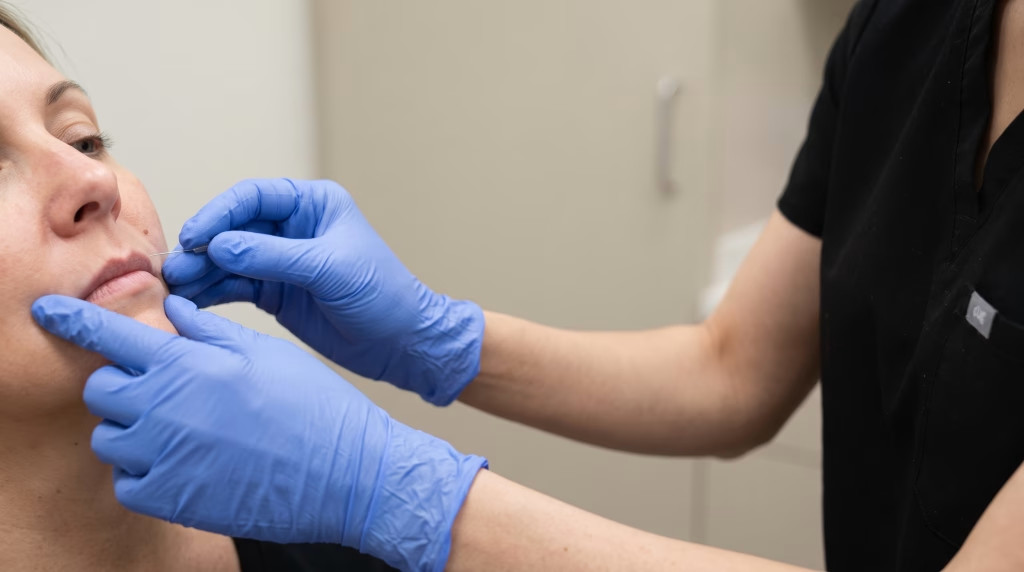
If you’ve been searching filler nasolabial folds advice, you’ve probably seen the same assumption repeated over and over: there’s a line, so you fill the line. I don’t work like that.
I’m Natasha, and after 7+ years in aesthetics, I can tell you this area is where overfilling shows fastest. Those lines from the sides of the nose to the corners of the mouth can be softened beautifully, but the most natural result often comes from supporting the face above the fold first, not packing product straight into the crease.
That matters because many individuals don’t want to look filled. They want to look less tired, less heavy through the mid-face, more refreshed when they smile and speak. That’s a very different goal from trying to iron a natural fold flat.
At House of Glam HQ in Southsea, every filler treatment is done by me personally. And if I think direct nasolabial fold filler isn’t the right plan for your face, I’ll say so. Sometimes that means a little cheek support first. Sometimes it means a small amount in the fold itself as a finishing step. Sometimes it means being honest that filler will improve the area, but won’t erase a deep fold completely. Nasolabial treatment is one of the areas I plan most carefully at my dermal filler clinic in Portsmouth — the full price list is published there.
An Honest Introduction to Nasolabial Fold Fillers
A deep nasolabial fold is rarely a sign that the fold itself needs a lot of filler.
In clinic, this is one of the fastest ways to make a face look heavier rather than fresher. The area around the mouth moves constantly when you talk, smile, eat, and rest. If too much product is placed straight into that crease, the result can look bulky, puffy, or oddly fixed. Patients usually notice it as, “I look different, but not better.”
I treat nasolabial folds as a structural issue first. In many faces, the fundamental change is higher up. The mid-face loses support, the cheek softens, and the fold starts to show more. So my job is not to chase a line. My job is to decide where support will create a lighter, more natural result.
Sometimes that means treating the cheek or front of the mid-face first, then using a very small amount in the fold only if it still needs refinement. Sometimes it means leaving the fold alone altogether. I would rather give a patient a softer, believable improvement than a flatter line that makes the lower face look overdone.
One rule guides me every time. If the mouth area looks heavier after treatment, the plan was wrong.
That is why consultation matters so much with this area. I assess your face at rest, in movement, and in full expression. I am looking at how the fold behaves, where support has been lost, how strong the surrounding tissue is, and whether filler is likely to improve the area in a clean way. A standard syringe pattern does not belong on an individual face.
If you want the wider overview of dermal filler treatments at House of Glam HQ, including treatment areas and booking information, that page covers it. Here, I want to be clear about one thing from the start. Good treatment for nasolabial folds is usually about restoring support, not stuffing a crease.
Why We Get Nasolabial Folds And It’s Not Just a Line
Nasolabial folds are the lines that run from the sides of the nose down towards the corners of the mouth. Everyone has them to some degree. The question isn’t whether they exist. It’s why they start looking deeper.
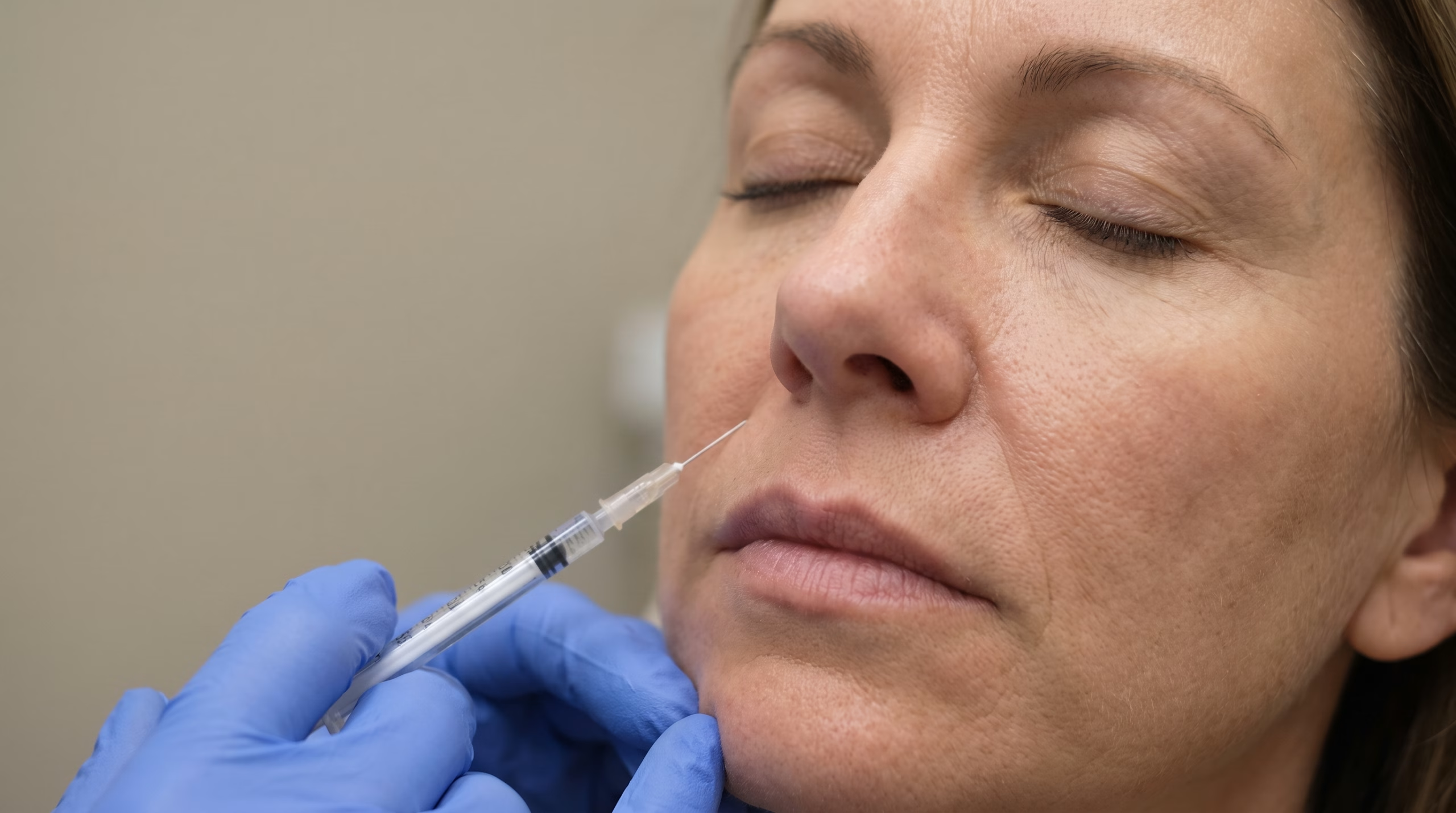
What’s really changing in the face
In plain English, the support in the mid-face starts to reduce over time. The cheek area loses volume, and the tissue above the fold starts to descend. So the fold becomes more visible, not because a random line appeared, but because the structure around it changed.
Consider fabric over a frame. If the frame loses support, the fabric starts to drape and gather. Your skin does the same thing. The fold is often the visible result of volume loss and descent above it.
That’s why treating the cause usually makes more sense than obsessing over the crease itself.
Why age changes the plan
A very early fold can sometimes be softened with minimal filler. But as the mid-face changes more, the treatment plan usually needs more thought. I’m not interested in pretending every face needs the same thing, because they don’t.
A shallower fold may be mostly about light support and skin quality. A deeper one may reflect more obvious loss through the cheek and a stronger downward pull into the line.
Here’s what I look at in consultation:
- Where the volume has gone: If the cheek has flattened, that changes how I approach the fold.
- How the face moves: Some folds look far deeper on animation than at rest.
- Whether the line is fixed or soft: A soft fold behaves differently from a deep, established crease.
- What result suits the face: Softer and fresher usually looks better than trying to force a flat result.
A nasolabial fold is rarely just a crease problem. It’s often a support problem.
Once you understand that, the treatment logic becomes much clearer.
My Approach to Treatment Supporting Not Overfilling
For most filler nasolabial folds cases, I don’t start by assuming the fold itself needs all the product. I start by asking what happens if I restore support higher up.
Why cheek support often comes first
Mid-face volume is usually best restored before the fold is treated directly, because the fold is driven by descent of the fat pads above it, and a firm or large-particle filler in an area that moves this much is more likely to look unnatural. That is exactly how I treat this area.
Cheek support doesn’t mean creating big cheeks. It means putting back enough structure to help the tissue sit better. Even a modest amount in the right place can soften the fold more naturally than putting everything into the line itself.
And when that support is in place, I can judge whether the fold still needs a small finishing touch directly. Sometimes yes. Sometimes no.
Shallow folds versus deeper folds
Here, honest treatment planning matters.
For shallower or earlier lines, I’ll often look at one of these routes:
- A little direct softening: If the fold is mild and the surrounding support is good, a small amount may be enough.
- Cheek support first: If the area above has started to flatten, support there often gives a cleaner result.
- A conservative start: Especially for first-time filler clients, less is often the smarter opening move.
For deeper folds, I’m usually more cautious, not more aggressive.
That might mean:
| Fold type | What usually works better |
|---|---|
| Early, softer fold | Light correction, sometimes with subtle support |
| Moderate fold with mid-face loss | Structural support first, then reassess |
| Deep established fold | A staged plan, with realistic expectations |
What I won’t do is keep adding product to chase a fold that’s telling me it needs a different approach. Past a certain point, filler in that line stops looking better and starts looking heavy.
Some deep folds can be improved well. Some won’t fully soften with filler alone. I’d rather tell you that up front than oversell it.
If you’ve also been looking at treatments that improve skin quality and hydration rather than volume, my article on what Profhilo treatment is helps explain where that kind of treatment fits, and where it doesn’t.
What a natural result actually looks like
A good result here shouldn’t scream filler. It should reduce the shadow, soften the heaviness, and keep your expressions looking like you.
That’s the difference between supporting and overfilling. One respects facial movement. The other tends to sit on top of it.
The Procedure Your Safety and The Product I Use
If you’re new to filler, this treatment usually feels more straightforward once you know what happens.
Consultation before treatment
First-time filler clients get a consultation with me. We talk through what bothers you, I assess your facial structure and movement, and I explain what I think is realistic. If I think cheek support will give you a better result than direct fold filler, I’ll tell you. If I think filler isn’t the right answer on its own, I’ll tell you that as well.
There’s no point pretending every concern needs injecting.
The filler I use
I use CE-marked hyaluronic acid filler matched to the job. Hyaluronic acid is a substance already found naturally in the body, and in aesthetic treatment it’s used to restore volume and support. For this area, product choice matters because the nasolabial fold moves a lot with talking, smiling, and everyday expression.
I keep technical placement details general on purpose. Injection depth and product selection should never be self-prescribed from a blog. What matters to you is that the filler is appropriate for your anatomy, suitable for a mobile area, and planned properly.
A key safety point is this: HA filler is reversible with hyaluronidase if ever needed.
Reversible treatment gives us a safety net. That’s one reason HA filler remains the standard option for this area.
Safety standards that matter
In Great Britain, dermal fillers are regulated within the UK medical-device framework, with MHRA oversight for safety and conformity. I only use properly sourced products and every treatment is carried out by me personally as the sole practitioner.
Things I think patients should check before booking anywhere:
- Who does the treatment: At my clinic, it’s always me, Natasha. No rotating staff.
- What product is being used: It should be CE-marked HA filler for this kind of work.
- Whether the practitioner is insured and trained: I’m fully qualified, insured, and CPD-accredited.
- Whether there’s a proper consultation: A plan should be built around your face, not sold as a fixed package.
If you want more background on how hyaluronic acid functions in the skin generally, my article on the benefits of hyaluronic acid for facial skin is a useful read before you book.
Realistic Results Longevity and Aftercare
Nasolabial fold filler tends to disappoint when it is sold as a quick way to erase a line. The better result usually comes from restoring support higher in the face, then deciding whether the fold itself needs any direct product at all.
That matters for longevity too. Filler placed into a heavily mobile fold is being asked to work in one of the busiest parts of the face. Cheek support often holds its effect more predictably because it is doing a structural job, not chasing movement all day.
How long it usually lasts
There is no honest fixed timeline. Duration varies with the product used, how much structural support was missing to begin with, your facial movement, and whether I am treating the fold directly or rebuilding support in the mid-face first.
In practice, patients usually notice that results soften gradually rather than disappear overnight. Treatments based around support tend to age better than treatments that only chase the crease. That is one reason I am careful about overfilling this area. A fold can look flatter on the treatment bed and still look heavy or unnatural once normal expression returns.
I explain this clearly in consultation because good aesthetic medicine depends on informed decisions. Patients do better when they understand what treatment can do, what it cannot do, and why the plan matters more than the syringe count.
Cost and what to expect after treatment
At my clinic, nasolabial folds are £150. If the better plan is to restore support first, cheek filler is £160. I will tell you that before we start, because the cheapest option on paper is not always the treatment that gives the better result. Every area is priced in my dermal filler cost guide.
Straight after treatment, expect some swelling, mild redness, tenderness, or bruising. That early look is not your final result. The area needs time to settle, especially around a mobile part of the face.
My aftercare advice is simple and practical:
- Keep hands off the area for the rest of the day: unnecessary touching increases irritation.
- Avoid hard exercise, saunas, and very hot environments for a short period: heat and increased blood flow can worsen swelling and bruising.
- Sleep with your head slightly raised on the first night if you can: it often helps reduce morning swelling.
- Give the result time to settle: small asymmetries early on are often part of normal settling.
- Follow the aftercare I give you at your appointment: it is based on exactly what I treated.
If your concern is part fold, part skin quality, filler may not be the whole answer. My article on best skin booster injections for improving skin quality explains where skin boosters fit, and where they do not.
The aim is a fresher, less tired look that still moves like your face. That is what patients are usually happy with long term.
Your Questions Answered for First Time Patients
Does it hurt
Usually less than people expect. I use topical numbing where appropriate, and HA fillers commonly contain anaesthetic within the product. You’ll feel pressure or some pinching, but most clients tolerate it well.
The more useful question is whether it feels manageable. In most cases, yes.
Is it safe, and what are the risks
All injectable treatment carries risk, so I’m not going to pretend otherwise. But I do think patients deserve context, not panic.
A systematic review and meta-analysis found the pooled incidence of complications for nasolabial fold fillers was 0.58 overall, with 0.59 for hyaluronic acid fillers specifically. The most common reported adverse events were lumpiness 43%, tenderness 41%, swelling 34%, and bruising 29%, and patient-reported improvement was immediate and typically peaked around 3 to 5 months before gradually declining according to the systematic review on nasolabial fold filler outcomes and complications.
That tells us two useful things. First, serious problems are uncommon. Second, the side effects people are most likely to notice are usually the temporary, visible ones such as swelling, bruising, tenderness, or small irregularities while the area settles.
How do I choose the right practitioner
Start with honesty. If someone says every nasolabial fold can be fixed with a quick syringe in the line, I’d question that.
Look for this instead:
- Experience with facial assessment: I’ve been in clinical aesthetics for 7+ years, and I assess the whole face before suggesting treatment.
- Consistency of practitioner: Every treatment at my clinic is carried out by me personally.
- Clear safety standards: I’m fully qualified, insured, and CPD-accredited.
- Real public feedback: There are verified reviews across Google, Fresha & Facebook.
- Willingness to say no: Good practice includes telling you when filler will only partly help.
I’m a big believer that patients make better choices when they’re properly informed.
What if I’m not sure filler is right for me
Then don’t rush it. That’s exactly what consultation is for.
Some people need cheek support more than fold filler. Some need less product than they expected. Some are better suited to a staged plan. And some deep folds won’t fully soften with filler alone. I’d rather give you a realistic answer than sell you a treatment that won’t do what you think it will.
If you want honest advice on filler nasolabial folds, book a consultation with House of Glam HQ. I’ll assess your face properly, explain what’s likely to work, what won’t, and whether nasolabial fold filler, cheek support, or a more conservative plan makes the most sense for you. To book, email houseofglamhq@gmail.com or call 07831 846273.

