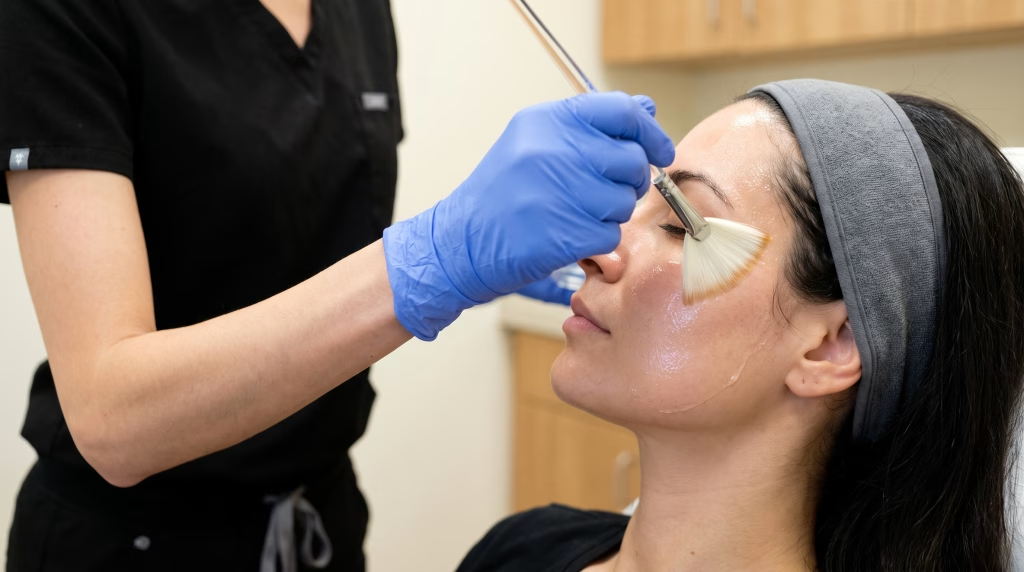
If you search for chemical peels for acne scarring, most advice skips the one point that decides whether the treatment is worth your money.
A lot of what people call “acne scars” isn’t scarring in the true sense. It’s post-acne marks, usually red, brown, purple, or deeper-toned discolouration left behind after spots heal. That matters, because chemical peels can help those marks. They do far less for indented scars.
I’m Natasha, sole practitioner at House of Glam HQ in Southsea, Portsmouth, and after 7+ years in clinic I’d rather be straight with you than sell you the wrong treatment. If your skin concern is mainly flat pigmentation, peels can be a very useful option. If you’ve got rolling, boxcar, or ice-pick scars, a peel on its own usually isn’t the answer.
That distinction shapes everything, from the acid I choose to whether I tell you a peel is worth doing at all.
What Chemical Peels Actually Do for Acne ‘Scars’
Chemical peels do surface work. That’s their strength, and also their limit.
When someone books asking about chemical peels for acne scarring, I first work out whether they mean marks or indentations. In clinic, a common concern is the leftover colour after acne, not a true loss of tissue in the skin. If the mark is flat and discoloured, that’s usually where peels can help.
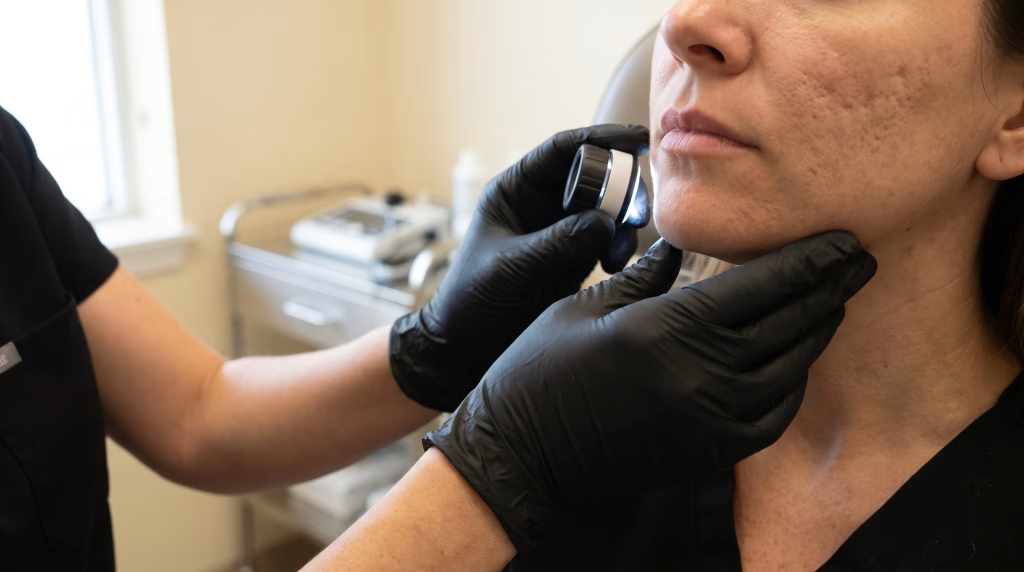
A peel works by encouraging controlled exfoliation and faster turnover in the upper layers of the skin. That’s why it can improve the look of lingering post-breakout marks and uneven tone.
What peels can help with
- Flat brown marks from old spots
- Red post-breakout marks
- Uneven tone after acne
- Mild texture roughness around breakout-prone skin
What peels usually won’t do on their own
- Lift indented scars
- Rebuild lost tissue
- Change deep ice-pick scars with a standard full-face peel
- Give dramatic change from one session
Practical rule: If the mark is flat, a peel may be useful. If you can feel a dip, you’re likely looking at a different treatment plan.
If you already know you’re dealing with pitted or indented skin, my page on the best treatment for acne scarring is the better place to start than assuming a peel will do the whole job.
Is It Pigmentation or a True Scar?
A lot of people say they want treatment for “acne scars” when they mean two different problems. That mix-up is expensive, because peels can help one of them and do very little for the other.
If the mark is flat and the main issue is leftover colour, you are usually looking at post-inflammatory pigmentation or post-inflammatory redness. If the skin dips, pits, or catches the light unevenly, that is an atrophic scar. One is a colour problem. The other is a structural problem.
That distinction decides whether a peel makes sense or whether you need a treatment that works deeper in the skin.
Pigmentation vs. True Scars at a Glance
| Characteristic | Post-Inflammatory Pigmentation (PIH/PIE) | Atrophic Acne Scar (Ice Pick, Boxcar, Rolling) |
|---|---|---|
| How it looks | Flat red, pink, brown, purple, or darker marks | Visible indentation or uneven skin surface |
| How it feels | Smooth when you run a finger over it | You can often feel a dip or pit |
| What it is | Colour left behind after inflammation | Loss of tissue deeper in the skin |
| What bothers people most | Staining, patchiness, marks that linger | Shadowing, dents, texture in side lighting |
| Best use of peels | Useful for fading and evening tone | Limited as a stand-alone treatment |
| What usually takes over | A peel course and home care | Microneedling, and in some cases targeted scar work |
What the scar types mean
Ice-pick scars are narrow and deep. Boxcar scars are broader with clearer edges. Rolling scars create softer dips and an uneven surface, especially in side lighting.
These scars do not behave the same way, and they do not respond the same way either. A full-face peel may freshen the surface and improve overall tone, but it does not replace treatment aimed at rebuilding support in indented areas. In practice, stronger acids can be used in very targeted ways for certain scar types, but that is very different from booking a standard peel and expecting dents to lift.
If you can see a shadow and feel a dip, treat it like a texture problem, not a stain.
This is why clients often feel they have “tried everything” when they have really just repeated surface treatments on a structural issue. The skin can look brighter and cleaner while the scar still shows from the side, because the depth was never addressed.
A quick self-check before you book
Check your skin in daylight. Normal front-facing bathroom lighting hides texture and exaggerates colour, so it can send you in the wrong direction.
- Turn your face side-on to the mirror. Indented scars usually show up more clearly in angled light.
- Run a clean fingertip over the area. Smooth but discoloured points more toward post-breakout marks.
- Look at the area with tinted SPF or make-up on. Colour often softens. Texture usually still shows.
- Notice what changes with lighting. If the mark appears much worse from the side, that usually suggests true scarring.
This is not a diagnosis, but it is a useful filter. It can save you from spending money on peels when what you really need is a treatment plan built for indented scars.
How Peels Even Out Skin Tone and Fade Marks
A peel helps most when the problem is leftover colour. If the skin is flat but the mark stays pink, red, brown, or grey-brown after a breakout, controlled exfoliation can speed up how evenly that pigment clears.

Peels work by loosening the outer layers of skin and improving cell turnover. For post-acne marks, that matters because excess pigment often sits in the upper part of the skin, where repeated superficial treatments can gradually make the area look more even. The result is usually a brighter, less patchy complexion. The result is not a dent filling in.
That distinction saves people money.
The job each peel is trying to do
AHA peels, including glycolic acid, are usually the better fit for dull skin, uneven tone, and superficial dark marks. They are the usual choice when the goal is to brighten and refine the surface without adding too much irritation.
BHA peels, mainly salicylic acid, are more useful if acne is still active, the skin is oily, or congestion is part of the picture. They can help reduce breakouts while also improving the marks those spots leave behind.
Jessner or TCA peels may suit more stubborn pigmentation in the right skin, but they need better prep, stricter aftercare, and a more cautious approach in melanin-rich or reactive skin. Stronger does not automatically mean better. Stronger often means more inflammation risk, and inflammation can leave another mark behind.
A basic at-home brightening routine can support this process between appointments, and Healtsy’s guide to a skincare routine for dark spots and melasma gives a useful overview of that side of care.
Why peel choice has to match the skin
The same brown mark can need a different plan depending on skin tone, oiliness, sensitivity, and whether breakouts are still happening. Fair skin that flushes easily has one set of limits. Deeper skin tones have another, especially if there is a history of post-inflammatory hyperpigmentation.
Poor peel selection is one of the main reasons clients feel they are “not responding” to treatment. The issue is often not that peels do nothing. The issue is that the peel was too aggressive, too frequent, or aimed at a textural problem instead of a pigment problem.
I would rather under-treat and build steadily than push a stronger peel too early and create irritation that sets pigment recovery back by weeks.
What I assess before recommending a course
- Whether the mark is red, brown, mixed, or mainly shadow from uneven texture
- Whether acne is still active
- How easily the skin stings, flushes, or dries out
- Your Fitzpatrick skin type and risk of post-inflammatory pigmentation
- Whether peels should lead, or whether microneedling for acne scarring and texture concerns makes more sense as the main treatment
This is why two clients with “acne scars” can need completely different plans. One needs help clearing residual pigment. The other needs treatment that targets collagen loss. If you mix those up, you can spend months improving the skin tone while the part that bothers you stays the same.
Where Peels Stop and Microneedling Starts
This is the honest part a lot of clinics soften too much. If your skin has true indented acne scars, chemical peels for acne scarring can improve the overall look of the skin, but they usually won’t do enough on their own to justify relying on them as the main treatment.

A peel works from the top down. An indented scar needs work from deeper within the skin, where collagen support has been lost. That’s why I direct people with rolling or boxcar scars towards microneedling if the main goal is to soften the depth of those scars, not only to brighten the surface.
Why microneedling is the better fit for texture
Microneedling creates controlled micro-injuries in the skin, which triggers repair activity where the scar sits. That makes more sense for pitted scarring than repeated surface exfoliation.
A 2024 systematic review and meta-analysis of 5 studies (n = 215) found that for atrophic acne scars, microneedling and chemical peels were broadly comparable on the primary endpoint of clinically significant improvement of at least 50% scar-severity reduction, with no significant difference between the two approaches (RR = 0.97; 95% CI: 0.82–1.15; p = 0.74; I² = 0%). The same review also found that, on another pooled outcome, microneedling had a higher likelihood of improvement than chemical peels (RR = 1.79; 95% CI: 1.37–2.34; p < 0.0001).
That lines up with what I see in practice. Peels help the marks. Microneedling usually does the heavier lifting on indentation. My guide to what acne scar removal can and cannot do sets out how far non-surgical treatment realistically goes.
When I combine them
The combination that makes sense is simple:
- Peels for surface pigmentation
- Microneedling for indented texture
- Proper spacing so the skin can recover
- Consistent home care, especially SPF
If dark spots are part of your concern as well as scars, it is worth understanding why pigment control needs more than one treatment appointment.
If your main issue is texture rather than leftover colour, start by looking at microneedling for acne scar texture concerns. It’s the treatment I’m more likely to recommend first when the scars are sitting below the surface.
Your Treatment Plan, Sessions, Timeline, and Costs
A good treatment plan starts with one blunt question. Are we treating leftover colour, or are you expecting a peel to lift indented scars?
If the main problem is post-acne marks, peels can be a sensible use of your budget. If the main problem is pitting, repeated peels often become an expensive way to make the skin look a bit brighter while the texture you dislike stays put. That is why I set the plan around your scar type, skin tone, breakout activity, and how your skin has handled treatments in the past.
For pigmentation, I usually recommend a course rather than a single session. One peel can freshen the skin, but older or more stubborn marks usually fade in stages.
What a realistic course looks like
Most clients need several sessions, spaced properly, with the skin reviewed each time. Rushing the strength or frequency usually causes more irritation, and irritated skin is more likely to hold onto pigment for longer.
A practical plan often includes:
- A series of treatments rather than a one-off appointment
- Regular review of the marks to check whether they are fading as expected
- Changes in peel type or strength based on your response
- A slower approach for reactive or darker skin tones, where pigment risk needs more caution
I would rather take longer and keep the skin calm than push too hard and create a new problem.
Timeline and what to expect
Results are usually gradual. Some marks respond quickly. Others, especially long-standing post-inflammatory pigmentation, take patience and consistent spacing between sessions.
That matters for cost too. The cheapest option is not always the single peel. If you need a course, it is better to plan for that from the start than book one session expecting it to fix months or years of post-acne discolouration.
If I assess your skin and the concern is mostly indented scarring, I will say that plainly. At that point, your money is often better spent on microneedling or a combined plan instead of repeating peels that are unlikely to change the depth of the scar.
Prices and booking
At my Southsea clinic, a facial chemical peel is £70 for a Jessner peel or £80 for a TCA peel, and neck and chest peels are priced separately, from £50. Courses of 3 and 6 are available, so ask me for the course price before you book.
Those prices make most sense for clients treating acne marks, uneven tone, or dullness, and the chemical peel page sets out every price. If your goal is smoother texture from true atrophic scars, I would discuss whether a different treatment route will give you a better return.
I also offer a consultation for first-time skin clients. If a peel is the wrong fit for your actual scarring pattern, I will tell you before you spend money on the wrong course.
Protecting the result between appointments
Aftercare has a direct effect on outcome. You can spend money on a well-planned course, then lose progress by picking, over-exfoliating, or skipping sun protection.
Keep the basics tight:
- Daily SPF
- No picking
- No extra acids or scrubs unless advised
- Careful sun exposure while the skin is healing
- Following proper recovery advice between sessions
For the practical details, read my guide on what to do after a chemical peel.
Frequently Asked Questions About Chemical Peels
Does a chemical peel hurt?
Most clients describe a peel as stingy, warm, or prickly rather than painful. The feeling depends on the acid, the strength, your skin barrier, and how reactive your skin is that day.
Some peels are mild from start to finish. Others give a sharper sensation for a short period. I watch the skin closely throughout, and I choose the peel based on what your skin can tolerate, not on what sounds strongest on paper.
What’s the downtime like?
Downtime varies.
A lighter peel may leave you pink, dry, or a bit tight for a day or two, with some flaking after. A stronger peel can mean more visible peeling and a longer recovery window. That matters if you have work, events, or skin that tends to overreact.
You should know the likely downtime before treatment, not after it.
Can darker skin tones have peels?
Yes, with careful selection.
In darker skin tones, the main concern is triggering more pigmentation while trying to clear existing marks. That is why peel choice, skin prep, treatment spacing, and aftercare matter so much. A slower plan is often the safer plan, and in practice it usually gives the better result.
Are peels enough if I have old acne marks and pits?
Peels can help if the problem is leftover colour. They do far less for dents in the skin.
That distinction saves people money. Post-inflammatory pigmentation often responds well to a course of peels. True atrophic scars, including ice pick, boxcar, and rolling scars, usually need microneedling or another treatment that works deeper in the skin. If you have both, the plan often needs both.
Why not just buy a peel online and do it at home?
Because acid is only one part of the treatment. The hard part is judging whether your skin should be peeled at all, how strong to go, how long to leave it on, and when to stop.
People get into trouble at home by treating redness, marks, and textural scarring as if they are the same problem. They are not. The wrong peel on the wrong skin can leave you with irritation, delayed healing, or darker marks than you started with.
Do you offer this treatment personally?
Yes. Every treatment is carried out by me personally, so you know who is assessing your skin and who is doing the treatment on the day.
How do I know if a peel is right for me?
Start with an assessment. I need to see whether you are dealing with flat post-acne marks, indented scarring, ongoing breakouts, or a mix of all three.
If the main issue is pigmentation, a peel may be a good use of your budget. If the main issue is textural scarring, I will say so plainly and point you towards a treatment plan that fits the skin in front of me. That is the whole point. Stop spending on peels if what you really need is scar-focused treatment.
If you want an honest assessment of post-acne marks versus true scarring, book a first-time skin consultation (£15, deducted from your treatment) with Natasha at House of Glam HQ. You can also get in touch directly at houseofglamhq@gmail.com or 07831 846273. The focus is simple. One-to-one treatment, realistic advice, and a plan that matches your skin rather than a generic course.

