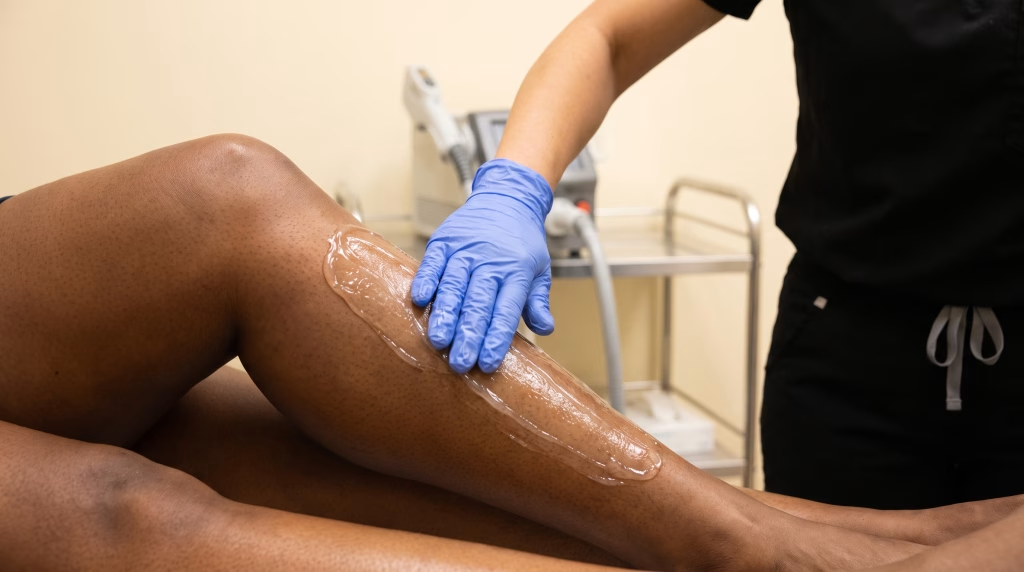
I’ve been looking into laser hair removal lately, and one of the biggest questions on my mind is just how many sessions do you actually need. It’s not as straightforward as you might think, and it turns out a lot depends on how hair grows in the first place. I wanted to get to the bottom of it, so I’ve done some digging to figure out what a typical treatment plan looks like and what factors might change things for me.
Key Takeaways
- Laser hair removal works best on hair in its active growth phase, which is why multiple sessions are needed to catch hairs that are in resting phases during other treatments.
- Typically, a minimum of 6 sessions spaced 4 to 6 weeks apart is recommended to achieve significant, long-lasting hair reduction.
- Individual results can vary based on skin type, hair colour, thickness, and hormonal factors, meaning your personal treatment plan might differ. Hormonal growth is a case of its own, and I have set out what to expect from laser hair removal for PCOS separately.
- The goal of laser hair removal is permanent hair reduction (around 80-90%), not complete removal, and top-up sessions may be needed periodically.
- Preparing your skin before and after sessions, and using medical-grade equipment, are important for safe and effective results.
Understanding the hair growth cycle is key

When I first started in this field, I thought laser hair removal was pretty straightforward: zap the hair, and it’s gone. Simple, right? Well, not quite. It took me a while to really get my head around why we need multiple sessions, and it all comes down to how hair actually grows. It’s not like a light switch that you can just flick off permanently in one go.
Why multiple sessions are essential
Think of your hair like a garden. You can’t just pull out all the weeds in one go if they’re all at different stages of growth. Laser hair removal works by targeting the hair follicle when the hair is actively growing. If a hair is in its resting phase, the laser just won’t be able to ‘see’ it or affect it. That’s why we need to come back several times, spaced out, to catch those hairs as they emerge from their resting period and enter the active growth phase. It’s all about timing and catching them at the right moment. This is why understanding the hair growth cycle is so important for effective treatment.
The active growth phase: when laser works best
The magic happens during the ‘anagen’ phase. This is when the hair is attached to the follicle’s blood supply and is actively growing. The laser’s energy is absorbed by the melanin (the pigment) in the hair shaft, and this heat travels down to the follicle, damaging it so it can’t grow hair anymore. If a hair isn’t in this anagen phase during your appointment, the laser energy won’t be absorbed effectively, and the follicle won’t be treated. We’re essentially waiting for the hair to show itself in its most vulnerable state.
Resting phases mean missed opportunities
So, what about the other phases? There’s the ‘catagen’ phase, which is a short transition period, and the ‘telogen’ phase, where the hair is resting and not actively growing. A significant portion of your hair will be in one of these resting phases at any given time. During these phases, the hair isn’t connected to the follicle’s blood supply in the way it needs to be for the laser to work. This means that during any single session, we’re only treating a fraction of the hair. The rest are just chilling, waiting for their turn to grow. This is why patience and consistency with your appointments are so important for achieving the best results.
How many sessions are typically recommended?
So, you’re wondering how many times you’ll need to pop in for laser hair removal to get those smooth results. It’s a question I get asked all the time, and honestly, there’s no single magic number because hair growth is a bit of a cycle. But, I can give you a really good idea of what to expect.
The standard course for lasting results
Generally, for most areas, I recommend a minimum of six sessions. This isn’t just a random number; it’s based on how hair actually grows. Remember how we talked about the active growth phase? Well, at any one time, only a portion of your hair is in that phase. The rest are chilling in resting phases. Each laser session is designed to catch as many hairs as possible in that active stage. By spacing out the treatments, we make sure we’re targeting new hairs as they emerge from their resting period and enter the active growth phase. So, that course of six sessions is really about giving us the best chance to get to the vast majority of those follicles. Most clients see a significant reduction by session three or four, and by the end of session six, we’re usually looking at about 80-90% permanent hair reduction. It’s pretty impressive, really.
Why spacing between sessions matters
This is super important, and it ties directly into the hair growth cycle. You can’t just blast the area every week and expect better results. In fact, it would be less effective and potentially irritating. The typical spacing is between four to six weeks apart. This timeframe allows enough time for the hairs that were in a resting phase during your last appointment to enter the active growth phase for the next one. It also gives your skin a chance to recover properly between treatments. Trying to rush it just means you’re not catching the hairs at the right time, and you’re not giving your skin the downtime it needs. For some areas, like the face, we might do sessions a bit closer together, maybe every four weeks, but for larger areas like legs or the back, it’s usually closer to six to eight weeks. It’s all about timing.
What to expect by the end of your course
By the time you’ve completed your initial course of, say, six sessions, you should be seeing a really dramatic difference. We’re talking about that 80-90% permanent hair reduction I mentioned. This means that any hair that does grow back will be significantly finer, lighter, and much sparser than before. For many people, this is enough to feel completely satisfied. You’ll notice less need for shaving or waxing, and often, the ingrown hairs that used to plague them will be a thing of the past. It’s a game-changer for a lot of my clients. Of course, everyone is a bit different, and factors like hormones can play a role, which is why we sometimes recommend top-up sessions down the line, but that initial course is where you get the main results.
Factors influencing your individual treatment plan
Look, we all want the same thing: smooth, hair-free skin. But the truth is, not everyone’s hair behaves the same way. What works perfectly for one person might need a bit of tweaking for another. It’s not just about the laser itself; there are several things that play a part in how many sessions you’ll actually need and how well you respond.
How your skin and hair type play a role
This is a big one. The laser targets the pigment in your hair, melanin. So, the contrast between your skin colour and your hair colour is super important. Generally speaking, people with darker hair and lighter skin tend to see the best and quickest results. Why? Because the laser can easily pick out the dark hair against the light skin without affecting the skin itself too much. If you have lighter hair (think blonde, red, or grey), laser hair removal might not be as effective, or you might need more sessions. Similarly, if you have very dark skin, we need to be extra careful with the laser settings to avoid any unwanted side effects. We use medical-grade equipment that can be adjusted for different skin types, but it’s something we absolutely have to consider from the get-go. It’s why that initial consultation and patch test are so vital – we’re figuring out your unique profile.
Considering hormonal influences
Hormones are sneaky little things, aren’t they? They can really mess with hair growth. Things like PCOS (Polycystic Ovary Syndrome), pregnancy, or even just natural hormonal fluctuations can cause hair to grow more persistently or in areas where it wasn’t noticeable before. If your hair growth is driven by hormones, you might find that you need more sessions to get on top of it, and you might also need more frequent top-up treatments down the line to maintain the results. It’s not a deal-breaker, but it’s something we need to be aware of when we’re planning your treatment course. We can’t change your hormones, but we can certainly adapt the treatment plan to work with them.
The importance of consistency
Honestly, this is where you have the most control. Sticking to your treatment schedule is absolutely key. Missing sessions or spacing them out too much can disrupt the process. Remember, we’re trying to catch the hairs in their active growth phase (the anagen phase), and they don’t all do that at the same time. By coming in for your appointments at the recommended intervals, we ensure we’re targeting new hairs as they enter that active phase. Skipping appointments means you might miss those hairs, and you’ll end up needing more sessions overall to get the same level of reduction. Think of it like trying to build something – you can’t just leave the building site for weeks on end and expect it to be finished on time. Consistency is your best friend here for achieving those long-term results. The number of sessions needed really does depend on how consistently you attend.
Achieving long-term results and maintenance
So, you’ve gone through your course of laser hair removal, and you’re seeing fantastic results. That’s brilliant! But what does ‘long-term’ really mean in this context, and how do you keep that smooth skin going?
What ‘permanent reduction’ really means
Let’s be clear: laser hair removal isn’t about removing every single hair forever. It’s about permanent hair reduction. We’re aiming for a significant decrease, typically between 80-90%, in hair growth. Any hair that does eventually grow back will be much finer, lighter, and less noticeable than before. This is because the laser damages the follicle’s ability to produce thick, dark hair. It’s a game-changer, but it’s important to have realistic expectations. Hormones can still play a role in hair growth, which is why we don’t claim 100% removal.
The role of top-up sessions
Because of the hair growth cycle, we can’t zap every follicle in one go. Even after a full course of treatments, a few rogue hairs might decide to make a comeback over time, or new follicles might become active due to hormonal changes. This is where top-up sessions come in. Think of them as a little maintenance to keep things in check. Most clients find they only need one or two top-up sessions every 12 to 18 months to maintain their results. It’s a small commitment for long-term smoothness, and honestly, it’s far more cost-effective and less hassle than a lifetime of shaving or waxing. Set the lifetime cost of shaving or waxing against a course plus the occasional top-up and the maths tends to speak for itself. Every price is published on the laser hair removal page.
Maintaining your smooth skin
Consistency is your best friend here. Sticking to your treatment schedule during the initial course is vital. After that, keeping an eye on your skin and booking a top-up when you notice regrowth starting is key. Avoiding sun exposure on the treated areas between sessions and using a good SPF afterwards also helps protect your skin and maintain the results. It’s all about a little bit of upkeep to enjoy the benefits for years to come.
What to expect during your laser hair removal treatment
So, you’re thinking about laser hair removal? It’s a big step, and I get it, you want to know what you’re getting into. I’ve seen plenty of people come through my clinic, and I always tell them, it’s not just about the laser itself, but the whole process from start to finish. It’s a process, really, and understanding each part helps make it a lot smoother.
The initial consultation and patch test
Before we even think about zapping any hair, we need to have a chat. This is where I get to know you and your skin. I’ll ask about your medical history, any medications you’re on, and what your goals are. Then comes the patch test. This is super important. We’ll treat a small, discreet area of your skin with the laser to see how it reacts. It helps us figure out the right settings for your specific skin and hair type, and also checks for any adverse reactions. It’s a bit like a dress rehearsal, making sure everything is safe and effective before the main event. The consultation and patch test are one appointment and one £15 charge, not two fees, and that £15 comes off your first full treatment. It takes about 15 minutes.
Preparing for your treatment sessions
Once we’ve got the green light, it’s time to prep for your actual sessions. The most crucial thing you need to do is shave the area you want treated about 24 hours beforehand. Seriously, don’t wax or pluck – the laser needs to be able to target the hair follicle, and that means the hair needs to be present, just not visible above the skin. Also, try to avoid any fake tan for at least four weeks before your appointment, and steer clear of sun exposure on the treatment areas. Clean skin is best, so no lotions or deodorants on the day. Think of it as getting your canvas ready for the artist.
Aftercare advice for optimal results
After each laser session, there’s a bit of aftercare to follow to help you get the best results and keep your skin happy. For about 48 hours, I’d advise you to avoid really hot baths, saunas, and strenuous exercise, as these can irritate the skin. Definitely keep out of direct sunlight and slather on a good SPF 50+ if you do go outside. You’ll notice the treated hair starting to shed over the next week or two – this is totally normal and a sign the treatment is working. It might feel a bit strange, but trust me, it’s worth it for that smooth skin you’re aiming for. Consistency with aftercare is key, just like it is with the treatments themselves.
Why choosing the right technology makes a difference

When I first started looking into laser hair removal, I was a bit overwhelmed by all the different machines and terms. It felt like everyone was using something slightly different, and honestly, it made me wonder if it all really mattered. As a practitioner, I can tell you, it absolutely does. Not all lasers are created equal, and the technology used can significantly impact your results, comfort, and safety.
Diode laser versus other methods
I primarily use a diode laser, specifically the SMARTDiode system. You might have heard of IPL (Intense Pulsed Light) too. While both use light to target hair, they work quite differently. IPL scatters light across a broad spectrum, which means less energy is precisely delivered to the hair follicle. Think of it like trying to hit a target with a shotgun blast versus a carefully aimed shot. The diode laser, on the other hand, uses a single, focused wavelength of light (808nm in my case). This means the energy is concentrated and absorbed much more effectively by the melanin in your hair follicle. This precision leads to more effective hair destruction per session and more consistent results over time. It’s why diode lasers are often considered a more potent solution for hair reduction compared to IPL. It is also the gap between clinic equipment and the at-home devices reviewed in the consumer press, which run at a fraction of the power and are a different proposition entirely.
Medical-grade equipment for safety and efficacy
This is a big one for me. I only use medical-grade equipment, and my SMARTDiode is a medical-grade, CE-marked diode laser rather than a salon or consumer device. You won’t find consumer-grade devices or IPL machines meeting these same standards. Using medical-grade equipment isn’t just about having the latest tech; it’s about ensuring your safety and getting the most effective treatment possible. It means the laser is designed for professional use, calibrated for precision, and built with safety features that protect your skin.
Personalised settings for your unique needs
Even with the best technology, a one-size-fits-all approach just doesn’t cut it. Every person’s skin and hair are different. That’s why the settings on the laser need to be adjustable and calibrated specifically for you. During your consultation and patch test, I assess your skin type (using the Fitzpatrick scale), hair colour, and thickness. Based on this, I can fine-tune the laser’s parameters. This personalised approach is vital for achieving optimal results while minimising any risk of side effects. It’s about tailoring the treatment to your individual needs, ensuring we’re targeting the hair effectively without causing unnecessary discomfort or skin reactions. This careful calibration is what makes the difference between a good treatment and a great one, and it’s why I’d always tell you to look for a clinic that sets the laser to you rather than to a default. It is the one thing the home devices reviewed in the consumer press cannot do, because a device sold to everyone has to be set conservatively for everyone.
If you want to see the machine, the areas I treat and every price before you commit to anything, it is all on the laser hair removal page — from £26 for a mini area up to £280 for full body, with 20% off a course of six. For what the underarms cost and how many sessions they take, see my guide to underarm laser hair removal.
So, How Many Sessions Do You Really Need?
Right, let’s wrap this up. We’ve gone through the whole hair growth cycle thing, and honestly, it’s not some trick to get you to book more appointments. It’s just how hair works. For most people, a minimum of six sessions, spaced out every four to six weeks, is the sweet spot. This gives the laser the best chance to catch those hairs when they’re in the active growth phase. After that initial course, you’re looking at maybe one or two top-up sessions every year or so to keep things smooth. It’s not a one-and-done deal, but the results are definitely worth the commitment. Remember, everyone’s different, so a chat with your practitioner is always the best way to get a plan that’s just for you.
Frequently Asked Questions
Why do I need more than one laser hair removal session?
It’s all down to how hair grows! My laser works best when hair is in its active growing phase, called the ‘anagen’ phase. The tricky part is that not all my hairs are in this phase at the same time; some are resting. So, I need to do several sessions over a few months to catch each hair as it enters that active growth stage. It’s like trying to catch a bus – you need to be there when it arrives, and different hairs arrive at different times!
How many sessions are usually recommended for good results?
Generally, I recommend a minimum of six sessions for most people to get that long-lasting smoothness. We space these out every four to six weeks. This timing is important because it gives resting hairs enough time to wake up and enter their active growth phase, so we can target them in the next session. By the end of the course, you should see a significant reduction in hair growth, often around 80-90%.
What does ‘permanent reduction’ actually mean with laser hair removal?
When I say ‘permanent reduction,’ I mean that after a full course of treatments, the amount of hair that grows back is significantly less, and any hair that does return is usually much finer and lighter than before. It’s not about removing every single hair forever, because hormones can influence hair growth. But it’s the closest you can get to permanent hair reduction, and it’s a game-changer compared to constant shaving or waxing.
What’s the difference between laser hair removal and IPL?
Think of it like this: laser uses a very specific, focused beam of light, like a laser pointer, that goes straight to the hair follicle. IPL (Intense Pulsed Light) is more like a floodlight, scattering light over a wider area. Because the laser is so precise, it’s generally more effective and safer for different skin types. My medical-grade diode laser is designed for targeted results, unlike some IPL devices.
What should I do to prepare for my laser hair removal sessions?
Before your appointment, the most important thing is to shave the area you want treated about 24 hours beforehand. Please don’t wax or pluck, as we need the hair root to be there for the laser to work! Also, try to avoid sun exposure and fake tan on the treatment area for a few weeks before your session, and come with clean skin, free from lotions or makeup on the day.
Can I expect to see results after just one session?
You’ll likely notice some difference after the first session, as some hairs might fall out within a week or two. However, because we can only treat hairs in their active growth phase, one session won’t get rid of everything. The real magic happens over the course of several treatments. Each session builds on the last, progressively reducing hair growth until you achieve the best possible long-term results.

