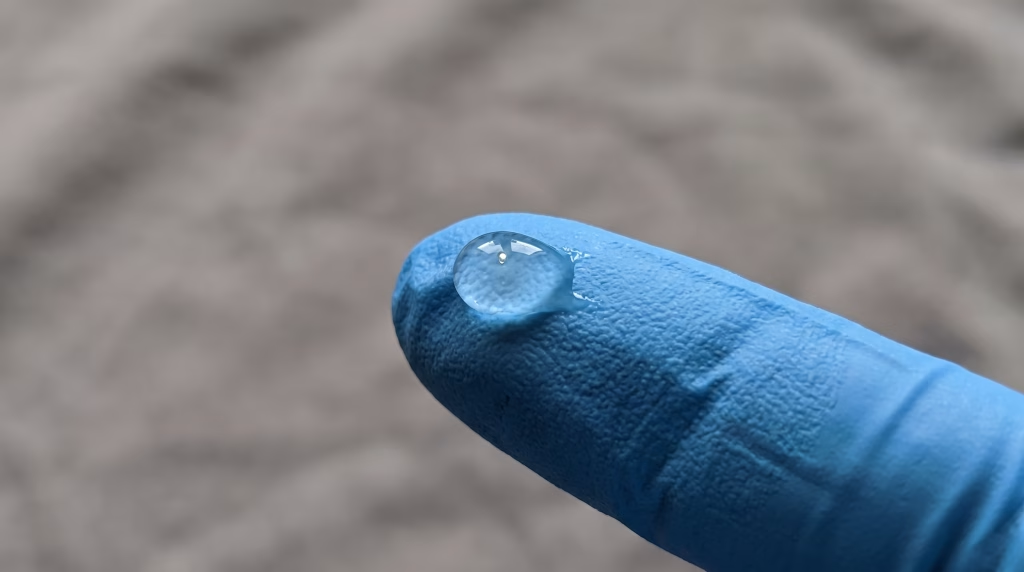
Lip filler is made of hyaluronic acid (HA), a substance your body already produces naturally, found in your skin where it helps keep tissue hydrated and plump. So the short answer to what is lip filler made of is reassuringly simple, it’s a gel form of something your body already recognises.
That matters, because the question behind the question is usually about safety. And if you’re thinking about lip enhancement, you’re right to want a plain, honest explanation before anyone picks up a needle.
Table of Contents
- The Plain Answer Up Front
- What Hyaluronic Acid Actually Is
- The Full Ingredient List, Without the Jargon
- Why CE-Marked and Medical-Grade Matters
- Different HA Fillers for Different Lips
- Why HA Lip Filler Is Temporary and Reversible
- Questions Worth Asking at Your Consultation
The Plain Answer Up Front
Hyaluronic acid is the main ingredient in modern lip filler. It is the same family of substance your body already makes, and that is a big reason it is the default choice for lip enhancement in clinic practice.
The simplest answer is also the most useful one. Your body already uses HA to help skin and connective tissue hold water. In filler form, that natural molecule is turned into a smooth gel that can add shape, softness and hydration without making lips look unnatural. The Cleveland Clinic describes HA as a natural glycosaminoglycan that the body produces and uses to retain water in skin and connective tissue, and notes that filler HA is chemically stabilised rather than taken from human donors.
Practical rule: if a treatment starts with a clear HA explanation, that is usually a good sign. If nobody can tell you what is in the syringe, ask again.
That is why the “what is lip filler made of” question should feel straightforward, not hidden behind jargon. A good answer is calm and direct. It is HA, used in a controlled medical gel, selected for a delicate area where shape, movement and reversibility all matter.
The safety signals matter more than a long ingredient lecture. A CE-marked product, a clear HA base and lidocaine for comfort are all simple, reassuring signs. They tell you the syringe contains a known material, not a mystery formula dressed up with technical language.
That last point is why HA filler is so widely used for lips. It is familiar to the body, it can be shaped carefully, and it is not permanent. Those three things matter for first-timers and for anyone who wants subtle lip work rather than a dramatic change.
What Hyaluronic Acid Actually Is

Hyaluronic acid is a natural glycosaminoglycan, which is the technical term for a water-binding substance your body makes itself. It is found in skin and connective tissue, where it helps tissue stay cushioned and hydrated.
That is the reassuring part. The lip filler used in clinic is not taken from a donor and it is not a mystery chemical. It is a purified, sterilised, lab-produced version of a molecule the body already recognises and knows how to handle.
Why that matters in the lips
The lips move constantly. They move when you speak, smile, eat and drink. A substance that holds water and sits softly in tissue suits that area better than anything rigid or permanent.
HA in filler form is not the same as the HA your body naturally makes day to day. It is stabilised so it lasts long enough to do a job, then breaks down gradually over time.
That balance is what makes the ingredient reassuring rather than intimidating. The body recognises the molecule, but the filler version is designed to behave in a useful way under the skin. If you are comparing treatments, that is the right way to frame it. It is familiar biology, shaped into a medical gel.
For wider skin support and hydration questions, my House of Glam HQ skincare advice explains how HA is discussed in skincare too, which helps show why the ingredient feels so familiar.
The Full Ingredient List, Without the Jargon
A quality lip filler is not a long list of mystery ingredients. In practice, it usually comes down to hyaluronic acid, a small amount of lidocaine for comfort, and a carrier solution that helps the gel work properly in tissue.
What each part does
Hyaluronic acid is the main ingredient doing the volumising and hydrating work. It is the gel that gives structure, softness and shape, which is why it behaves so well in the lips.
Lidocaine is a local anaesthetic. It is included for comfort, to numb the area as the filler is placed. It belongs to the same family of numbing agent used in dental care, so the idea behind it is familiar rather than unusual. Many HA lip filler formulations include a small amount of lidocaine to reduce injection discomfort.
The carrier solution keeps the gel in a usable form. It helps the product move through the needle smoothly and sit appropriately in tissue once it is placed.
If a provider cannot explain what is in their filler in plain English, that is a red flag. Honest medical products should be easy to explain.
That is usually the part that puts people at ease. There is no endless ingredient list hidden behind the brand name. There is the HA gel, there is comfort support, and there is a controlled medical formulation around it.
That is also why I answer the ingredient question directly in consultation. People do not need jargon. They need to know what is being placed in their lips, what each part does, and whether it suits the result they want.
If you are also comparing skin-quality treatments alongside filler, my polynucleotides Southsea page fits with that same question, because the material itself should always be clear before anyone decides on treatment.
Why CE-Marked and Medical-Grade Matters
The ingredient is only half the story. The other half is whether the product has been made and supplied to a proper standard. That’s where CE-marked, medical-grade filler matters in practical terms.
CE-marking tells you the product has been assessed against required standards for medical use. Medical-grade tells you it’s intended for treatment, not cosmetic guesswork. In a lip treatment, that matters because you want consistency, sterility and a product that behaves predictably in tissue.
A good question can save a lot of confusion
Ask the injector what filler they use, why they chose it, and whether it’s CE-marked. If they can’t answer clearly, that’s a fair concern. You’re putting something into a delicate area, so clarity is part of safety, not a bonus. The same principle applies here. The category, standard and intended use matter.
The reassuring part is that high-quality lip filler doesn’t rely on vague claims. It relies on an identifiable product, a known formulation and a clinician who can explain why that specific HA is appropriate for the lips. That kind of answer builds confidence fast.
Different HA Fillers for Different Lips
Different HA fillers can behave differently in tissue, even though the ingredient is still hyaluronic acid. Some are softer and spread more naturally. Others are firmer and hold shape with a bit more structure. The practical difference is not a new ingredient list, it is how the gel is formulated and how that formulation performs in the lip.

Matching the filler to the lip
Thin, delicate lips usually suit a softer HA that integrates smoothly and lets the lips keep moving naturally. Lips that need more definition may suit a slightly firmer HA that holds contour more effectively. The ingredient does not change. The choice is about selecting the right HA for the tissue in front of me. The same principle scales across the face — the dermal fillers in Portsmouth I use for cheeks, chin and jawline are firmer HA formulations than anything I would place in lips, chosen for structure rather than softness.
That is why I keep lip treatment simple in practice. Good results usually come from a single, well-chosen HA used with restraint, not from layering products or treating the lips like a technical exercise. A careful plan, sensible product choice and conservative placement do more for the final result than complexity ever does.
Practical rule: if the plan sounds complicated for the sake of sounding advanced, pause and ask why. Lips usually respond best to simple, well-judged treatment.
For people who want a softer finish, my natural lip filler tips approach stays the same. Keep the gel appropriate for the lip, choose a conservative technique and avoid overfilling. That is how you get lips that still move like lips.
So the honest answer to “what is lip filler made of” stays the same from patient to patient. It is hyaluronic acid. What changes is the HA type, the treatment plan and how carefully it is matched to the tissue in front of me.
Why HA Lip Filler Is Temporary and Reversible
HA lip filler is temporary because the body gradually breaks down hyaluronic acid over time. In the lips, that usually means results last around 6 to 12 months. That shorter lifespan makes sense, because lips move constantly and the product is under more daily wear than filler placed in less active areas.
The reassuring part is reversibility. If filler ever needs adjusting, HA can be dissolved with hyaluronidase. That is one reason HA remains the preferred choice for lip augmentation, because it gives a practical way to correct placement if the result is too much, too uneven, or not the shape you wanted.
Why that matters for real decision-making
Temporary treatment gives you room to reassess. You are not committing to a permanent change, and that matters if it is your first time having lip filler or if you want a subtle result that can be refined later. Reversible treatment adds a safety net, which is useful when the lips need careful shaping rather than heavy correction.
It also helps to know how to maintain lip filler results if you want the outcome to last as well as it can within the natural limits of the product. Good aftercare, sensible expectations and a treatment plan matched to lip movement all play a part. For a straightforward overview, how to maintain lip filler results.
Older filler materials behave differently. Some permanent implant-style products cannot be dissolved in the same way, which is why they are not the everyday choice for routine lip work. For lips, predictability matters more than forcing a long-term structure into a mobile, expressive area.
That is the reassurance. HA is chosen because it gives control, correction options and a natural breakdown pattern that suits the lips.
Questions Worth Asking at Your Consultation
A good consultation should leave you clearer, not more confused. Ask direct questions and pay attention to how plainly they are answered.
- Which HA product are you using? Ask for the exact filler type and a simple explanation of why it suits your lips.
- Is it CE-marked and medical-grade? That tells you the product has been supplied to the right standard.
- Does it include lidocaine? If comfort matters to you, that is a sensible question to ask before treatment.
- What ingredients are in it? The answer should be a short, clear list, not a vague description that hides what is doing the work.
- How long should the results usually last with this product? In lip tissue, the usual range is 6 to 12 months, because the area moves so much.
- What happens if I need an adjustment? You should hear a clear answer about hyaluronidase and the plan for correction if needed.
If the answers are calm, direct and specific, that is a good sign. If they are vague, that is a reason to keep asking.
If you would like to talk through what lip filler is made of and whether it suits your lips, visit House of Glam HQ. I offer honest, one-to-one advice, careful treatment planning and a straightforward consultation so you can decide with confidence before you book.

