Skin boosters do work for hydration, texture and radiance, and in one UK-relevant comparison, 96% of subjects showed investigator-reported aesthetic improvement at 1 month after a 3 mL Restylane Skinboosters course, with 71% still improved at 9 months (PMCID review). But they don’t add volume, reshape the face, or deliver dramatic one-session change, so if that’s the result you want, you’ll be disappointed.
Most of the frustration I hear comes from the gap between what the treatment is designed to do and what people hope it will do. Skin boosters are for skin quality, not facial structure. That means they can give you a better surface, better bounce, and a more rested look over a course of treatments, but they won’t act like fillers or wrinkle relaxing injections.
What Skin Boosters Actually Change
The first client I had who questioned whether skin boosters were worth it was expecting a sharper jawline after one session. I had to be direct. Skin boosters are for skin quality, not contour, and that difference matters if you want to judge whether the treatment is worth paying for.
Skin quality, not facial shape
The clinical review cited above points in the same direction. Injectable hyaluronic acid skin boosters improved hydration, firmness, brightness, texture, radiance and elasticity across formulations. That is the practical value of the treatment, better skin quality over time, not a new face.
In clinic, I explain this plainly. If someone wants skin that looks less tired, makeup that sits better, and a bit more glow, skin boosters can be a sensible option. If they want contouring or a more obvious structural change, I steer them elsewhere. That honesty saves time and money, and it avoids the common disappointment that comes from expecting a skin treatment to behave like filler.
Practical rule: if your goal is “better skin”, skin boosters may suit you. If your goal is “different face”, they usually won’t.
The same review also showed that the improvement can last beyond the first post-treatment glow. After a Restylane Skinboosters course, investigator-reported improvement was still seen at 9 months in 71% of subjects. That does not make it permanent, but it does show the result is more than a short-lived flash of hydration.
If you are trying to work out whether that kind of change is worth paying for, the key question is not whether the skin booster will transform your features. The question is whether you value a gradual improvement in skin quality enough to justify the course of treatment. For people mainly bothered by dullness, crepiness or a tired surface, the answer is often yes. For anyone chasing a dramatic one-appointment change, it is usually the wrong investment.
If you want a broader explanation of what hyaluronic acid can do for skin, I have covered the basics in this guide to top hyaluronic acid benefits.
How Hyaluronic Acid Boosters Work in the Skin

People often ask me if skin boosters are the answer to looking fresher fast. The short answer is that they can improve skin quality, but the change is usually subtle rather than dramatic.
Skin boosters work because hyaluronic acid is placed into the dermis, where topical products cannot reach properly. Once it is there, it attracts and holds water in the tissue, which is why the treatment is judged by changes in hydration, elasticity, roughness and fine lines, not by volume gain.
Why the effect feels gradual
The clinical review referenced earlier shows that the changes are measurable, not just a matter of patient opinion. In one prospective study of intradermal hyaluronic acid filler, the Lemperle wrinkle scale fell by 40%, from 2.60 ± 0.60 at baseline to 1.55 ± 0.51 by week 8, and remained about 33% improved at week 12 (Wiley study). The same study reported significant improvements in roughness, elasticity, pore size, hydration, transepidermal water loss and glossiness.
That is the practical point. Skin boosters do not sit like a visible lump waiting to be admired. They spread through the tissue, interact with the dermis, and improve surface quality over time. In clinic, that usually means the change builds gradually rather than landing in one obvious moment.
The distinction is functional rather than cosmetic, fillers reshape, boosters support the tissue environment. A filler adds structure where you want shape. A skin booster works on the skin quality around the area, which is why the result tends to be softer and less obvious at first glance.
Practical rule: if the product is working properly, you should measure it by how the skin looks and feels, not by whether the face looks fuller.
I also use an internal benchmark when I am consulting. If someone only wants a quick visible change, I am cautious. If they want skin that feels better conditioned and looks less flat over a course of treatment, the mechanism matches the goal. If they are chasing a one-appointment transformation, they usually leave disappointed.
Profhilo Versus Other HA Skin Boosters

Not all hyaluronic acid boosters behave the same way. Some are used more like bioremodelling treatments, while others are aimed at more local skin quality work. In consultation, I care more about how a product behaves in the skin than the name on the box.
Why product choice changes the result
Profhilo is often discussed differently because it’s commonly positioned as a bioremodeller rather than a traditional spot-based booster. Other hyaluronic acid skin boosters, including products used through serial puncture techniques, are more focused on superficial hydration and fine line improvement. That matters when someone’s main issue is a dry, tired surface rather than laxity.
The treatment pattern also changes what people feel. A bio-remodelling approach uses set injection points, while serial puncture techniques distribute product more broadly across the area. Neither approach is magic. The right one depends on the skin problem in front of me.
Useful distinction: the best product is the one that matches the skin concern, the injection depth, and the amount of change the client actually wants.
If you want a plain-language explanation of the product I’m asked about most often, I’ve written about how Profhilo works on skin. And for people comparing treatment plans, that context matters more than brand hype.
A sensible consultation question is simple. Do you want all-over skin quality improvement, or are you trying to soften specific fine lines and dehydration patches? Once that’s clear, product selection becomes much easier. For some clients, a skin booster facial is enough. For others, a different injectable, such as anti-wrinkle injections in Portsmouth, or a different skin plan makes more sense.
Treatment Course and When Results Appear
A course is usually needed because skin boosters build change gradually. They are not designed to give a dramatic one-off transformation, and that is where expectations often go wrong. In practice, the point is usually steadier skin quality, not a sudden visible overhaul.
The published material on hyaluronic acid skin boosters shows that treatment is often delivered in stages, with improvement followed over a longer period rather than judged immediately. That fits the way these products are used in clinic. If a client expects a big difference after one appointment, the treatment is unlikely to satisfy them.
What timing looks like in practice
Week 1, hydration lifts first. The skin may feel less tight and look a little less dull, but the change is still subtle. Month 3, texture often looks more settled, and the surface can appear smoother and better rested. Month 9, some clients still report visible improvement, but by then maintenance has usually become part of the conversation.
That is the part people tend to miss. Skin boosters can work, but they work by gradual improvement in skin quality, not by creating an obvious before-and-after effect in a single session. If the goal is to look different fast, the treatment is usually the wrong fit.
A sensible way to judge the course is this:
- After the first session, the skin may start to feel better hydrated and less flat.
- After the course, texture and glow usually look more settled.
- For maintenance, results are temporary and depend on the formulation and treatment plan, with hydration and smoothness often lasting a few months, and some effects lasting longer depending on the product and the skin being treated (DrOracle summary).
That timeline matches what I see in consultation. Clients who want something for a wedding next week usually need a different approach. Clients who are willing to plan ahead and wait for skin quality to build over time are the ones most likely to feel that the treatment was worth it.
Practical rule: book skin boosters when you can wait for the course to work, not when you need a same-day visible change.
If you want to plan maintenance properly, it helps to decide early how long you want the result to hold and how often you are prepared to repeat treatment. I have set out how long skin boosters last, product by product, if you want the real timelines. You can also look at ways to extend Profhilo longevity if you are trying to keep the result going without guessing.
What the Treatment Feels Like and Recovery
The treatment itself is usually tolerable, but it isn’t nothing. The dermis is densely innervated and reactive, so superficial delivery can feel sharp or stingy for some people, especially on sensitive areas. That’s one reason first-time patients often ask me more about comfort than outcome.
The honest version of downtime
A review hosted in an NHS and NIH context describes skin boosters as generally safe, while still requiring awareness of adverse effects (safety review). In a clinical study, adverse events were described as slight and resolved within a few days. In real life, that usually means temporary redness, swelling, or small raised areas where the product was placed.
I tell clients to expect a short-lived recovery, not a dramatic one. You can get on with normal life fairly quickly, but the skin may look a bit marked straight after treatment. If you’ve got an important meeting or event, don’t leave the appointment until the last minute.
Common reactions are usually brief and local. If swelling feels out of proportion, pain worsens, or anything looks unusual rather than just irritated, the clinic should be told promptly.
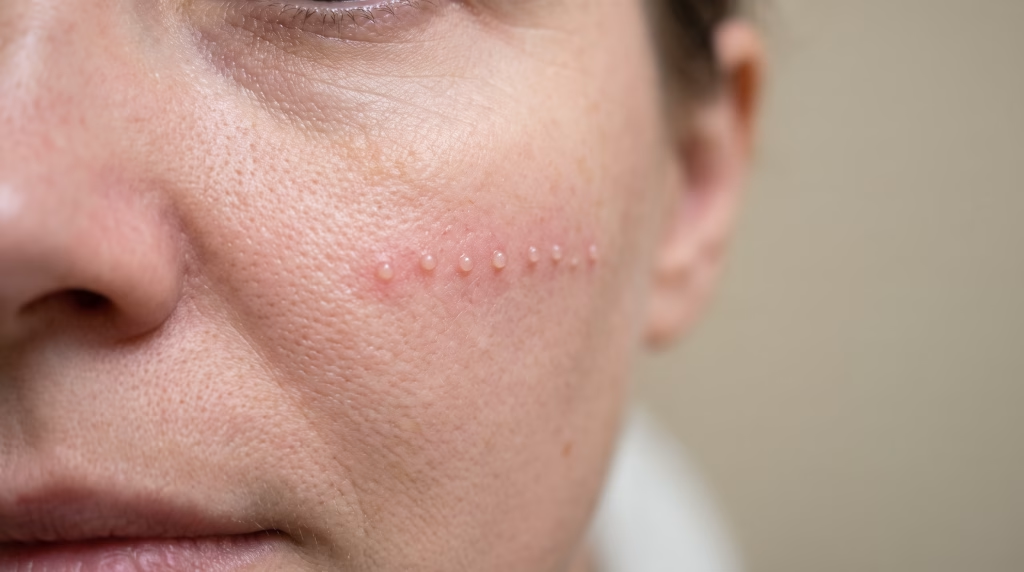
Some people are surprised that a subtle result can still come with visible bumps for a short time. That’s normal. The skin settles before the final result shows.
I’ve found that the first-time client who does best is the one who wants subtle improvement and can cope with a short recovery window. The person who hates any temporary redness usually spends the whole appointment worrying about it, and that’s rarely a good fit.
Who Benefits Most and Who Should Look Elsewhere
The skin boosters I offer in Portsmouth, Profhilo at £185 and Seventy Hyal 2000 at £165, suit people who want better skin quality, not a different face. The practical wins are dullness, dehydration, crepey texture, and fine lines, because those are the problems that tend to respond best. If the main goal is structure, lifting, or deeper wrinkle correction, I would point to another treatment first.
Better matches and poorer matches
The people who usually get the most from skin boosters are the ones who say, “My skin looks tired even when I’m sleeping well.” They are usually after gradual improvement and can tolerate the fact that the change builds rather than announces itself. The poorer match is the client who wants one appointment to make everyone notice a dramatic difference.
If the problem is contour loss or shape, dermal fillers are usually the more logical option. If the concern is movement lines, anti-wrinkle injections, commonly known as Botox, are the conversation to have. If the skin needs resurfacing, calming, or acne support, a clinical facial or another skin treatment can be a better fit than an injectable.
For some clients, a polynucleotide skin treatment is worth discussing instead, especially when the aim is skin support rather than hydration alone. That does not make skin boosters a poor choice. It means different skin concerns need different tools, and the better result comes from matching the treatment to the problem in front of you.
I also offer a Signature Skin Booster facial at £110 on my facials menu at House of Glam HQ in Southsea, but I only raise that when the client wants a practical option and understands the difference between a facial treatment and an injectable course. It is one route, not the answer for everyone.
A simple way to judge fit
- Good fit: mild-to-moderate skin quality concerns, realistic expectations, comfort with gradual change.
- Poor fit: strong preference for contouring, major wrinkle correction, or a same-day visual shift.
If you are comparing treatment options and want to sanity-check the numbers first, you can compare Profhilo prices with House of Glam. Price matters, but only after the treatment matches the goal.
Aftercare and Deciding If It Is Worth the Investment
Aftercare is simple, but it still counts. Keep the treated area clean, avoid pressing or massaging it too soon, and give the skin a quiet recovery window. If you have plans straight after, sweat, heat, and extra facial products can all wait a little.
The value question
The question is whether the result justifies the time and money. For some people, a course that improves hydration, brightness, and texture over time is good value. For others, that subtle shift is exactly the problem, because they would rather put the same budget into a treatment with a more obvious visual change.
I usually bring the conversation back to the goal in front of me. If you want skin that looks healthier in natural light and you are happy to wait for the course to build, skin boosters can make sense. If you want a stronger visible change from one appointment, they are usually not the right spend.
A recent consultation came to mind here. The client wanted fresher skin, not more volume or shape, and was happy to accept gradual change. In that setting, a skin booster course was a sensible choice. Another client wanted a clear before-and-after shift for an event and would have felt underwhelmed by the same treatment. That is the trade-off people need to hear before they book.
Maintenance also matters. The clinical summaries referenced earlier make it clear that results are temporary and need topping up to stay consistent. That is normal for this category of treatment, so it should be part of the decision from the start, not a surprise later. The money side belongs in that decision too, and every skin booster price is listed in full.
If you are still weighing up whether to book, ask one direct question in consultation, “What exact change should I expect to see, and when?” A good practitioner should answer that clearly, without overselling it.
If you want a straight consultation and honest guidance on whether skin boosters suit your skin, book with Natasha at House of Glam HQ in Southsea. I will look at your skin goals properly, explain what will work and what will not, and give you a plan that fits your face, your schedule, and your budget.

