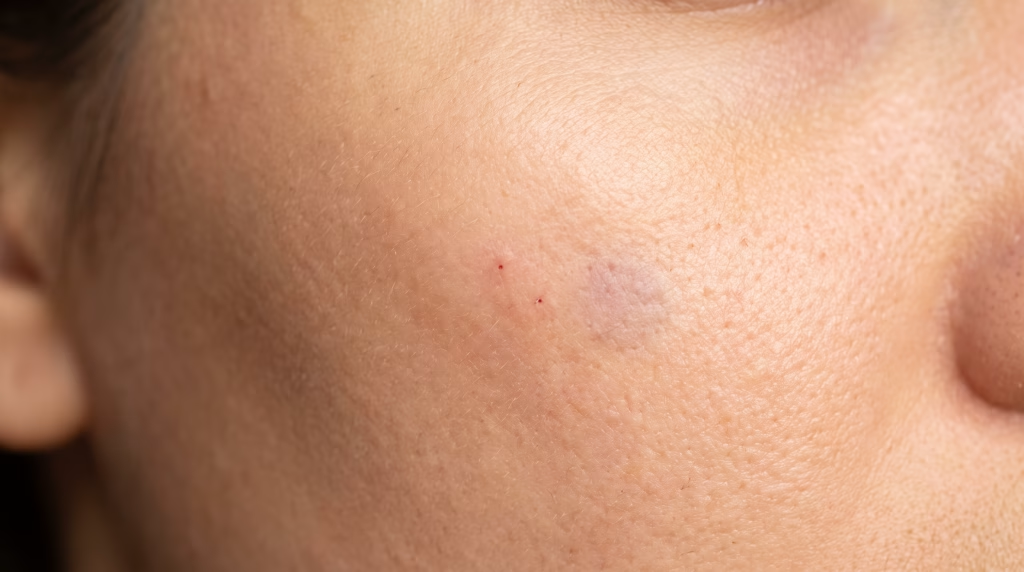
Cheek filler swelling goes through three stages. For the first day or two the cheeks get fuller rather than less full, and day two is often the fullest-looking day. From about day three to five the swelling comes down in a way you can see. By day seven to ten the cheeks look much closer to the result, and the shape you keep is the one at around two weeks.
I am Natasha. I carry out every House of Glam HQ treatment personally, at my clinic in Southsea, and I have been injecting for more than seven years. This post is what I tell people about their cheeks before they leave me, written down so you can check it at eleven at night on day two, which is when most of the messages arrive.
One thing first. You will find cheek swelling timelines online that go hour by hour and day by day. I am not going to do that, because I would be inventing a precision I do not measure, and everyone swells differently. What I can give you is the pattern I see every week, and the signs that mean you should stop reading and call me.
Cheek filler swelling stages, at a glance
| When | What is usually happening in the cheeks |
|---|---|
| The first few hours | Tenderness over the cheekbone, some local swelling and small injection marks |
| The first 24 to 48 hours | Swelling becomes more noticeable, not less. Day two is often the fullest-looking day. A small bruise may come up |
| Day 3 to 5 | Swelling starts to come down in a way you can see. The cheeks are still tender to pressure |
| Day 7 to 10 | Much closer to the settled result. Most bruises have faded within the week |
| About two weeks | Settled. This is the shape you keep, and the point to judge it |
Nothing in that table is a promise about your face. It is the shape of a normal recovery, and plenty of people move through it faster.
Why cheeks swell differently from lips
Two separate things are going on after any filler, and people mix them up. One is the filler itself, a hyaluronic acid gel that sits where it was placed and draws a little water to itself. The other is your body reacting to having been injected. That second part is the swelling, the tenderness and the occasional bruise, and it tells you nothing about how good the result will be.
Cheek filler is placed deeper than lip filler, over the cheekbone, so the swelling is usually less dramatic than people expect after reading about lips. The trade-off is that the area stays tender to pressure for a few days, and pressure is exactly what a cheek gets from a pillow or a hand resting on your face. If you have had lips done before, do not use that experience as your guide. Lips nearly always swell more than any other area, which is why they have their own post on lip filler swelling stage by stage.
What should I expect on day 2 after cheek filler?
Day two is often the fullest-looking day, and it is the day people worry most. The cheeks can feel tender when you touch them, look a little puffy, and one side can look fuller than the other. A small bruise may have come up overnight.
That is why I tell people the first evening and the next morning can look fuller than the result they have paid for. If you know that before you leave, day two is uncomfortable. If you do not, it is frightening. Swelling often becomes more noticeable in the first 24 to 48 hours rather than less, so feeling worse the morning after than when you walked out is normal.
Does cheek filler look weird at first?
It can do, for a few days. Swelling sits on top of the filler and can make the cheeks look wider or higher than they will be. That is unsettling if nobody has warned you.
None of that means the filler has moved or that too much went in. It means you have had injections. I place cheek filler conservatively and in small amounts, sitting you up between them, and I do not add more on the day for exactly this reason: a cheek judged while it is swollen is not the cheek you will have in a fortnight.
Is it normal for one cheek to be more swollen than the other?
Yes. Swelling is rarely perfectly even on both sides. You might sleep on one side the first night, or one side simply reacts more. I do not assess symmetry properly in the first few days, because swelling distorts what you are seeing.
Take a photograph at around two weeks, in the same light and from the same angle as one taken before treatment. If one side still looks different once the swelling has gone, message me and I will look at it. That is a conversation to have at two weeks, not on day three.
How much does cheek filler cost in Southsea?
Cheek filler at House of Glam HQ is £160 for 1ml, which is 0.5ml in each cheek. Every price is published, where most Portsmouth clinics quote only after a consultation. Each line below opens that exact service on Fresha.
Klarna is available on treatments over three monthly payments. If you book the treatment directly, the consultation happens at the start of that appointment with no separate fee. How much your cheeks actually need, and whether 1ml is enough for you, is covered properly in my post on cheek filler cost and how much you need.

How to sleep with swollen cheeks after filler
Sleeping position matters more after cheek filler than after almost any other area. For the first night or two, sleep on your back with an extra pillow so your head is slightly raised, and keep the cheeks out of the pillow. That helps the swelling go down and keeps pressure off the area while it is still tender.
Side sleeping is a problem only if the treated cheek ends up pressed into the pillow. One night on your usual pillow is not going to undo the work, but pressure and heat can make swelling worse, which drags out exactly the stage you are impatient to get past.
What makes cheek swelling worse in the first two days
Heat and raised blood pressure both encourage swelling and bruising in a freshly treated area. For the first 24 hours:
- No heavy exercise, alcohol or heat, including saunas, steam rooms, hot baths and very hot showers on the face.
- Do not touch, press or massage the cheeks for at least six hours, and after that only touch them to wash.
- Do not press on the cheekbones to see whether the filler is there. In the first few days you cannot tell what is filler and what is swelling anyway.
- Leave out firm facial massage, gua sha and anything that rests on the cheeks, such as a hand at your desk.
A cool compress helps with swelling and tenderness, held against the cheek without pressing hard. Concealer over a small bruise is fine after 24 hours, and makeup elsewhere on the face is fine the same day, so there is no reason you cannot do your eyes. The full list, area by area, is in my dermal filler aftercare guide.
If you have an event or a holiday coming up, book well ahead of it, so the swelling has gone and the result has settled before the day. The shape settles at around two weeks, so leave at least that.
Can you feel cheek filler?
In the first few days, yes. The area can feel firm under your fingers, and one patch can feel firmer than another. That firmness is part of the swelling stage and it is not a lump to be pressed flat. Repeated pressing at home is where people create problems for themselves.
If something still looks or feels wrong once the cheeks have settled at around two weeks, that is a conversation with me, not something to work on with your thumb.
What are the first signs of a filler problem?
Most swelling, tenderness and bruising after cheek filler is normal. Rarely, filler can affect the blood supply to the skin, and knowing the warning signs is part of having filler safely. Contact me straight away if you notice:
- severe pain, or pain that is increasing rather than easing
- blanching, where the skin over or near the cheek looks white or unusually pale
- dusky, blotchy or mottled skin that does not look like an ordinary bruise
- any change to your vision
Do not wait to see whether it settles. If you cannot reach me and you have vision changes or obvious warning signs, seek emergency medical help. Swelling that keeps getting worse after the first couple of days, rather than easing, is also worth a message.
How long does cheek filler take to settle?
About two weeks. By day seven to ten most people stop worrying, because the cheeks look much closer to the finished shape, and the remaining few days are fine detail. Two weeks is the same answer I give for lips, chin, jawline and nose. The cheek is simply a quieter fortnight than the lip. There is more on what is happening in that time in how long filler takes to settle.

Does cheek filler ever go away?
Yes. Cheek filler typically lasts 12 to 18 months, depending on the product, which is longer than lips because the mid-face moves far less than a mouth does. Your body breaks the hyaluronic acid down gradually over that time.
It can also be dissolved sooner if you want it gone. Every filler I use is CE-marked hyaluronic acid, Juvederm, Restylane or Belotero, blended with lidocaine, and it can be dissolved with hyaluronidase. There are no permanent fillers here. Facial filler dissolve, which covers the cheeks, is £180, and it needs a £15 patch test and consultation booked at least a week beforehand, which comes off the dissolve. Very few people use it, and the swelling stage is never a reason to.
What swelling will not tell you
Swelling does not tell you whether you had the right amount, whether the filler is in the right place or whether you will like the result. Cheek filler adds volume, and that is all it does. It will not tighten loose skin, and it will not give you a cheekbone you do not have. If the swollen version on day two looks like too much, wait. If the settled version at two weeks looks like too little, that is when to talk about it, and I would still rather see you again than add more than you need.
Booking cheek filler in Southsea
House of Glam HQ is at 1A Auckland Road East, Southsea, Portsmouth PO5 2HA, and I see clients from across Portsmouth, Fareham, Gosport, Havant and Waterlooville. Cheek filler is £160 for 1ml, and the full list for every face area is on my dermal fillers page for Portsmouth and Southsea.
Book 1ml cheek filler, £160, on Fresha · Book a £15 consultation first · WhatsApp Natasha, or call 07831 846273.

