You might be reading this while sitting in a job that pays the bills but doesn’t feel like yours anymore. Or you’re already in beauty, you’ve built good client care skills, and you’re wondering whether injectables are the next step. Either way, the question is usually the same: where do I start, especially if I’ve never held a syringe before?
I’m Natasha, the sole practitioner at House of Glam HQ in Southsea, Portsmouth, and I’ve worked in aesthetics for 7+ years. I train complete beginners, career-changers, and beauty therapists who want a proper entry point into aesthetics without the hype, through my aesthetics and beauty training in Southsea. I also believe in being blunt about what this industry is and what it isn’t. There is real opportunity here. The UK aesthetics industry is worth billions of pounds a year, and demand for practitioners who have trained through accredited routes is strong.
But demand alone doesn’t make someone safe.
What matters is how you train, what you’re taught first, and whether your course prepares you to assess, not just inject.
Thinking About a Career in Aesthetics
A lot of beginners assume they need a medical background before they can even consider aesthetics. Plenty don’t. Some come from beauty, some from retail, some from office jobs, some from completely unrelated careers and want something more hands-on, more client-facing, and more their own.

What I see most often is someone who wants a clean starting point. Not ten different course names. Not sales language. Just a clear answer on what to do first.
Who beginner training is actually for
These aesthetic courses for beginners are for you if:
- You’re changing career and want a practical route into aesthetics without prior injectable experience.
- You’re already in beauty and want to add foundation injectables or skin treatments properly.
- You’ve got no medical or beauty background and need the groundwork built in, rather than being expected to somehow know it already.
The starting line matters. If your first course skips the basics, you’ll feel that gap later.
I teach beginners because that’s where habits form. Good habits give you a long career. Bad habits usually come from rushing.
What beginners need to hear early
You do not need to be an expert before you begin. You do need to be realistic. A beginner course should give you a safe route in, make you insurable, and teach you what your limits are. It shouldn’t sell you the idea that you’ll leave as a finished practitioner.
And if a treatment isn’t right for someone, you need to be able to say no. That mindset starts in training, not years later.
Your Two Starting Points in Aesthetics
A beginner usually comes to me with one practical question. Do I start with injectables only, or do I train in a wider group of treatments so I have more grounding from day one?
There are two sensible ways in. Neither turns you into an expert in a few days. What they do is give you a safe starting point, a recognised certificate, and a route to insurance so you can begin properly and keep building. That matters more than collecting lots of treatment names too early.
A straight path is not the only valid one. Good training choices made in the right order count for more.
Beginner Aesthetics Course Comparison
| Feature | Foundation Aesthetics Course | Step Into Aesthetics (Fast-Track) Course |
|---|---|---|
| Duration | 2 days | 4 days |
| Price | £1,899 | £2,499 |
| Best for | Beginners who want to focus on core injectables | Beginners who want a wider treatment menu from the start |
| Main focus | Foundation anti-wrinkle injections and dermal filler | Level 3 Anatomy & Physiology, basic facials, dermaplaning, microneedling, B12 injections, foundation filler, foundation anti-wrinkle injections, first aid and anaphylaxis |
| Experience needed | No prior experience required | No prior experience required |
| Accreditation | CPD-accredited | CPD-accredited |
| Insurance | Insurable | Insurable |
| Models and materials | Live models provided, all materials provided | Live models provided, all materials provided |
The choice comes down to breadth.
The Foundation route is for the beginner who wants to keep the first step narrow and clear. You focus on foundation anti-wrinkle injections and dermal filler, then build experience slowly. I often recommend that route to students who already know injectables are the area they want to commit to first, and who do not want extra treatments clouding the learning process early on.
The aesthetics course Southsea option suits the beginner who wants more structure around the basics before offering injectables alone. It includes Level 3 Anatomy & Physiology, basic facials, dermaplaning, microneedling, B12 injections, foundation filler, foundation anti-wrinkle injections, plus first aid and anaphylaxis. For someone with no beauty or medical background, that broader start often feels less rushed and more realistic.
There is a trade-off. A wider course gives you more exposure, but it does not replace repetition, supervised practice, and real consultation experience. A shorter injectables course gets you to your first focus area faster, but only works well if you respect your limits and keep your treatment menu tight at the start.
That is how I ask beginners to choose. Not by what sounds more impressive, but by what gives them the safest first year.
What You Learn First and Why It Matters Most
Most beginners think training starts with how to hold the syringe. Mine doesn’t.
Before any needle touches a model, I teach consultation and facial assessment first. That means learning how to look at a face properly, understand the anatomy underneath, spot what is suitable, and plan a treatment that is safe and sensible.

A beginner who can inject but can’t assess is a risk. A beginner who learns to assess first becomes a safer practitioner from day one.
Assessment comes before technique
To correct one of the biggest beginner myths, aesthetics isn’t mainly about injecting technique. Technique matters, obviously. But assessment, restraint and judgement matter just as much.
I teach students to read the face before they touch it. That means looking at movement, symmetry, muscle action, skin quality, proportions, and whether treatment is appropriate at all. Sometimes the right plan is a smaller plan. Sometimes it’s no treatment that day.
For students who need that theory base, Professional beauty and aesthetics training in anatomy and physiology is part of building those decisions on something solid, not guesswork.
The first hands-on injecting step
When we do move into practical work, I start with foundation anti-wrinkle injections in the upper face, forehead, frown and crow’s feet. It’s a controlled place to begin learning needle depth, angle and placement before progressing further.
Then filler is taught on top of that base.
Practical rule: Learning where to place a needle is only part of the job. Learning whether, where and how much to treat is what makes someone worth trusting.
The best practitioners usually do less, not more. That’s not a slogan. It’s judgement. Heavy-handed work often comes from insecurity, not skill.
How a Complete Beginner Becomes a Safe Practitioner
A complete beginner usually walks into training worried about one thing. “What if I hurt someone?” That concern is healthy. I trust that mindset far more than overconfidence, because safe practice starts with respecting what you do not know yet.
I teach complete beginners, so I do not expect medical language, clinic experience, or beauty qualifications on day one. I do expect attention, honesty, and the willingness to slow down. That is what keeps clients safer later.
The foundation aesthetics course in Southsea gives beginners a structured start, but I am always clear about what a beginner course does. It gets you safe and insurable to begin within your training scope. It does not turn you into an expert in a weekend.
The groundwork is built in
A safe beginner needs more than a treatment pattern to copy. You need enough theory to understand what you are doing, enough practical supervision to do it carefully, and enough judgement to stop when something is not right.
That groundwork includes anatomy and physiology, facial anatomy, injection theory, infection control, consent, complications awareness, and first aid and anaphylaxis response. Students often arrive expecting the hard part to be holding the needle. In reality, the harder part is knowing when to treat, when to reduce the plan, and when to say no.
That restraint matters.
What support actually looks like
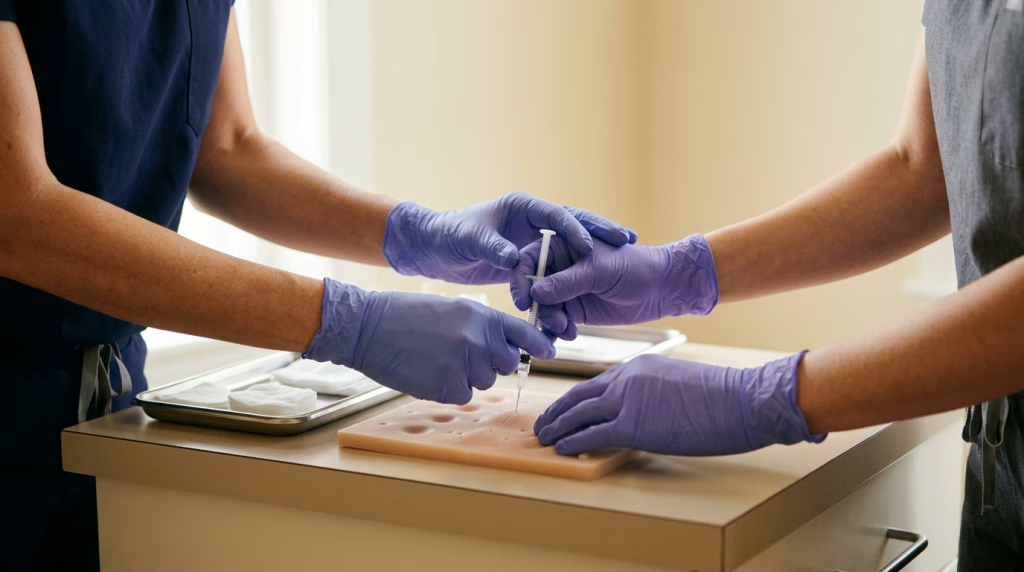
I teach in steps. First I demonstrate. Then we talk through why the treatment is being done that way, what could go wrong, and what to watch for. Then students work on live models with close supervision, correction, and clear feedback.
Live model work matters because real faces are not textbook faces. People move differently. Anatomy presents differently. Nerves show up in different places. Confidence starts to grow when beginners see that safe practice is not about rushing through a routine. It is about assessing properly, treating conservatively, and staying calm enough to adjust.
Materials are provided. Models are provided. Ongoing support is there after the course as well, because questions usually come once you start seeing real clients, not while you are sitting in a training chair.
What progression really looks like
The beginners who do well are rarely the flashiest ones in the room. They are usually the students who keep their standards simple and strict. They ask for help early. They document properly. They review their work critically. They do not chase advanced treatments before they have earned basic judgement.
I have been in aesthetics for more than seven years, and this part matters to me. Good practitioners are built in layers. First safety. Then consistency. Then experience. Technical skill grows with repetition, but good judgement grows when you stay humble enough to keep learning.
A certificate is the start of practice, not proof of mastery. That is the honest version.
When you have that groundwork and you are ready for the next layer, advanced aesthetics training is where technique gets refined rather than introduced.
Legal Rules and The Role of a Prescriber
This part isn’t optional, and I say that very plainly when I teach.
In the UK, anti-wrinkle injections (botulinum toxin) are classified as prescription-only medicines, which means they can only be prescribed by a qualified prescriber such as a doctor, dentist, prescribing nurse, or pharmacist after a face-to-face consultation, as set out in this UK explanation of anti-wrinkle prescribing rules.
What that means as a beginner
If you’re not a prescriber yourself, you don’t prescribe anti-wrinkle treatment. You work with a prescriber. That’s how you stay legal, ethical and safe.
And for clients receiving anti-wrinkle injections in clinic practice, a prescriber consultation of £25 is legally required before first treatment, and the 14-day review is included. If you’re training to offer this treatment, you need to understand that process from the start because it affects how you set up your service properly.
Where beginners get confused
Some people hear “qualified and insurable” and assume that means fully independent in every part of injectable practice. It doesn’t.
CPD-accredited training can make you insurable to begin offering treatments within the scope of your training, but it does not make you a medical professional, and it does not give you prescribing rights. If you want to become a non-medical prescriber in the UK, that requires the V300 prescribing course, and the cost of that varies depending on the university.
Why I teach this early
I want students to leave understanding the full chain of responsibility. Safe assessment, correct consent, treatment planning, prescribing rules, aftercare, and knowing when not to proceed. That is professional practice.
And anti-wrinkle injections (commonly known as Botox, the brand name for botulinum toxin) are one of the clearest examples of why legal knowledge matters as much as practical skill.
The Honest Truth About Your First Year in Aesthetics
A 2-day or 4-day course can make you safely qualified and insurable to begin. It does not make you an instant expert.
That’s the bit some people don’t want to hear. I think it’s exactly what beginners need to hear.
What a beginner course actually gives you
It gives you structure. It gives you practical experience on live models. It gives you a foundation in safety, assessment and treatment delivery. It gives you a standard to work from.
It does not replace practice.
I’d rather train someone who knows their limits than someone who’s overconfident after a certificate.
The industry is large, active and full of opportunity. As noted earlier, demand for practitioners who have trained through accredited routes is strong, which tells you there is room for new people entering the field. But room in the market and readiness to practise are two different things.
What your first year usually requires
Your first year is where you build your habits and your reputation. That’s usually slower than social media makes it look, and that’s fine.
- You keep learning: Every client teaches you something if you’re paying attention.
- You stay conservative: Restraint protects your clients and your reputation.
- You ask for support: Early questions prevent later mistakes.
- You build trust properly: Good consultation skills matter from your first client onwards.
You don’t need to pretend to be advanced. You need to be safe, consistent and honest. That’s how people build a career that lasts.
Common questions from beginners
What qualifications do you need to become an aesthetics practitioner?
There is no single certificate in the UK that turns someone into an aesthetics practitioner. What CPD-accredited training does is make you insurable to work within the scope of what you have actually been taught, and that is what lets you start treating clients properly. It does not make you a medical professional, and it does not give you prescribing rights.
So the honest answer is training you can insure against, then experience on top of it. Most beginners start with one of the two routes above and add treatments as they go.
How much does aesthetics training cost?
At House of Glam HQ courses run from £199 to £2,799, depending on how much you are training in. The Foundation Aesthetics Course is £1,899 over two days and covers core injectables. Step Into Aesthetics, the four-day fast-track, is £2,499 and gives you a wider treatment menu from the start. Every price is published on the course list.
Every course is one-to-one and I teach all of them myself, so what you are paying for is my time with you rather than a seat in a room.
Can I train in anti-wrinkle injections if I am not a nurse?
Yes. You do not need to be a nurse, a doctor or any kind of medic to train in anti-wrinkle injections.
What being a non-medic changes is prescribing, not treating. Anti-wrinkle injections are a prescription-only medicine, so the prescription has to come from a prescriber, meaning a doctor, dentist, prescribing nurse or pharmacist, after a face-to-face consultation with the client. You work alongside one. That is the normal and legal way a non-medical practitioner offers this treatment, and it is the part I teach early rather than leaving you to find out afterwards.
Book Your Course in Portsmouth Today
You are usually sitting with three tabs open at this point. One course looks quicker, one looks broader, and you are trying to work out which one gives you a safe place to start.
My advice is simple. Choose the route that matches what you want to learn first, then commit to doing actual skill-building after training through careful practice, case review, and staying within your limits.
If you want to compare your options and read the training details in full, start with House of Glam HQ Portsmouth.
Your next step
There are two beginner routes. One is a more focused injectables start. The other gives you a broader beginner package with skin, theory and injectables. Both are listed with full prices alongside my other aesthetics training courses. As noted earlier, the right choice depends on how wide a foundation you want at the beginning, not on which title sounds more advanced.
I teach in Southsea, Portsmouth, and I keep beginner training personal for a reason. New practitioners need close supervision, honest feedback, and enough time to ask the basic questions properly. Rushed training creates false confidence, and that is the last thing you need in aesthetics.
Practical details
Both beginner options are CPD-accredited, insurable, and include live models and all materials provided.
Before anyone books, I want them clear on what they are paying for. You are getting structured entry-level training that helps you begin safely. You are not buying instant expertise. I would rather see a beginner start carefully, assess well, and treat conservatively than chase speed and end up correcting avoidable mistakes later.
If you want to ask a direct question before booking, email houseofglamhq@gmail.com or call 07831 846273. You can also read my client and student reviews if you want a sense of how I teach and how people find the training experience.

