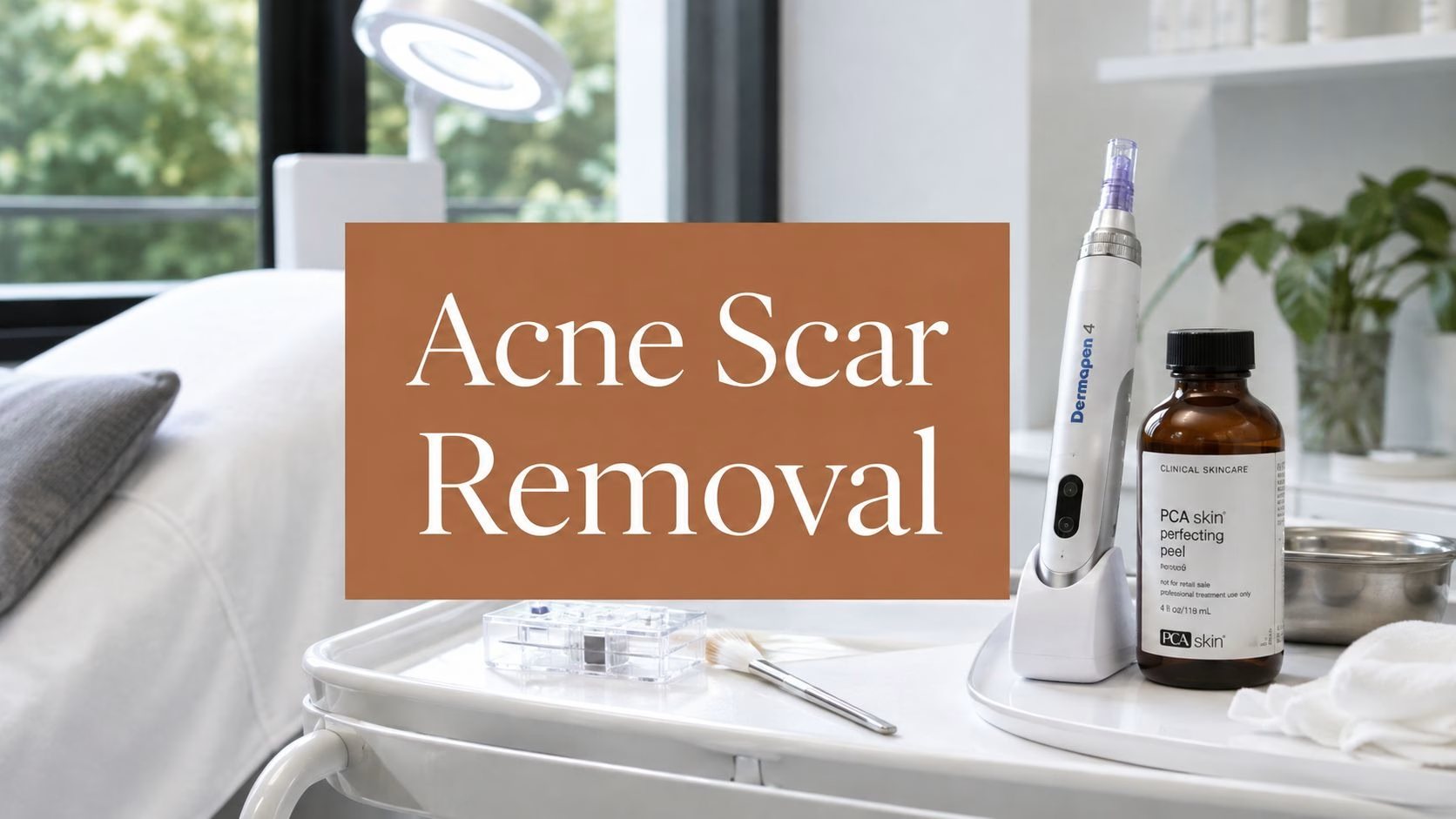
You’re probably searching for acne scar removal because you want the skin to look smoother, feel more even, and stop drawing your eye every time you look in the mirror. I’ll be straight with you, though. Non-surgical treatment doesn’t fully erase acne scars, but the right plan can reduce and improve them in a way that feels worth it.
That honesty matters, because the biggest disappointment I see is when people are sold “removal” and need improvement. I’m Natasha, sole practitioner at House of Glam HQ in Southsea, Portsmouth, and I’ve spent over seven years treating skin concerns in real clinic settings, so I’d rather tell you what’s achievable than promise something I can’t deliver. If you want a simple starting point, the best acne scar treatments Portsmouth page is a useful place to see how I approach scar concerns in practice.
If you’re also looking at at-home options, it helps to know that mark-fading ingredients can support skin tone, but they don’t replace in-clinic treatment for true texture. This guide from Neutralyze on ingredients that fade acne marks is a helpful reminder that redness and pigmentation are a different problem from indentation.
Table of Contents
- The Honest Truth About Acne Scar Removal
- Two Different Problems Need Two Different Treatments
- How Microneedling Rebuilds Textural Scars
- Which Scar Types Respond Best to Treatment
- Realistic Timelines and What a Course Looks Like
- Your Consultation and Next Steps
The Honest Truth About Acne Scar Removal
People search for acne scar removal because they want a clean fix. That reaction makes sense. In clinic, I frame the goal as reduction and improvement, because non-surgical treatment can make scars far less noticeable, while complete erasure is rarely a realistic promise.
That matters because acne scarring is not one single problem. A UK-based review notes that acne scar formation is influenced by genetics, acne severity, and delay in treatment (PMC review), which helps explain why some people are left with more visible marks than others. The same review also shows how subjective this can be. Among 2,133 volunteers aged 18 to 70, only 1% reported acne scars, but 14% of those respondents considered them disfiguring. A scar can look minor in a survey and still feel very obvious on your own face.
Practical rule: if the scar is bothering you, the aim is to make it less obvious, not to pretend every scar can be wiped out.
That is the honest language I use with clients. People do see visible changes, sometimes substantial ones, but the result depends on scar type, skin tone, active acne, and how the skin responds over time. The right plan starts with the exact scar pattern in front of you, not a generic “acne scar” label. If you want a practical starting point, our guide to the best acne scar treatments Portsmouth explains how treatment choice changes with the kind of mark you have.
A quick look at the morphology helps. In atrophic scarring, ice-pick scars are estimated at 60% to 70%, boxcar scars at 20% to 30%, and rolling scars at 15% to 25%, according to the same review. Those proportions matter because they shape whether microneedling, subcision, resurfacing, or a combination makes the most sense. Marks left behind by inflammation can also need a different approach, and the right order of treatment may include skin-calming steps first, plus the mark-fading ingredients mentioned above when colour change is part of the picture.
Two Different Problems Need Two Different Treatments
Many people use “acne scars” to describe everything that remains after breakouts, and that is where the confusion starts. Indented texture and colour change need different treatment approaches.

Texture is about shape
Rolling and boxcar scars alter the surface of the skin. You can usually feel the unevenness before you catch it clearly in a photo. That is a collagen problem, so the treatment plan has to focus on rebuilding support under the skin rather than only lightening the surface. In practice, that is where microneedling Southsea can be part of the conversation, because the aim is to improve the contour that the skin presents rather than chase a colour issue.
Marks are about colour
Post-inflammatory pigmentation and post-inflammatory erythema can leave brown or red patches even when the skin is not pitted. That is why some people think they have “scarring” when what they need first is pigment control, sun protection, and calmer skin care, which is often better served by a regular facial in Portsmouth than by a scar procedure. Clinical review literature and NICE-linked evidence reflect that scar care is multimodal, with different approaches used for different findings (PMC review).
A useful way to keep this straight is simple, the shape of the skin and the shade of the skin are separate jobs. Microneedling is more useful for shape, chemical peels are more useful for marks and uneven tone, and stronger plans often combine more than one approach in a planned course. That is why a single treatment rarely solves a mixed acne concern on its own. If you are comparing treatment paths, it helps to see how other clinics describe the same thing, and this med spa’s rundown of microneedling for scarring sets out the basics clearly.
If your skin is smooth but red, you are dealing with a different problem from someone with pitted texture. Treat the right problem first, or you will waste time.
That distinction is why good advice should not collapse everything into one “scar” bucket. Mixed post-acne concerns are common, and the treatment choice should match the actual pattern in front of you.
How Microneedling Rebuilds Textural Scars
Microneedling is the treatment I would point to first for indented, textural scarring. It creates controlled micro-injuries in the skin, which prompts repair activity and collagen production underneath the surface. That matters most for rolling and many boxcar scars, where contour is the problem rather than colour.
The goal is to encourage the skin to support itself better from below, rather than scrubbing the surface flatter. A UK evidence review used by clinicians notes that after five microneedling sessions in one study of 36 patients, the mean acne scar assessment score fell from 11.73 to 6.5, and 50% to 75% improvement was seen in the majority of patients (NICE evidence review). That will not be the same for every client, but it shows why microneedling has a clear place in scar care.
I also keep the comparison with other procedures in view. A review of acne-scar treatments found that subcision reported improvement across a very wide range, from 10% to 100%, while microdermabrasion was much less convincing, with 27.3% of patients showing no benefit even after eight sessions and only 9.1% achieving good results, again in the NICE evidence review. That is one reason superficial exfoliation alone usually disappoints people who need structural change.
For clients who want the treatment pathway explained plainly, I also suggest reading the honest chemical peel guide, because device choice and technique matter as much as the treatment name. At House of Glam HQ, I use microneedling Southsea as the core textural treatment, with pricing from £65, and acne scarring from £100. Chemical peels start from £50, and they fit in as support for tone and pigmentation rather than as the main answer for indented scars.
Which Scar Types Respond Best to Treatment
Scar removal is the wrong promise. Scar reduction and improvement is the honest goal, and the scar type decides how far you can realistically go. Rolling scars usually respond best to non-surgical treatment, boxcar scars can improve well with the right approach, and deep ice-pick scars are the most difficult to change without more targeted work.
Contour is the first thing I look at in clinic. Rolling scars are broader and often shallower, so they tend to soften more noticeably with collagen-stimulating treatment. Boxcar scars have clearer edges and can still improve, but they usually need a steady course and realistic expectations. Ice-pick scars are narrow and deep, so they are the least responsive to general treatment, and I would not promise to make them disappear when the honest aim is to reduce how obvious they look.
| Acne Scar Types and Treatment Response | ||
|---|---|---|
| Scar Type | Appearance | Typical Response |
| Rolling | Broad, shallow, wave-like unevenness | Often responds well to collagen-stimulating treatment |
| Boxcar | Wider depressions with clearer edges | Can improve with a consistent course |
| Ice-pick | Narrow, deep pits | Most stubborn, usually only partial improvement |
The evidence supports that cautious approach. A systematic review notes that filler treatment can help boxcar or rolling atrophic scars, while evidence is not strong for deeper ice-pick scars, and PMMA is the only FDA-approved filler specifically for atrophic acne scars in the cited review. That matters because it shows why one treatment plan cannot fit every scar pattern.
For lighter texture and marks, the honest chemical peel guide gives a practical overview of where peels fit. For deeper pits, I stay cautious. Softening the skin around the scar can make the whole area look smoother, but that is different from saying the pit itself will vanish.
Practical rule: the deeper and narrower the scar, the more modest the non-surgical result tends to be.
This is good planning. It helps clients choose treatment for the result it can deliver, rather than chasing a promise that the skin cannot keep.
Realistic Timelines and What a Course Looks Like
Acne scar improvement takes time. Collagen remodeling moves slowly, so meaningful change usually shows over months rather than after a quick visit. The best evidence we have from acne-scar reviews shows that many patients need around 3 treatments spaced roughly 4 weeks apart, and one cited protocol found strong results with five sequential 70% glycolic acid sessions every 2 weeks (review). That is not a universal recipe, but it does show the general shape of a course.
Microneedling is usually spaced 4 to 6 weeks apart, because the skin keeps building collagen for around 12 weeks after each session. Improvement continues after you leave the clinic. That is why the change often appears gradually, rather than all at once.
If you want a practical read on comfort and recovery, House of Glam HQ’s downtime advice is a good reference point, because redness and healing need to fit into your routine as well as the appointment itself.
Skin tone changes the plan
Darker skin tones need a gentler approach because aggressive treatment can trigger post-inflammatory pigmentation. That does not rule treatment out, it means the intensity should be adjusted carefully and the progression should be slower. For skin of colour, superficial peels such as Jessner’s solution, 92% lactic acid, 20% to 70% glycolic acid, SMP, and 10% to 25% TCA are considered safe in the cited review, and multiple sessions can reduce superficial scars (skin of colour review).
Active acne also needs to be controlled first. There is little point trying to remodel old scars while fresh breakouts keep creating new ones. A sensible plan tackles the ongoing acne, then the marks, then the indentation if it is still there.
Your Consultation and Next Steps
A proper consultation starts with honesty about what acne scar removal can and cannot mean. In practice, I am looking at scar type and depth, skin tone and pigmentation risk, and whether active acne has settled enough to treat safely and effectively. If someone arrives expecting one procedure to erase every mark, I explain the limits clearly.
If your skin is still breaking out heavily, stabilise that first. Otherwise you are treating old damage while new damage keeps forming.
The next decision is whether microneedling should stand alone or be paired with peels. Moderate mixed scarring often needs both, but the balance depends on whether the main issue is texture, redness, or brown marks. If the scarring is beyond what non-surgical treatment can realistically improve, I would rather say that upfront than over-promise a result the skin cannot deliver.
Severe or cystic active acne needs separate medical attention, and scarring that looks more complex than a skin treatment can address should be assessed by your GP or dermatologist. That advice matters even more when the acne is still inflamed, painful, or leaving new marks behind. The aim is to treat the right problem in the right order.
For booking, the House of Glam HQ booking page gives you the direct route. You can email houseofglamhq@gmail.com or call 07831 846273 for a consultation. I have also got verified reviews across Google, Fresha, and Facebook, and every treatment is carried out by me personally here in Southsea, Portsmouth.
If you are ready to stop guessing and get a clear plan for your skin, visit House of Glam HQ and book a consultation. I will look at your acne scarring properly, explain what microneedling and peels can realistically do, and recommend the safest next step for your skin in Portsmouth, Southsea, or anywhere in Hampshire.
