You’ve just had a baby, and your skin’s playing catch-up in the mirror. The dark patch on your cheek hasn’t shifted, your chin’s breaking out again, and the cleanser that used to feel fine now stings. That’s a common postpartum pattern, and it usually settles in stages, not overnight.
Post pregnancy skin care works best when it follows what your skin is doing, not what social media says it should look like. If you are looking for practical post pregnancy skin care in Portsmouth, Southsea, or the wider Hampshire area, the goal is the same, calm the skin first, then rebuild gradually. In Southsea, I see these changes week in, week out at House of Glam HQ, and the same pattern keeps coming up, pigmentation, barrier damage, and inflammation. Gentle routines help. Harsh scrubs and panic buying usually don’t.
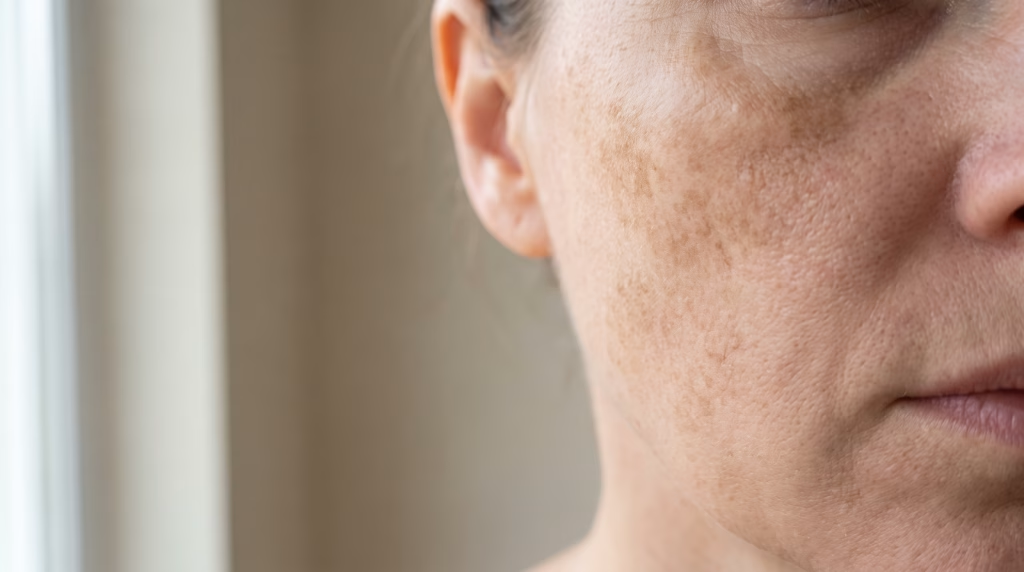
Table of Contents
- What Your Skin Is Doing After Birth and Why in Portsmouth
- The Three Post-Pregnancy Skin Types I See Most Often in Southsea
- A Simple Daily Routine That Actually Works for Portsmouth Mums
- Ingredient Safety During Breastfeeding and When to Reintroduce Actives
- Managing Pigmentation, Acne, Sensitivity and Stretch Marks in Hampshire
- When You Can Safely Book Clinic Treatments in Southsea
- Your Post Pregnancy Skin Care Plan and How to Book in Portsmouth
What Your Skin Is Doing After Birth and Why in Portsmouth
The first thing to understand is that your skin hasn’t “gone wrong”. It’s responding to a hormone shift, a sleep deficit, and a barrier that’s been asked to do more with less. About 90% of pregnant women experience skin changes that can continue after birth, and a broader postpartum dataset found 94.5% of 439 puerperal women reported some dermatological alteration, with 78.6% reporting hyperpigmentation and 57.6% stretch marks (PMC review). That’s why this feels so widespread.
The three drivers are usually clear
Oestrogen and progesterone changes affect pigment and oil production, which is why melasma and acne can flare together. At the same time, frequent washing, indoor heating, and broken sleep chip away at the barrier, so skin starts stinging in places that never used to bother you. Then there’s the stress factor, which doesn’t cause every breakout, but absolutely makes the whole picture harder to settle.
Practical rule: if your skin feels reactive, treat the barrier first. Chasing glow before the skin is calm usually backfires.
The recovery window also needs patience. Dermatology guidance cited in 2024 says many postpartum changes begin to improve within 3 to 6 months after birth, although melasma and stretch marks can last much longer (Parents). That timeline matters because you’re not waiting for perfection, you’re letting the skin stabilise.
If you’re thinking about longer-term skin support, my boost collagen naturally guide sits neatly alongside the routine side of recovery.
The Three Post-Pregnancy Skin Types I See Most Often in Southsea
Most new mums don’t need a hundred-product routine. They need the right category. Once you separate pigmentation-led, barrier-led, and acne-led skin, the next decision gets much easier.
Pigmentation-led skin
This is the classic melasma pattern, darker patches across the cheeks, forehead, or upper lip. It often looks uneven, can be more noticeable on one side, and gets worse with daylight, not only direct sun. The mistake here is reaching for strong exfoliation too early. That tends to irritate the skin and make the pigment look more stubborn.
Barrier-led skin
This is the tight, reactive, flaky pattern. Skin that tolerated acids and foaming cleansers before pregnancy now stings after a single wash. I see this more in colder months, especially where central heating is on and the air is dry. It can look like simple dryness, but it may be the early edge of irritant dermatitis or eczema if it keeps spreading.
Acne-led skin
This is the jawline and chin cluster, often angry but not necessarily severe. It usually shows up when oil production swings back after birth, and it can hang around if the barrier is already compromised. People often try to “dry it out”. That usually makes the face sore and the spots linger longer.
A split like this matters because each pattern needs a different response. Pigmentation wants SPF with visible-light protection and very cautious actives. Barrier skin wants fewer steps and more emollient support. Acne skin needs gentle treatment, not stripping.
A Simple Daily Routine That Actually Works for Portsmouth Mums
Start small. A good postpartum routine should be boring in the best possible way, because consistency beats novelty here. In the morning, use a mild, non-soap cleanser or just lukewarm water if your skin is very reactive, then apply a fragrance-free emollient moisturiser, and finish with broad-spectrum SPF 30+ as an essential step (AAD).

The routine I’d keep if skin feels sore
Use about two finger-lengths of SPF for the face and neck, then reapply during the day if you’re outdoors or near bright windows. If makeup makes reapplication awkward, a powder SPF or mist over the top is a practical compromise. For melasma-prone skin, a tinted mineral sunscreen with iron oxides is worth considering because visible light can also drive pigmentation (Skincare Topic).
At night, cleanse gently again and moisturise. If your skin is stinging, skip foaming cleansers, hot water, scrubs, and exfoliating cloths. They don’t help a barrier that’s already under pressure.
Practical rule: in the first six months after birth, a simpler routine usually outperforms a complicated one.
If you want acne-focused cleanser guidance that stays practical rather than trendy, my House of Glam HQ face wash advice covers the basics without overloading the skin.
Ingredient Safety During Breastfeeding and When to Reintroduce Actives
Breastfeeding does not mean you have to strip your routine back to bare basics. It means every ingredient should earn its place. Gentle cleansers, ceramides, hyaluronic acid, niacinamide, azelaic acid in moderate strengths, vitamin C, and mineral SPF all sit comfortably in a breastfeeding-safe routine when they are used properly. Those ingredients can help with redness, oil balance, and the dullness that often follows birth.
What I’d pause for now
I would hold back high-strength retinoids, including retinol and tretinoin, unless a prescriber has specifically told you otherwise. I would also pause hydroquinone and clinic-strength acid peels while breastfeeding. That is not because these ingredients are automatically unsafe or ineffective. Postpartum skin changes quickly, and this is not the time to add avoidable uncertainty.
Practical rule: breastfeeding-safe does not mean weak. It means chosen carefully and used at the right strength.
Once breastfeeding finishes, retinol can be brought back slowly. A cautious route is retinol 2 nights a week for 2 weeks, then increasing step by step to nightly if the skin is coping. That gives the barrier time to settle and makes it easier to spot irritation before it turns into a flare.
For stubborn melasma, sunscreen alone is often not enough. An American Family Physician review says postpartum options can include tretinoin, hydroquinone and corticosteroids, and notes that a 2010 Cochrane review found products containing all three drugs were the most effective for hard-to-shift pigmentation (AAFP). That belongs in the right phase of care, not in the early breastfeeding weeks, and I would only move there with clear timing and proper context.
If you are deciding whether to move from home care into clinic treatment, my what to know before aesthetics reading point is the right next step before booking anything stronger.
Managing Pigmentation, Acne, Sensitivity and Stretch Marks in Hampshire
Treat each concern separately. That sounds simple, but it stops people from using the wrong products on the wrong problem. Melasma, acne, sensitivity, and stretch marks don’t behave the same way, so they shouldn’t be handled the same way either.
Pigmentation and melasma
SPF is the floor, not the ceiling. A broad-spectrum SPF 30+ is the baseline, and a tinted mineral formula matters when visible light is part of the trigger, especially on deeper skin tones (The Guardian reference to dermatology guidance). Azelaic acid is a sensible home-care active while breastfeeding, and prescription support becomes the next step if the pigment keeps sitting there. Melasma can fade, then return, so I never talk about it as if it’s “done” after one good month.
Acne and sensitivity
For acne, a gentle salicylic acid cleanser or azelaic acid can help, but only if the skin isn’t already stripped and sore. If the face is reactive, I’d scale back first, not add more treatment steps. For ongoing sensitivity, shorter lukewarm showers, fragrance-free emollients, and fewer products usually help more than another serum layered over irritated skin.
Stretch marks
Home care has limited value once stretch marks are established. Early red or purple marks are more responsive than mature silver ones, and that’s where professional treatment can make more sense.
If you’re considering clinic support for texture or stretch marks later on, skin pen microneedling is one of the options people often ask about, but timing matters more than enthusiasm.
When You Can Safely Book Clinic Treatments in Southsea
The order matters here. Early postpartum skin often feels changeable, reactive, or depleted, so I’d rather give a clear sequence than promise a treatment before the skin is ready. The best results usually come from starting with lower-risk options, then moving up only when recovery has settled and the concern still justifies clinic work.

A practical timeline I’d use
Dermaplaning, on my facials menu with prices, can suit the early postpartum period once the skin is calmer, but I still keep the first session conservative. Microneedling usually makes more sense once healing is steadier and the skin is less reactive, often a few months in, and I would still check breastfeeding status before booking anything. Skin boosters such as Profhilo need individual assessment, and I usually hold those back until breastfeeding has finished or is close to finishing.
Chemical peels need the right strength chosen for the skin in front of me. Mild peels may be appropriate earlier than medium-depth peels, but only if the barrier is calm and not already irritated. For anti-wrinkle injections (commonly known as Botox, the brand name for botulinum toxin), breastfeeding needs to be finished, then a £25 prescriber consultation is required before first treatment, and the 14-day review is included. That is there for safety and prescribing compliance.
Dermal fillers are usually postponed until breastfeeding ends as well. HA filler typically lasts 6 to 18 months depending on area, and lips usually last 6 to 12 months because they move more. It is also reversible with hyaluronidase if needed. For laser hair removal, I only offer women’s SMARTDiode laser hair removal at the clinic, with a £15 patch test and a permanent hair reduction approach, not a promise that every hair is gone forever.
If you are looking at treatments at House of Glam HQ, the better question is not what you can squeeze in now, it is what fits your stage of recovery. No clinic can guarantee outcomes. Most clients see gradual change, not instant change.
Your Post Pregnancy Skin Care Plan and How to Book in Portsmouth
Keep the plan simple. Months 0 to 3 are for barrier repair, SPF, and a calm routine, with no actives and no aggressive treatments. Months 3 to 6 are the point where azelaic acid and vitamin C can be reintroduced carefully, and gentle options like the Rejuvenating Facial may start to make sense. Months 6 to 12 is where stronger clinic treatments can come in as breastfeeding ends, including microneedling, skin boosters, and, after a £25 prescriber consultation, anti-wrinkle injections with the 14-day review included.

The women who get the best results usually do two things well, they keep SPF on daily and they stop rushing the process. Post pregnancy skin care is a marathon, not a week. The barrier settles first, the pigment follows later, and the right clinic treatment only lands properly when the skin is ready.
If you are looking for practical post pregnancy skin care support in Portsmouth, I can help you work out what your skin needs now, what can wait, and which facials and skin treatments are worth considering later.
At House of Glam HQ in Southsea, a standalone consultation is £15, and that comes off your treatment if you go ahead. For laser, the same £15 covers the consultation and patch test in one appointment. You also get transparent pricing and one-to-one care from me, Natasha. If you’re in Portsmouth, Southsea, Fareham, Gosport, Havant, Waterlooville, or wider Hampshire, call 07831 846273 or email houseofglamhq@gmail.com to talk through the right next step.
If you want a calm, honest review of what your skin needs after pregnancy, start with a consultation at House of Glam HQ. You’ll get straight answers, a realistic plan, and treatment advice shaped around your stage of recovery, not a sales pitch. House of Glam HQ is rated 5.0 across verified reviews.
Book your consultation with Natasha at House of Glam HQ on Fresha if you want a practical postpartum skin plan that matches where your skin is right now. I’ll look at your pigmentation, sensitivity, acne, or stretch marks properly, then map out what you can do at home and when clinic treatment becomes appropriate. Call 07831 846273 or email houseofglamhq@gmail.com to get started.

