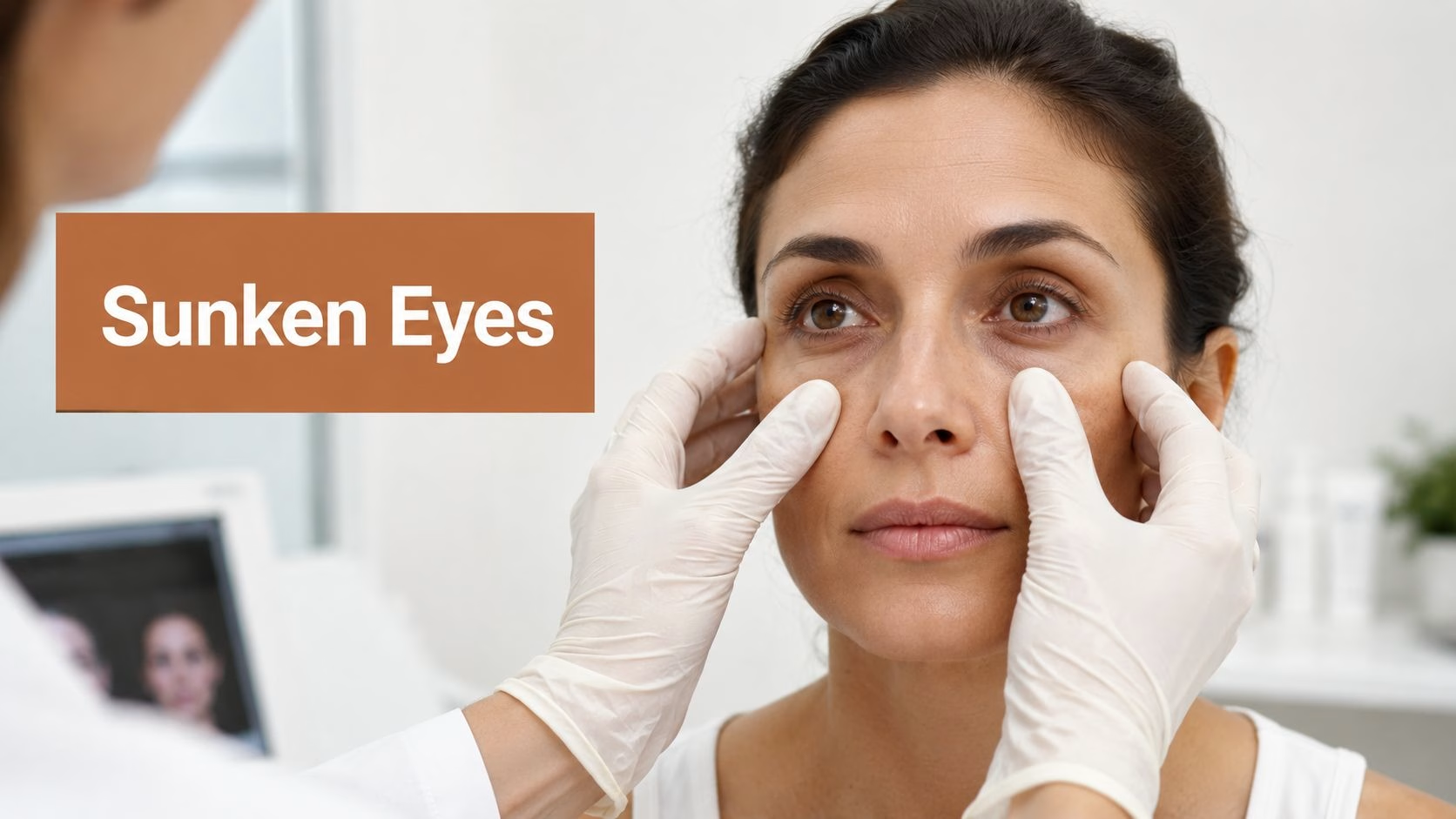
If you search for a sunken eyes treatment, most pages push you straight toward filler. I don’t work like that.
I’m Natasha, sole practitioner at House of Glam HQ in Southsea, Portsmouth, and after 7+ years in clinical aesthetics, the biggest mistake I see with under-eyes is choosing a product before understanding the cause. Hollow under-eyes, dark circles, thin crepey skin, tired-looking eyes, shadowing from bone structure, all of that gets bundled into one phrase. But it isn’t one problem. So it doesn’t have one fix.
Why There Is No Single Sunken Eyes Treatment
People often come in asking for tear trough filler because that’s the treatment they’ve heard of. Sometimes that is the right call. Sometimes it absolutely isn’t.
Under-eyes can look sunken for different reasons. You might have a genuine hollow where volume has reduced. You might have thin under-eye skin that makes the area look darker and more tired. You might have pigmentation. You might have a mix of all three. And if I treat the wrong cause with the wrong method, you don’t get a fresher result. You just spend money on something that was never going to do the job properly.
That’s why I treat this as an assessment question first, not a menu choice. The two main routes for this area are tear trough dermal filler and polynucleotide treatment. They work in completely different ways.
The two routes I look at first
- Tear trough filler suits a real hollow, where lost volume is creating a shadow.
- Polynucleotides suit skin quality concerns, under-eye thinning, crepey texture and some tired-looking darkness where volume isn’t the main issue.
- A combination can be right if someone has both hollowing and poor skin quality.
The best sunken eyes treatment is the one that matches the cause. That sounds simple, but it’s where most bad under-eye work starts.
I’m direct about this in consultation. If filler is likely to sit badly, look puffy, or leave you disappointed, I’ll say so. If polynucleotides are the better route, I’ll tell you that instead. And if neither treatment is the right answer until something medical is ruled out, I’ll say that too. Under-eye and tear trough work is assessed individually before any dermal filler treatment in Portsmouth at my clinic — never sold as a default.
Tear Trough Filler for Restoring Lost Volume

Tear trough filler works best when the problem is straightforward. There is a genuine hollow under the eye, that hollow creates a shadow, and replacing a small amount of lost support improves the contour.
That is a very specific under-eye.
I use hyaluronic acid filler in this area because it can be adjusted or dissolved if needed, which matters in a part of the face where poor treatment choices show quickly. Used well, it can soften a hollow and make the under-eye look less tired without changing the character of the face. Used on the wrong person, it can do the opposite.
Who is filler for?
The simplest way I explain it is this. Filler helps a dip. It does not improve thin, crepey, fragile under-eye skin, and it does not erase every kind of dark circle.
The people who usually suit tear trough filler have:
- A clear hollow rather than general under-eye darkness
- Shadowing caused by loss of support rather than mainly pigment
- Skin and tissue quality that can hold filler neatly
- Realistic expectations about softening the area, not making it look filtered or flawless
That distinction matters. A lot of disappointment with under-eye filler comes from treating darkness as if it always means hollowing. It doesn’t. If the skin is the main issue, adding volume can leave the area looking heavier rather than fresher.
Why I treat this area cautiously
The under-eye is one of the areas where injector judgement matters most. It sits close to important blood vessels, the skin is thin, and mistakes are harder to hide here than in many other parts of the face. That is why I keep treatment conservative and why I assess suitability properly before I agree to it.
I also do not quote under-eye filler in a generic syringe formula on a webpage. That would be poor practice. The right amount depends on the shape of the hollow, the quality of the tissue, your baseline anatomy, and whether filler is the right choice at all.
For anyone looking at filler treatments in other areas too, the jawline filler page links through to the wider dermal filler information.
What good tear trough filler should look like
A good result looks rested. It should not look filled.
When tear trough filler is matched properly to true volume loss, the improvement is often visible quite quickly. The hollow looks less sharp, the shadow is reduced, and the whole eye area can look less drawn. The trade-off is that under-eyes do not tolerate overcorrection well. Too much product, poor placement, or the wrong diagnosis can leave puffiness, bulk, or an odd transition between the lower eyelid and cheek.
That is why I do not treat tear troughs as a default answer for sunken eyes. I use it when the anatomy supports it and when the cause is clearly volume loss. If that is not what I see, I would rather say no than give you a treatment that was never likely to age well or look right.
Polynucleotides for Skin Quality and Dark Circles

A lot of people describe their under-eyes as “sunken” when the bigger issue is poor skin quality.
That distinction matters. If the area looks darker because the skin is thin, crepey, translucent, or generally tired-looking, adding filler does not address the underlying issue. In that situation, I am more likely to discuss polynucleotides than volume correction.
I offer polynucleotide treatments for the under-eye area, including Vitaran Eyes and Lumi Eyes, from £150. They are designed to improve the condition of the skin over time. They do not replace lost structure, and that is exactly why they can be the better choice for the right patient.
When I consider polynucleotides
I usually consider this route when the under-eye concern is driven by skin behaviour rather than a true hollow. Common examples include skin that looks papery, fine creasing that shows more on movement, or darkness that seems to come from translucency rather than depth.
In practice, polynucleotides may suit:
- Thin under-eye skin
- Crepey texture
- A tired look linked to skin quality
- Dark circles where translucency is part of the problem
The treatment goal is modest but worthwhile. Better skin quality, a little more resilience, and a less worn-out look.
What they can and cannot do
Polynucleotides work gradually by supporting repair in the skin. Under the eyes, that can help the area look a bit stronger and less fragile, which matters because thin skin shows every vessel, shadow, and change in texture more easily.
The trade-off is speed. This is not the treatment for someone who wants an instant change before an event next week. Results build over a series of appointments, and the improvement is usually softer than filler. For the right under-eye, that softer change is exactly what makes it look believable.
If someone tells me, “I look tired all the time, but I do not want the area to look filled,” this is often the conversation I have.
You can read more about my polynucleotide skin treatment if skin quality is the part you want to improve.
What the treatment timeline looks like
I usually recommend a course of 3 to 6 treatments. The area improves over weeks, not overnight. That requires some patience, but it also means the result tends to read as healthier skin rather than obvious intervention.
Here is the practical way I frame it:
| Concern | More likely route |
|---|---|
| Clear hollow in the tear trough | Tear trough filler |
| Crepey or thinning under-eye skin | Polynucleotides |
| Tired look with mixed causes | Assessment, sometimes combination |
| Pigmentation with little hollow | Usually not filler-led |
Expectations need to stay realistic. Polynucleotides can improve skin quality and sometimes soften the look of dark circles where thin skin is part of the cause. They will not erase strong genetic pigmentation, and they will not lift a structurally hollow under-eye on their own.
That is why I separate “dark” from “sunken” very carefully in consultation. People with several contributing factors often need a more thoughtful plan, and good communication helps — especially for anyone balancing treatment decisions with medical history or other concerns.
The Consultation How I Assess Your Under-Eyes

A good under-eye result starts with diagnosis, not product choice.
People often arrive asking for filler because they see a hollow, or they call everything under the eye a dark circle. Those are not the same problem, and treating them as if they are is how people end up disappointed. My job in consultation is to work out what is creating the tired look in your face, then decide whether treatment will improve it, do very little, or risk making it look heavier.
I assess the area in motion and at rest. Photos help, but they are not enough on their own. Light, angle, concealer, and facial expression can all exaggerate or hide what is really going on.
What I’m assessing in person
I look at the under-eye as part of the whole mid-face, because the cause is rarely just one thing.
- True volume loss. Is there a genuine tear trough hollow that creates a shadow?
- Skin quality. Thin, crepey, lax skin points to a different plan from a clean hollow with decent support.
- Pigment versus contour. If colour would still be there after the hollow is softened, filler is unlikely to solve the main complaint.
- Support from the cheek and bone structure. Some under-eyes look sunken because of anatomy, not because they need product placed directly in the trough.
- Fluid and puffiness. Swelling changes what is safe and what is likely to look natural.
The same symptom can have completely different causes, necessitating varied treatment approaches. A person with volume loss may suit tear trough filler. A person with thin skin and visible vessels may get a better result from a skin-quality approach. A person with puffiness may be a poor filler candidate full stop.
Why I sometimes advise against treatment
The under-eye is a small area with very little room for error. If I think filler will sit puffy, draw water, or create that overfilled look people notice from the side, I will say so. If I think polynucleotides will improve the skin but will not change a structural hollow enough to justify the cost, I will say that too.
That honesty saves people money and avoids chasing a result the treatment was never likely to deliver.
Sometimes the right plan is to do nothing yet. Sometimes it is to treat the cheek support first, sometimes to improve skin quality first, and sometimes to leave the area alone altogether. There is no standard formula I apply to every under-eye.
The questions that change the treatment plan
Medical history and day-to-day factors often explain why under-eyes look worse than expected. I ask about allergies, sinus issues, smoking, sleep, dehydration, recent weight loss, past filler, and whether the change has been gradual or sudden.
A sudden change around the eyes needs more caution. So does persistent swelling, discomfort, or a complex health background — bring anything relevant to your consultation, however minor it seems.
What you leave the consultation with
You should leave knowing what I think the cause is, what treatment matches that cause, what the trade-offs are, and whether I think you are a good candidate at all.
That might mean a conservative filler plan. It might mean polynucleotides over a course of sessions. It might mean no under-eye injectable treatment, because the likely return is poor. If you want a straight assessment of your own under-eyes, you can book a consultation.
What These Treatments Cannot Fix
Honesty saves people money.
Neither filler nor polynucleotides can fix every kind of dark circle. If the main issue is pigmentation, genetics, or naturally visible vessels under thin pale skin, there are limits. Polynucleotides may improve skin quality and make the area look healthier. Filler may soften a hollow shadow. But neither treatment removes the underlying genetic tendency.
Problems that get mistaken for hollows
A lot of people describe any darkness under the eyes as “sunken”. That isn’t always what’s happening.
What treatment won’t reliably fix:
- Pigmented dark circles where colour in the skin is the issue
- Genetic darkness that has been there for years without much hollowing
- Sudden under-eye change that needs medical review first
- Significant puffiness or swelling where adding volume would be the wrong move
If there’s obvious puffiness, swelling, pain, or a change that came on quickly, see your GP before booking aesthetics treatment. Under-eye concerns are often cosmetic, but not always.
Lifestyle can undercut good treatment
Even when the treatment choice is correct, lifestyle still shows up under the eyes fast. Poor sleep, dehydration, smoking and heavy sun exposure can all make this area look worse and can reduce how pleased you are with the result.
That doesn’t mean you need a perfect routine before treatment. It means I’ll be honest if your under-eyes are being pushed in the wrong direction every day.
A good treatment plan works better when your day-to-day habits aren’t fighting it.
If someone comes in expecting filler to erase exhaustion, dehydration and pigment all at once, I’ll reset that expectation early. Better to be clear at consultation than disappointed later.
Your Next Step to Brighter-Looking Eyes

The right sunken eyes treatment depends on what’s causing the look in the first place. That’s the whole point.
If it’s a true hollow, tear trough filler may be the better route. If it’s more about skin quality, thinning or tired-looking under-eyes, polynucleotides are often the smarter choice. And if it’s a mix, the plan needs to reflect that rather than forcing one treatment to do everything.
Keep the next step simple
You don’t need to decide this from an article. You need a proper assessment.
Start by reading about the under-eye skin route on my polynucleotides page, where Vitaran Eyes and Lumi Eyes are covered. If you think your concern is more of a structural hollow, you can also look at the tear trough option through my dermal fillers page.
I keep the process personal because under-eyes need nuance. With under-eyes, the final decision always needs human assessment in person.
If you want an honest opinion on what suits your eyes, contact me directly at houseofglamhq@gmail.com or 07831 846273.
If you’re in Portsmouth, Southsea or nearby and want a straight answer rather than a hard sell, House of Glam HQ is the place to start. Every treatment is carried out by me, Natasha, personally. No staff, no hand-off, no guesswork. A consultation is £15, redeemed against your treatment, and with verified reviews across Google, Fresha & Facebook, the focus is always the same: safe, natural-looking results and honest advice about whether filler, polynucleotides, a combination, or no treatment at all is the right call for your under-eyes.
