If you’ve been told a facial, serum or gadget can make your pores disappear, that advice is wrong. I’m going to be blunt, because often, skin content strays from accuracy on this point. Pores can’t be permanently changed, they don’t “open and close”, and no honest practitioner should promise otherwise.
What I can do, and what good pore minimizing treatments do, is reduce how visible your pores look. In clinic, that comes down to two things. Clear what’s stretching them, and improve the skin around them so the texture looks smoother. That’s the difference between real treatment planning and buying another bottle that promises more than it can deliver.
The Honest Truth About Your Pores
Pores are part of normal skin. You need them. They’re the opening of the hair follicle, and they don’t have little muscles around them that can open and shut on command. So if someone says they can “close” your pores, they’re selling a line, not explaining skin properly.

What makes pores look larger
In practice, I see two main reasons.
- Congestion. Oil, dead skin and debris sit in the pore and stretch it from within.
- Loss of firmness. The skin around the pore loses support, so the edges look more obvious.
- Sometimes both at once. And that’s very common, especially on cheeks, nose and chin.
The American Academy of Dermatology explains pore appearance mainly through oiliness, follicular plugging and reduced skin elasticity, and points to cleansing, salicylic acid and retinoid-based care as the useful technical levers, rather than any claim of true permanent pore reduction (American Academy of Dermatology guidance on large pores).
Practical rule: if the pore is full, clear it. If the surrounding skin lacks support, build that support. Usually, treatment works best when both are addressed in the right order.
That’s why I don’t recommend treatments based on trends. I assess the skin first. Someone with visible blackheads and oilier skin usually needs decongestion before anything collagen-focused. Someone with smoother but slack-looking skin texture may get more from a course approach that improves firmness.
What this means in real life
You’re not aiming for “poreless” skin. That’s filtered skin, not real skin. You’re aiming for skin that looks cleaner, smoother and less rough close up.
And that’s achievable, but only when the plan matches the cause.
How Microneedling Improves Pore Appearance
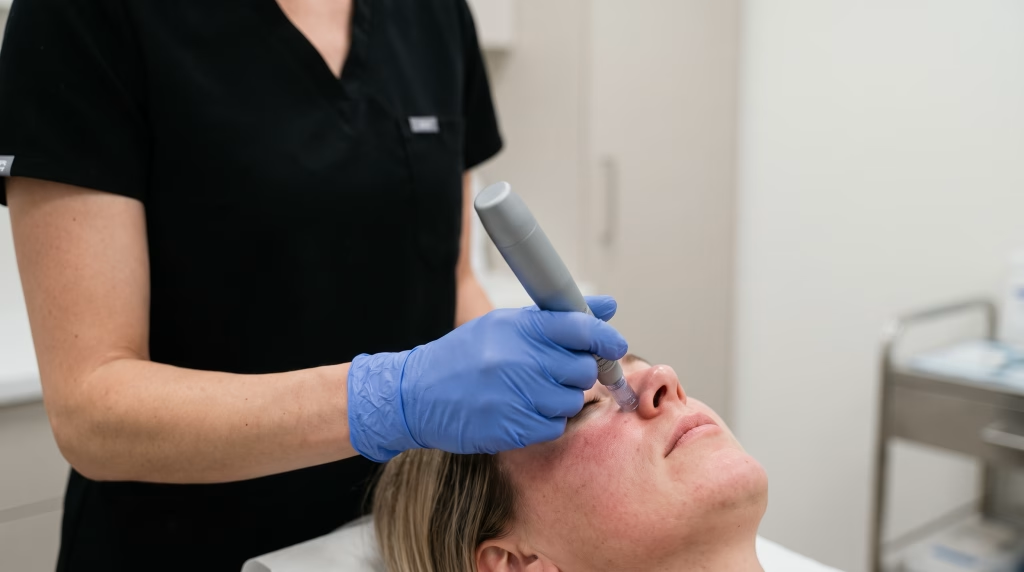
If your pores look more obvious because the skin has lost firmness, microneedling is usually the treatment I rate most highly over a course. It isn’t a one-off miracle. It’s a skin quality treatment, and that matters.

Why it helps
Microneedling creates controlled micro-injury in the skin. That repair response is the point. It encourages collagen and elastin remodelling, which helps the skin around the pore look firmer and more refined over time.
A practitioner-level overview of procedural options reports that treatments like microneedling are commonly planned as 3 to 6 sessions, spaced every 4 to 6 weeks, for improving skin laxity and pore appearance.
That timing fits what I see in clinic. One session can be a good start, but texture work usually builds over a course. If someone wants me to be honest, this is what I tell them: if your pore visibility is linked to skin quality, one appointment probably won’t be the full answer.
What I tell clients before booking
- It builds gradually. Smoother skin is typically observed over weeks, not overnight.
- It’s better as a course. That’s why I discuss consistency before I discuss outcomes.
- It has to suit your skin. If your pores are mainly stretched by congestion, microneedling alone isn’t where I’d start.
My microneedling is £80 for the face, with a course of 3 at £215 and a course of 6 at £410. Every appointment includes a skin consultation at no separate fee, and every treatment is carried out by me personally. If you want to read more about the treatment itself, you can see my microneedling treatment page.
Microneedling improves the framework around the pore. That’s why it can make pores look more refined, even though it doesn’t change what a pore is.
When I wouldn’t push it
If your skin is heavily congested, very oily, or packed with blocked pores, I’d usually deal with that first. There’s no point jumping straight to a collagen-focused treatment if the immediate problem is that the pore is physically full.
Why Clearing Congestion Is the First Step
If a pore is blocked, that blockage needs dealing with. Sounds obvious, but often people waste money. They book treatments aimed at texture and firmness, while the underlying issue is compacted debris and oil.
Congestion changes how pores look
When the pore is full, the opening often looks wider and darker. That’s why decongesting treatments can make a real visible difference. You’re not changing the pore permanently. You’re removing what’s making it stand out.
For that reason, I often start with treatments that physically clear the skin rather than jumping straight into collagen work.
| Treatment | Best suited to | Price |
|---|---|---|
| Steam & Extraction Facial | Localised congestion, blackheads, blocked pores | £50 |
| Ultimate Glow Facial | Congested skin that also looks dull and needs a thorough cleanse | £65 |
Where each option fits
My Steam & Extraction Facial is more hands-on and targeted. I use steam to soften the skin, then I remove blockages in a controlled, hygienic way. It’s useful when the main complaint is obvious congestion. I’ve written up what that appointment actually involves, including what extractions will not do, in my guide to the blackhead extraction facial.
The Ultimate Glow Facial at £65 suits clients who want a thorough cleanse while also improving overall freshness in the skin. It combines a deep cleanse, steam, exfoliation and dermaplaning. It’s often a good option when pores look prominent because the skin feels overloaded, dull or greasy.
If your skin also needs resurfacing support, I may discuss options from my chemical peel treatments, but again, only if your skin assessment says that makes sense.
Why this step matters
The reason I’m strict about decongestion first is simple. If the opening is still packed with oil and dead skin, building collagen around it won’t solve the immediate visual issue.
Clear skin usually looks smoother before we’ve even started working on firmness.
And this is where home care matters too. The same dermatology guidance I mentioned earlier supports consistent cleansing and ingredients like salicylic acid for unclogging pores. In clinic terms, that means your professional treatment works better when you’re not sending the skin straight back into the same cycle of build-up.
Combining Treatments for Better Results
A lot of people don’t have just one cause. They’ve got congestion on the surface and a bit of loss of firmness underneath. That’s exactly why combination plans tend to outperform one-off treatment choices.
A 2022 systematic review of clinical trials found that combining different treatment modalities was more effective for improving pore area and pore count than using a single approach, and the review supported structured, multi-session planning rather than isolated interventions (systematic review of facial pore treatments).
The combination I use most often
In simple terms, I usually think about pore minimizing treatments like this:
- Clear the pore first with steam and extraction if congestion is a major driver.
- Then improve the surrounding skin with a microneedling course where firmness and texture need work.
- Maintain the result with sensible home care and review appointments.
That order matters. If I try to build structure around skin that’s still congested, I’m skipping the obvious first job.
A one-session option
I also offer a treatment that follows the same logic in a shorter format. The Signature Skin Booster combines dermaplaning with skin-booster microneedling in one session, and it starts from £110. It can suit clients who want surface build-up removed while also starting work on overall skin quality.
I’m careful with how I present that, though. It’s a useful option, not a magic answer.
Pore improvement is usually gradual. If someone promises dramatic overnight change, I’d question the claim before I’d question your skin.
This is also why I don’t track treatment success with flashy percentages. I track what your skin is doing across appointments, and I tell you if the plan needs changing.
A Realistic Home Care Routine for Pores
Good clinic work falls apart without decent home care. But I’m not going to pretend there’s one serum that fixes pore visibility on its own, because there isn’t.
The ingredients I actually recommend
I prefer ingredient-first advice over product hype.
- Salicylic acid (BHA) helps keep congestion down. It’s the ingredient I think of first for skins that block easily.
- Niacinamide can be useful for oil control and overall skin quality.
- Daily SPF matters most if you’re trying to protect collagen and keep texture from getting worse.
That last one is the least glamorous and the most useful. Sun damage breaks down the support around the pore, so if you skip SPF daily, you’re working against your own treatment plan.
What not to fall for
No single serum “shrinks” pores. No mask “closes” them. No toner changes their structure. If a product is being sold to you on that promise, the wording is doing the heavy lifting, not the formula.
A simple routine usually does more than a cluttered one:
| Step | What to look for |
|---|---|
| Cleanse | A gentle cleanser used consistently |
| Treat | Salicylic acid or niacinamide, depending on your skin |
| Protect | SPF every day |
If your skin is oily and you want a routine that makes practical sense, my page on skincare for oily skin gives more direction.
Keep it sustainable
I’d rather give someone a routine they’ll stick to than a long shopping list they abandon after ten days. Consistency beats excitement every time with pores.
Your Pore Treatment Questions Answered
People usually ask me the same few things, so I’ll answer them plainly.
How long do results last
That depends on what made the pores look obvious in the first place. If congestion is the issue and you don’t maintain the skin, the build-up can come back. If you’ve improved skin quality with microneedling but don’t protect that collagen, you won’t hold the result as well as you could.
So the honest answer is this: pore work needs maintenance.
Do trendy machine treatments always work
No. And this is exactly why skin assessment matters. One clinical study included in the published evidence on pore treatment showed an average pore reduction of just 2.81%, and that result was not statistically significant, which is a good reminder that some popular light-based options can have very modest standalone effects (clinical evidence on a light-based pore protocol).
That’s why I won’t recommend a treatment because it’s fashionable. I recommend it if it fits your skin.
Is there downtime
Usually, the main downtime question comes with microneedling. Some redness typically occurs afterwards, and I’ll talk you through aftercare properly before you book. Decongesting facials are generally easier from that point of view, but suitability still comes first.

Which treatment should you choose
I can’t answer that without seeing your skin. If your pores look large because they’re congested, I’ll treat that differently than if the issue is texture and loss of firmness. If it’s both, I’ll say so and plan it properly.
That’s also why I include a consultation with every appointment. I’d rather tell you a treatment isn’t the right fit than take your money and hope for the best.
You can view the full range of facials and skin treatments there, including treatment details and pricing. And if you’d rather ask first, you can contact me directly at houseofglamhq@gmail.com or call 07831 846273. I’m the sole practitioner, so every treatment is done by me personally. And with verified reviews across Google, Fresha & Facebook, there’s plenty of feedback there from people who value straight answers as much as good skin.
If you want honest advice on pore minimizing treatments, book through House of Glam HQ. I’ll assess whether your skin needs decongestion, collagen support, or both, and point you towards the treatment plan that fits.

