Masseter anti-wrinkle treatment comes up constantly in my clinic — sometimes for jaw slimming, just as often from people grinding their teeth at night. It’s a treatment that does two jobs at once, but it isn’t right for everyone. Here’s a clear picture of who it really suits, how it works, and what results are realistic.
Key Takeaways
- Masseter anti-wrinkle treatment involves injecting a substance into the jaw muscles to relax them, which can lead to a slimmer jawline and help with teeth grinding.
- It works best for individuals whose jaw shape is primarily due to enlarged masseter muscles, often exacerbated by clenching or grinding.
- This treatment might not be suitable if your jawline definition is due to bone structure or significant facial fat.
- A consultation is important to assess if you’re a good candidate and to discuss realistic outcomes, as results can vary.
- While often used for aesthetics, anti-wrinkle injections for teeth grinding also offer therapeutic benefits by reducing discomfort associated with bruxism.
Understanding masseter anti-wrinkle treatment for jaw slimming
What is masseter anti-wrinkle treatment?
It is a cosmetic treatment that uses botulinum toxin injections, the drug most people know by the brand name Botox, to relax the masseter muscles. These are the large muscles located at the back of your jaw, responsible for chewing. When these muscles are overactive, they can lead to a square-shaped jawline, and sometimes discomfort or pain associated with teeth grinding or clenching. It’s a popular treatment for those looking to achieve a more refined facial contour. Masseter treatment is one of the advanced options at my anti-wrinkle clinic in Portsmouth, priced at £180.
How does it work for jaw slimming?
The magic behind masseter anti-wrinkle treatment for jaw slimming lies in muscle relaxation. When we inject a small amount of botulinum toxin into the masseter muscle, it temporarily reduces its activity. Think of it like giving the muscle a little break. Over time, as the muscle becomes less prominent, the jawline appears softer and less angular. It’s not about removing tissue, but about reshaping the underlying muscle structure. The effect is subtle yet noticeable, leading to a more V-shaped or oval facial appearance for many.
Who is a good candidate for masseter anti-wrinkle treatment?
So, who stands to gain the most from this treatment? Generally, I find it works best for individuals who have a noticeably square or wide jawline due to enlarged masseter muscles. This often stems from habits like teeth grinding (bruxism) or clenching, especially during sleep or stressful periods. If you can feel or see a bulge in your jaw when you clench your teeth, you’re likely a good candidate. It’s also important that your jawline concerns are primarily muscular, rather than being due to bone structure or excess fat. A thorough consultation is key to determining if this treatment is right for you. We’ll assess your facial anatomy and discuss your goals to see if masseter anti-wrinkle treatment aligns with what you’re hoping to achieve. You can explore more about masseter anti-wrinkle treatment for jaw pain and slimming to get a better understanding.
Who benefits most if they grind their teeth

When I first started offering masseter anti-wrinkle treatment, I noticed a particular group of patients who saw the most dramatic and satisfying results. It’s not just about aesthetics, though that’s often the initial draw. For many, it’s about addressing a persistent, often unconscious, habit that’s causing discomfort and changing their face shape.
Addressing bruxism and its symptoms
If you’re someone who grinds your teeth or clenches your jaw, especially at night, you might be suffering from bruxism. I see this a lot. People come in complaining of headaches, jaw pain, or even neck stiffness. Sometimes they’re aware they do it, other times a partner points it out. It’s a really common issue, and it can be quite disruptive. The constant tension in the jaw muscles can lead to a whole host of problems, not just physical discomfort but also a noticeable change in the lower face.
The link between clenching and jaw shape
Here’s where the masseter muscle comes in. This is the large muscle that connects your jawbone to your cheekbone, and it’s responsible for chewing. When you clench or grind your teeth, this muscle works overtime. Over time, this constant activity can cause the masseter muscle to become hypertrophied, meaning it gets bigger and more prominent. This is what gives that squared-off, wider jawline appearance that many people want to address. It’s not necessarily about having a large bone structure; it’s often the muscle itself that’s creating the width. I often explain it like this: think of any muscle you work out regularly – it grows. The masseter is no different.
Achieving a softer jawline through muscle relaxation
This is where masseter anti-wrinkle treatment really shines. By carefully injecting a small amount of botulinum toxin into the masseter muscle, I can effectively relax it. This doesn’t stop you from chewing or talking, of course. What it does is reduce the muscle’s ability to clench and grind so forcefully. Over a few weeks, as the muscle relaxes and reduces in size, the jawline starts to appear softer and less angular. It’s a fantastic way to achieve a more refined, V-shaped lower face without surgery. It’s particularly effective for those whose jawline concerns stem primarily from muscle hypertrophy rather than bone structure. For patients experiencing headaches or jaw pain related to teeth grinding, this treatment offers a dual benefit – both aesthetic and therapeutic. It’s quite rewarding to see the relief it brings on both fronts.
When masseter anti-wrinkle treatment might not be the answer
Jawline definition versus slimming
It’s important to be clear about what you’re hoping to achieve. Masseter anti-wrinkle treatment is brilliant for reducing the size of an enlarged jaw muscle, often caused by grinding or clenching your teeth. This can lead to a softer, more tapered jawline shape. However, if your goal is to create a sharper, more defined jawline angle, or to add structure to a weaker lower face, this isn’t the right tool for that job. That’s where treatments like jawline filler come in. Filler can build definition and create that sculpted look you might be after, whereas anti-wrinkle injections work by relaxing and shrinking a muscle. They achieve very different things.
Bone structure and facial proportions
Sometimes, what people perceive as a ‘wide’ or ‘square’ jawline is actually down to the underlying bone structure. Anti-wrinkle injections can only affect the muscles. If your jawbone is naturally broad, or if you have a very prominent chin bone, relaxing the masseter muscle won’t change that fundamental shape. I often see patients who have a naturally strong bone structure, and while reducing the masseter can soften the overall appearance, it won’t alter the skeletal framework. It’s about understanding the anatomy and what’s contributing to the shape you see. We need to consider the whole face – the proportions, the bone, the fat, and then the muscles. Sometimes, a treatment like chin filler can help rebalance the lower face, even if the masseter muscle isn’t the primary concern.
Alternative treatments for jawline enhancement
So, if anti-wrinkle injections aren’t giving you the jawline definition you’re looking for, what else can we consider? It really depends on what you want to achieve:
- For definition and structure: Dermal fillers are excellent for sculpting the jawline. They can add volume along the angle of the jaw to create a sharper line, or even add projection to the chin for better facial balance. This is a different approach to slimming, focusing on adding shape rather than reducing muscle bulk.
- For stubborn fat: In some cases, a small amount of localised fat around the lower face can contribute to a less defined jawline. While not directly related to the masseter muscle, treatments like Lemon Bottle fat dissolving injections could be an option for specific pockets of fat, though this is less common for the jawline itself compared to other areas. I have explained how Lemon Bottle fat dissolving injections actually work if that is the part you are weighing up.
- For overall facial harmony: Sometimes, addressing other areas can indirectly improve the appearance of the jawline. For instance, restoring volume to the cheeks can create a more lifted effect, making the lower face appear more sculpted. Similarly, softening lines around the mouth, like nasolabial folds, can contribute to a more balanced lower face.
It’s always about having a thorough consultation to figure out the best approach for your individual face and your specific goals.
What the masseter treatment actually involves
So, you’re thinking about masseter anti-wrinkle treatment for a slimmer jawline. That’s great! It’s a pretty straightforward process, but I always like to walk my patients through exactly what to expect, from the moment you step into the clinic to seeing those subtle changes.
Consultation and assessment
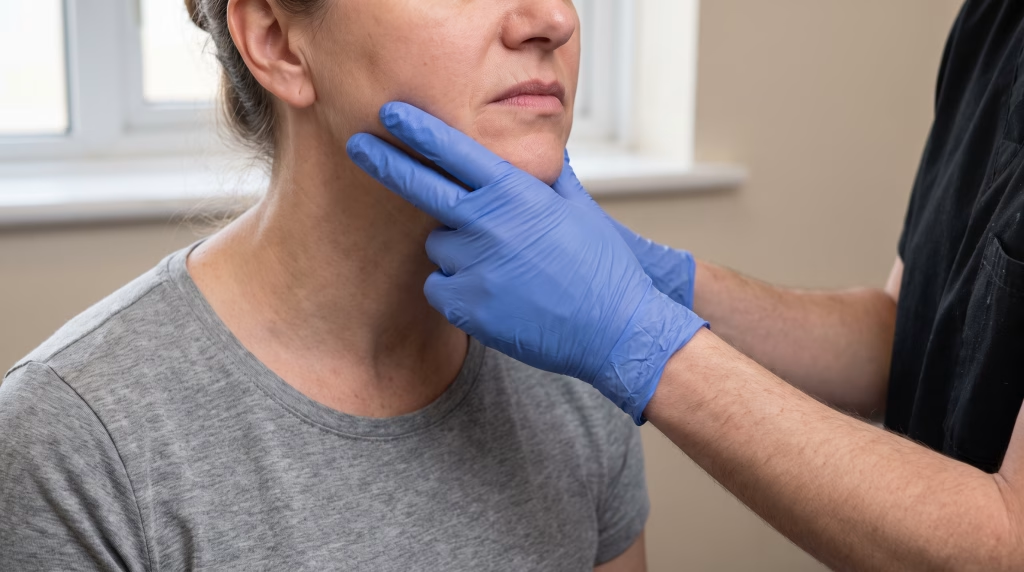
First things first, we need to have a chat. This isn’t just a quick hello; it’s where I get to understand what you’re hoping to achieve. I’ll ask about your concerns, look at your facial structure, and specifically examine your masseter muscles. We’ll see how prominent they are when you clench your jaw. This is also where we discuss your medical history to make sure this treatment is safe for you. It’s all about making sure we’re on the same page and that masseter anti-wrinkle treatment is genuinely the right path for your goals. Sometimes, what you’re looking for might be better achieved with something else, like jawline filler, and I’ll be honest about that.
The injection process
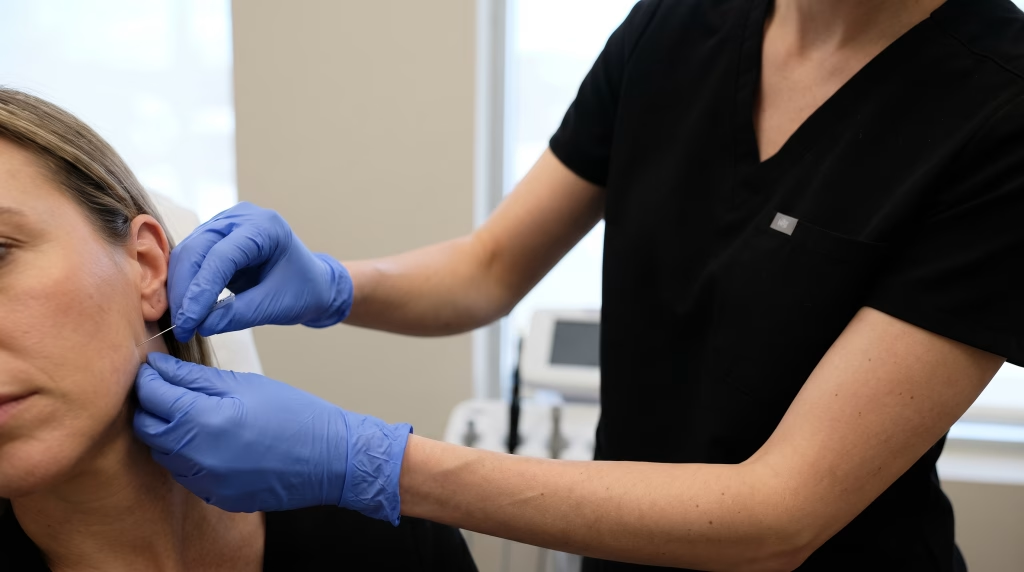
Once we’ve decided to go ahead, the actual treatment is surprisingly quick. I’ll mark the injection points on your jawline. Then, using a very fine needle, I’ll administer small amounts of the toxin into the masseter muscles. Most people describe the sensation as a mild pinch, and it’s over in just a few minutes. Honestly, it’s usually done within 15 to 30 minutes, depending on how much we’re treating. You can pretty much walk out and carry on with your day straight afterwards – no real downtime needed.
Aftercare and expected results
After the injections, there are a few simple things to keep in mind for the first 24 hours. I usually advise avoiding strenuous exercise, excessive heat (like saunas), and alcohol. It’s also best to try and stay upright for a few hours and avoid massaging the treated area. I’ll give you full written instructions, of course. As for results, you won’t see a dramatic change overnight. It’s a gradual process. You’ll start to notice the muscles softening over the next 2-4 weeks, and the slimming effect will become more apparent over the following weeks. The full effect usually settles in around 4-6 weeks. We’ll typically schedule a follow-up appointment about two weeks after your treatment to check on your progress and see how everything is settling. Remember, results can last anywhere from 3 to 6 months, so we’ll discuss when you might want to consider a follow-up treatment to maintain your results.
Managing expectations with jaw slimming treatments
When I first started offering masseter anti-wrinkle treatment for jaw slimming, I noticed a common thread: people often had a very specific idea of what the results would look like. It’s my job to help manage those expectations, because while this treatment can be fantastic, it’s not a magic wand. It’s important to understand what we’re actually aiming for and what’s realistic.
Understanding the nuances of facial aesthetics
Facial aesthetics are complex, and what looks good on one person might not be the ideal for another. Masseter anti-wrinkle treatment works by reducing the size of the jaw muscles, which can indeed lead to a slimmer, more V-shaped jawline. However, the degree of change depends heavily on your starting point. If your jawline is primarily defined by bone structure rather than muscle bulk, then the treatment will have a more subtle effect. It’s about refining, not completely reshaping. I always stress that the goal is a balanced and harmonious look, not necessarily a drastic transformation.
The role of muscle versus fat and bone
It’s crucial to remember that your jawline’s appearance is a combination of muscle, fat, and bone. Masseter anti-wrinkle treatment directly targets the muscle. If you have significant fat deposits in the lower face or a naturally broad bone structure, the injections alone might not achieve the dramatic slimming effect you’re hoping for. Think of it this way:
- Muscle: This is where the injections make their impact. By relaxing and shrinking the masseter muscles, we can soften a square jaw.
- Fat: If excess fat is contributing to a wider lower face, treatments like fat dissolving injections might be more appropriate, or used alongside anti-wrinkle injections. My guide to what fat dissolving injections can and cannot do in Portsmouth covers where they suit and where they do not.
- Bone: This is the underlying structure. While anti-wrinkle injections can’t change bone, they can create the illusion of a more refined jawline by reducing muscle bulk. Procedures like jawline filler can add definition to the bone structure, but that’s a different goal than slimming.
Achieving a balanced and natural look
My aim is always to create results that look natural and enhance your existing features. We’re not trying to make everyone look the same. A successful treatment should make you look like a refreshed, more refined version of yourself. This means considering your entire face – your forehead, cheeks, and chin – to ensure the jawline slimming complements everything else. It’s about proportion and harmony. If you’re looking for significant changes to bone structure, or if fat is the primary concern, we’ll need to discuss other options. But for many, particularly those with overdeveloped masseter muscles from clenching or grinding, masseter anti-wrinkle treatment can be incredibly effective at creating that softer, more elegant jawline.
Considering anti-wrinkle injections for facial harmony
Beyond aesthetics: therapeutic benefits
It’s easy to focus on the aesthetic outcomes of masseter anti-wrinkle treatment, like achieving a slimmer jawline. But I always make sure my patients understand that there’s a significant therapeutic side to this treatment too. For many, the primary reason they seek out this treatment isn’t just about how their face looks, but how it feels. If you suffer from bruxism, that’s the technical term for teeth grinding or clenching, you’ll know the discomfort it can cause. We’re talking about jaw pain, headaches that feel like a constant dull ache, and even tooth sensitivity. Masseter anti-wrinkle treatment works by carefully relaxing the overactive jaw muscles responsible for this grinding. It’s not about eliminating the function entirely, but about dialling down the intensity, especially during sleep when you have no control over it. This muscle relaxation can bring immense relief from those persistent symptoms. It’s quite rewarding to see the difference it makes to someone’s daily comfort.
Combining treatments for comprehensive results
While masseter anti-wrinkle treatment is fantastic for addressing jaw clenching and slimming the lower face, I often find that combining it with other treatments can lead to even more balanced and harmonious results. For instance, if someone has a naturally strong jawline due to muscle hypertrophy but also desires more definition in the lower face, we might consider adding some jawline filler. Filler can help sculpt and define the angle of the jaw, creating a sharper silhouette that complements the softened muscle. Similarly, if volume loss in the midface is contributing to an overall less defined look, treatments like cheek fillers can lift and rebalance the face, making the jawline appear more proportionate. It’s about looking at the face as a whole, not just isolated features. Sometimes, a subtle tweak here and there, when combined thoughtfully, can create a much more significant and pleasing overall effect.
Long-term considerations for jawline treatments
When we talk about treatments for the jawline, whether it’s anti-wrinkle injections for slimming or fillers for definition, it’s important to think about the long term. Masseter anti-wrinkle treatment, for example, isn’t a permanent fix. The effects typically last around 3 to 4 months, and you’ll likely need repeat treatments to maintain the results. This is actually a good thing, as it allows us to adjust the dosage or frequency based on how your muscles respond over time. For fillers, the longevity varies, but again, it’s not permanent. We’re essentially working with the body’s natural processes. My approach is always to aim for natural-looking results that age gracefully with you. It’s about enhancing your features and addressing concerns in a way that looks and feels authentic, rather than chasing an unattainable ideal. Regular consultations help us stay on track and ensure your treatment plan continues to meet your evolving needs and aesthetic goals.
Thinking about anti-wrinkle injections to help balance your face and ease teeth grinding? It’s a clever way to achieve a more harmonious look. This treatment can ease jaw tension and refine your facial features. Curious to learn more about how this could work for you? Visit our website to discover the possibilities and book a consultation.
So, is masseter anti-wrinkle treatment for you?
Right then, we’ve gone through who masseter anti-wrinkle treatment is brilliant for – think teeth grinders, people with a really square jaw they want to soften, or those looking for a bit of facial balance. But, as I’ve said, it’s not a magic wand for everyone. If you’re after a dramatic change or your jawline shape is down to bone structure rather than muscle, this probably isn’t the treatment for you. It’s always best to have a good chat with someone like me, who knows their stuff, to figure out if it’s the right move for your face. We can look at what you’re hoping to achieve and see if relaxing the jaw muscles is actually the best way to get there, or if something else might be a better fit.
Frequently Asked Questions
What exactly is masseter anti-wrinkle treatment, and how does it help slim my jaw?
Masseter anti-wrinkle treatment involves injecting a small amount of botulinum toxin into the masseter muscles. These are the big muscles you use for chewing, located on the sides of your jaw. When these muscles are overactive, they can make your jaw look wider or squarer. By relaxing them a bit, the muscle can shrink over time, leading to a slimmer, more ‘V-shaped’ jawline. I find it’s a really effective way to soften the lower face.
Who is the ideal candidate for jaw slimming?
Generally, if you have a square or wide jawline because your masseter muscles are quite developed, you’re likely a good candidate. This often happens if you clench or grind your teeth, maybe even without realising it. If your jaw shape is mainly due to bone structure, though, the treatment might not make a big difference. I always check this during a consultation to make sure it’s the right treatment for you.
Will masseter anti-wrinkle treatment help if I grind my teeth at night?
Absolutely. Teeth grinding, or bruxism, is a common reason for enlarged masseter muscles. Anti-wrinkle injections can significantly reduce the force of your jaw clenching, which not only helps to slim the jawline over time but also eases symptoms like headaches and jaw pain associated with grinding. It’s a win-win for both aesthetics and comfort.
How long does it take to see results from masseter anti-wrinkle treatment?
You won’t see a dramatic change overnight. The treatment starts to relax the muscle gradually. I usually tell patients they’ll begin to notice a difference after about 4 to 6 weeks. The full slimming effect can take a few months as the muscle atrophies slightly. The results typically last for about 3 to 4 months, after which you might consider a follow-up treatment.
Are there any alternatives if this isn’t right for my jawline?
Yes, definitely. If your jawline concerns are more about definition or volume rather than muscle size, fillers might be a better option. Jawline filler can add structure and contour, creating a sharper profile. Sometimes, a combination of treatments works best. We can explore other options like fillers for the chin or jawline if the injections aren’t the perfect fit for what you’re hoping to achieve.
What happens during a masseter anti-wrinkle treatment session?
It’s a pretty straightforward procedure. First, I’ll have a chat with you to understand your goals and check if you’re suitable. Then, I’ll clean the area and mark the injection points on your jaw muscles. Using a very fine needle, I’ll administer a few small injections. The whole process usually takes about 15-30 minutes. It feels like a quick pinch, and most people can carry on with their day straight afterwards.

